
5 African Players Who Will Shape Ligue 1 in 2026/27
By Arizechukwu Okekeogbu
Ligue 1 and African football have a long history together.
George Weah, Abedi Pelé, Jay-Jay Okocha, and Didier Drogba all travelled through France before their careers took them to even higher heights. For generations of African players, the French top division has been both a destination and a gateway.
That relationship remains strong.
At the start of the 2025/26 season, African players accounted for 140 of the 294 foreign players in Ligue 1, making Africa the most represented continent among the league’s foreign talent. Senegal alone had 28 players in the competition, while Côte d’Ivoire had 20 and Morocco 16.
The 2026/27 season brings another set of stories.
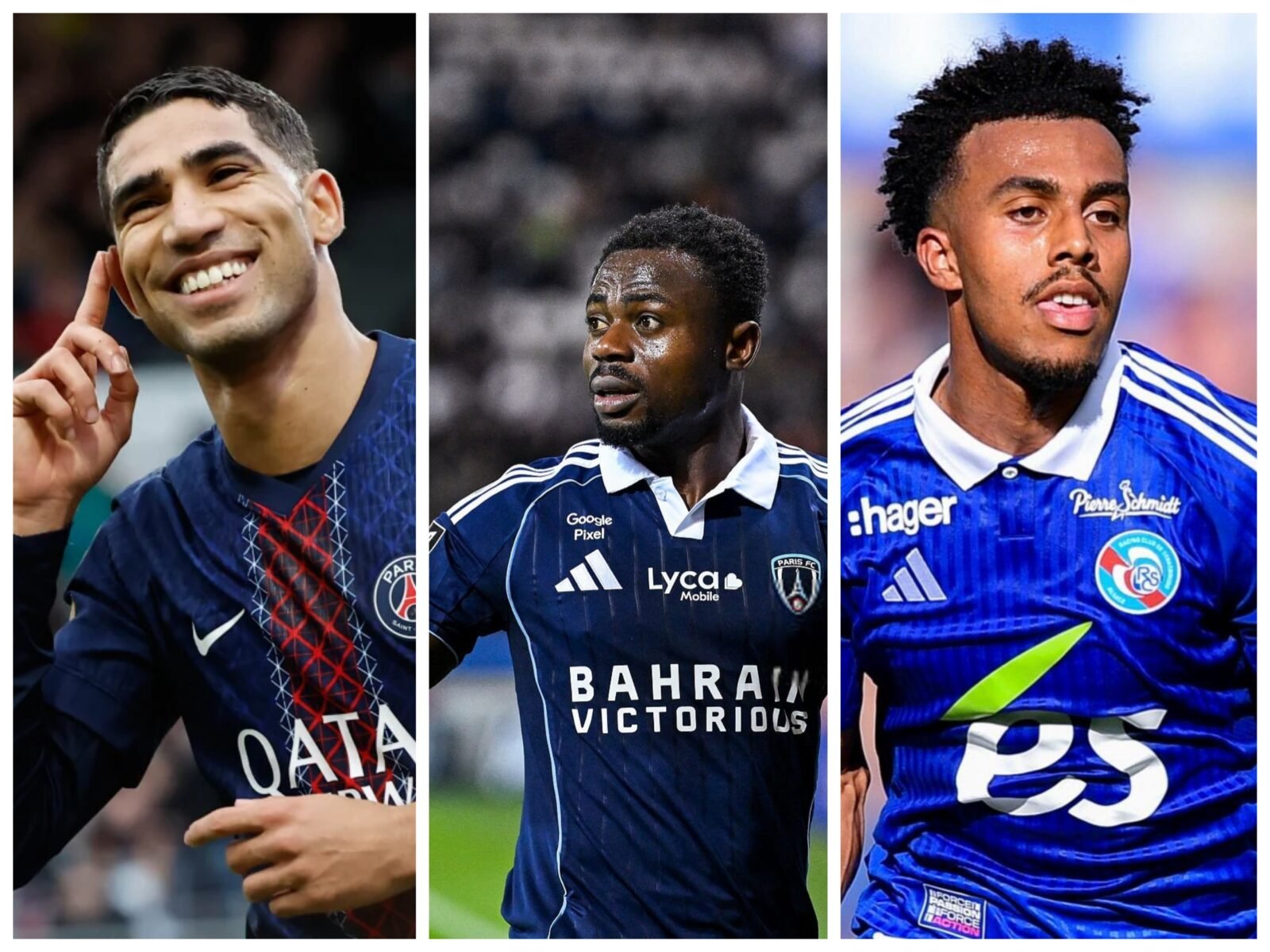
Hakimi returns as the reigning CAF African Player of the Year after another great season with Paris Saint-Germain. Lamine Camara is entering the stage where good performances can change the conversation around his career. Moses Simon has already experienced Paris FC’s first season back in the top flight and now has to show what his experience can add to the team.
Moussa Niakhaté has rebuilt his reputation at Lyon. And Guéla Doué arrives with a World Cup behind him and a fascinating family story that speaks to the modern African footballer.
This is not the best XI list. It is a watchlist of five African players at different points in their football careers, each with a different story hanging over the season ahead.
1. Achraf Hakimi, Morocco (Paris Saint-Germain)
The easiest way to understand Hakimi’s status is to look at the medals.
The Moroccan finished the 2025/26 season with another Ligue 1 title and a Champions League medal. PSG won the French championship for the fifth consecutive season, then beat Arsenal 4-3 on penalties after a 1-1 draw in Budapest to retain the European title. Hakimi even converted his penalty in that final shootout.
A few months earlier, CAF had already crowned him Africa’s best player. He won the 2025 CAF Men’s Player of the Year award in November and became the first Moroccan to win the award since midfielder Mustapha Hadji in 1998 and the first defender since Zaire centre back Bwanga Tshimen in 1973.
A recognition that crowns years of hard work, success, and unforgettable moments.
— Achraf Hakimi (@AchrafHakimi) November 19, 2025
My gratitude goes to my family, my teammates, and everyone who works with me every day, on and off the field. Your trust, dedication, and support make me stronger and allow me to grow.
Thank you… pic.twitter.com/ZssdnZ2T55
Under Luis Enrique, Hakimi has become one of the best attacking full-backs in Europe. He can start in the back four, push beyond the winger, and appear around the edge of the penalty area. Against Arsenal in the Champions League final, he was not simply there to defend his side’s right flank. He was part of the attacking structure.
That is the version of Hakimi Ligue 1 will see again.
PSG have spent years making domestic dominance look routine. Now the challenge is different. They have to keep winning while carrying the expectation that comes with being European champions twice in a row. Hakimi sits right in the middle of that expectation.
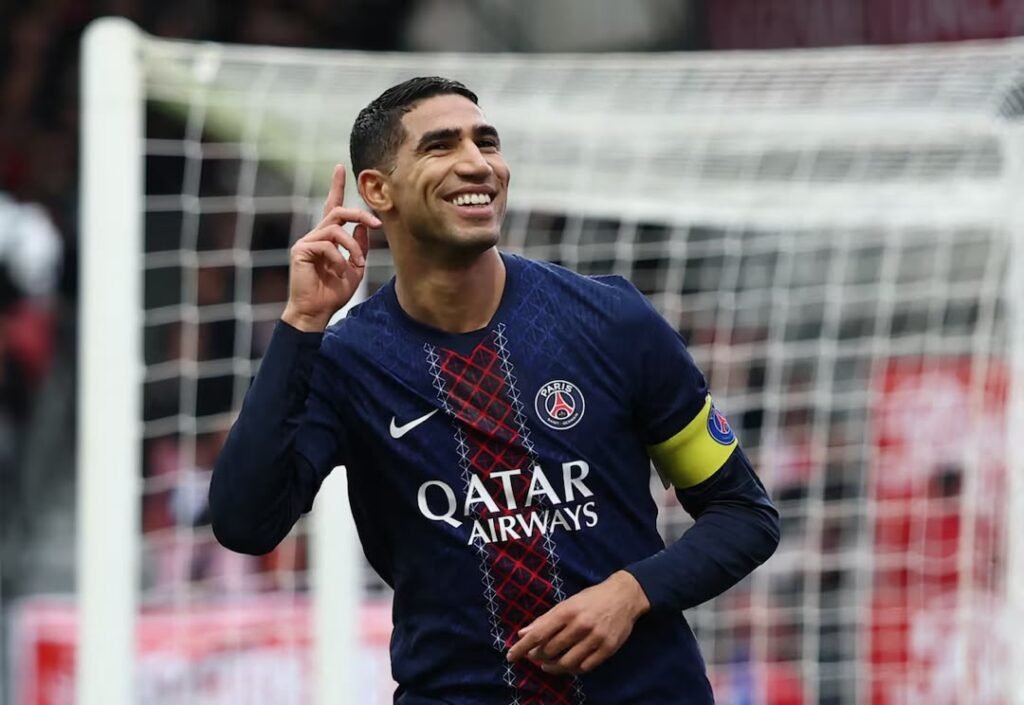
For African football, there is something else worth watching. A player who once represented the familiar pathway from Africa to Europe has now become one of the faces of European football himself.
2. Lamine Camara, Senegal (AS Monaco)
Lamine Camara’s best performance of last season came at a stadium where very few visiting midfielders get to dictate the game.
At the Parc des Princes in March, Monaco beat PSG 3-1. Camara had 13 ball recoveries, won 10 of his 14 duels, made two tackles, and intercepted three passes. Monaco supporters subsequently voted him their man of the match.
Camara was one of the three finalists for the 2026 Prix Marc-Vivien Foé alongside Mamadou Sangaré and Lyon’s Moussa Niakhaté. Sangaré won the award, but Camara’s place among the finalists was another sign of how his reputation has grown.
Now comes the transfer noise. There have been reports of interest from Premier League clubs. Crystal Palace had submitted a bid of £35 million, which was rejected by Monaco.
Camara is 22. He completed his early development in Senegal before moving from Génération Foot to Metz and then Monaco.
A season in which he consistently controls matches rather than merely producing flashes would change his standing. And if Monaco can keep him, he may become one of the more interesting players to watch in Ligue 1.
3. Moses Simon, Nigeria (Paris FC)
Moses Simon knows what it feels like to play in Ligue 1.
He also knows what it feels like to arrive at a club with something to prove.
Paris FC signed the Nigerian from Nantes in June 2025 on a contract running until 2028. The club described him as a priority signing and highlighted the speed, direct running and crossing ability that had made him a long-serving figure at Nantes. He arrived with almost 180 Ligue 1 appearances already behind him.
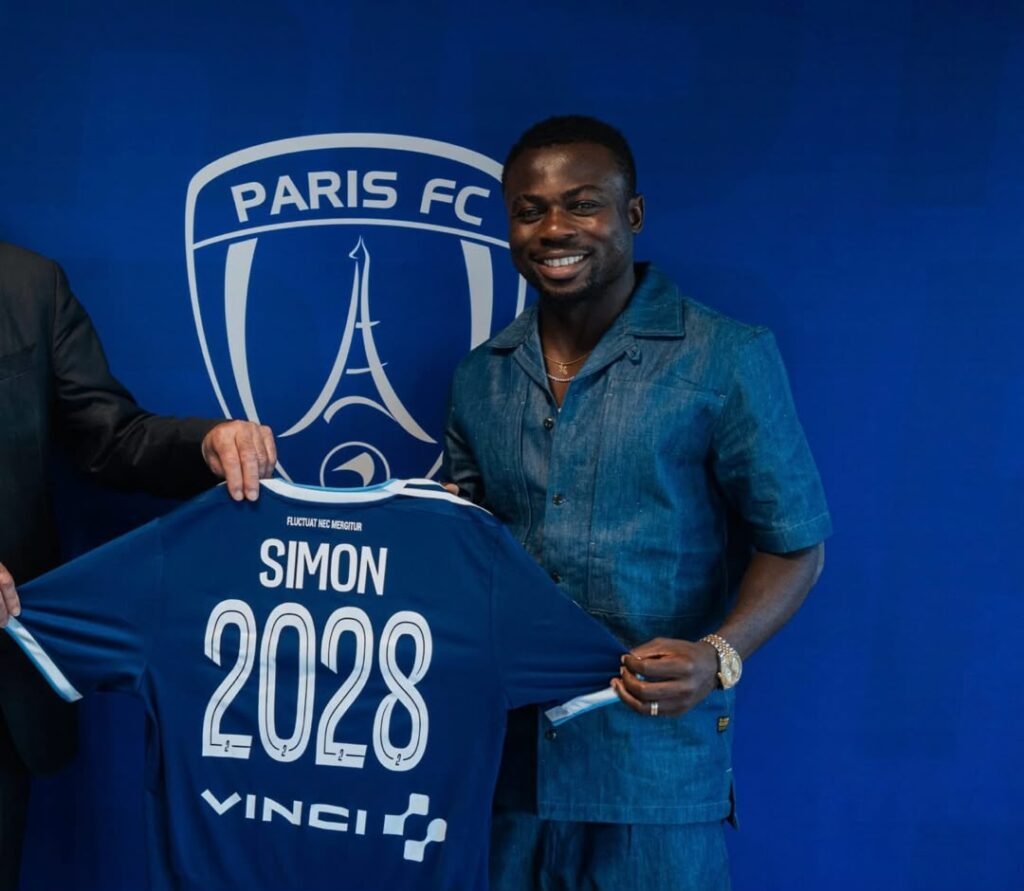
Paris FC had returned to Ligue 1 after 46 years outside the top flight. Simon was not joining a finished team. He was joining a club, trying to work out what life among France’s best looked like again.
He made 29 appearances, 25 starts, three goals, and three assists in his first season. The biggest stars in the league won’t be confused by those numbers. They do, however, provide some insightful information about his role.
Simon was part of the transition. Now he has to help with the next one.
At 31, his value to Paris FC is not only about beating a full-back or delivering a cross. He has played in France since 2019. He has been through the physical demands of Ligue 1. He brings six years of Ligue 1 battles, Super Eagles international caps, and the calm required when top-flight pressure kicks in.
The real test now is to translate that veteran knowledge into dressing-room authority. If Simon gets it right, Paris FC will not only have an experienced winger on the flank, but also the cultural leader this top-flight project requires.
4. Moussa Niakhaté, Senegal (Olympique Lyonnais)
Lyon paid a club-record €32 million to sign the Senegalese centre-back from Nottingham Forest in 2024.
The Senegalese international started more Ligue 1 games than any other member of Paulo Fonseca’s team in the previous campaign. Because of his availability, he has become a mainstay in Lyon’s defence and was named vice-captain after Alexandre Lacazette left the team.
Off the ball, Niakhaté became Lyon’s defensive reference point. Alongside Clinton Mata, he anchored a unit that posted Ligue 1’s third-best defensive record. That form travelled well beyond the Groupama Stadium, too. A top-three finish for the Prix Marc-Vivien Foé behind only Lamine Camara and Ibrahim Sangaré confirmed his standing among the continent’s elite performers in France.
Niakhaté has become a more trusted option for Senegal, as he can play in different defensive systems. He can operate in a back four or as part of a back three.
Niakhaté, who is thirty years old, is no longer evaluated solely on his potential. Now, the question is whether he can become one of the top African defenders in Ligue 1 by maintaining this level of consistency.
5. Guéla Doué, Côte d’Ivoire (Strasbourg)
Guéla is the brother of PSG’s Désiré Doué. The Doué household runs on pure football pedigree. Raised in France by Ivorian parents, Guéla and his younger brother Désiré broke through the ranks together at Rennes after Désiré was famously scouted while tagging along to Guéla’s original trial. Years after sharing that academy pitch, they took their talents to opposite sides of international football: Guéla repping Côte d’Ivoire and Désiré putting on Les Bleus. When the 2026 World Cup kicked off, one household had two players on football’s absolute biggest stage.
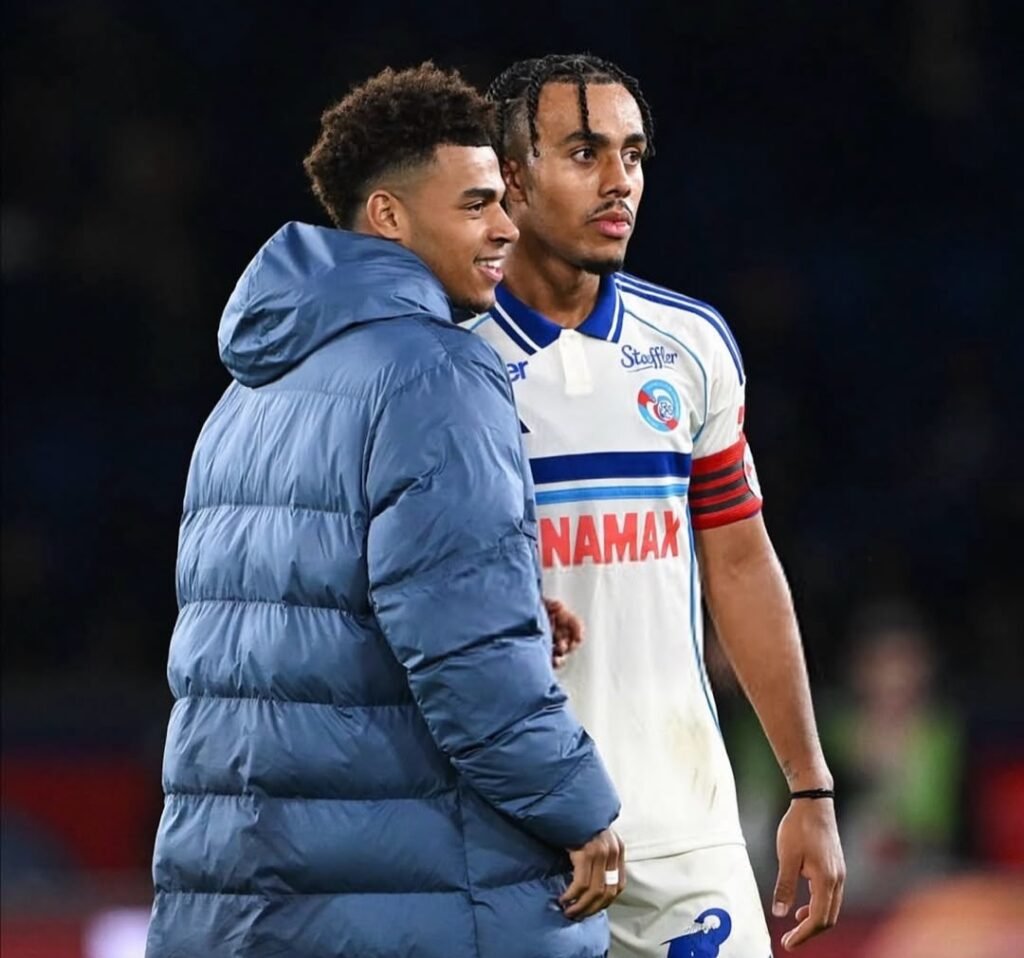
In a June friendly game where Côte d’Ivoire beat France 2-1, the Strasbourg defender scored and assisted the winner, while his brother was on the other side.
Guéla also scored against PSG in Strasbourg’s 2-1 defeat in February. He had a productive 2025/26 season, finishing with two goals and six assists in 24 Ligue 1 appearances.
Guéla’s choice reflects a wider reality across modern European football, where dual heritage is the norm rather than the exception. For diaspora players coming through French academies, choosing a national team is rarely a simple career calculation. It is a declaration of identity.
There has also been reported interest from PSG that the European champions had considered him as cover for Hakimi. Other clubs are watching too. Gazzetta dello Sport reported in July that Inter had Doué on its list as it looked for a right-back.
The ‘Désiré’s older brother’ tag is well behind him. Guéla is building a standalone reputation, backed by pitch performances rather than family pedigree.
Ligue 1 Is More Than a Bridge to Europe
It is easy to describe Ligue 1 as a bridge for African footballers.
That description is true. It is also incomplete.
French football is much more than just a stopover for African talent on their way to the Premier League or La Liga. Ligue 1 is a destination in its own right, with decades-old scouting networks and direct academy pipelines connecting French clubs to the continent long after deadline day.
Look at Lamine Camara. He came through Génération Foot in Senegal before moving to Metz. FC Metz’s partnership with the academy has existed since 2003 and has helped produce a long line of Senegalese players, including Sadio Mané, Ismaïla Sarr, Pape Matar Sarr, Habib Diallo, and Camara himself.
The pipeline runs both ways. The grit and intuition come from African grassroots systems, while Ligue 1 offers top-notch infrastructure and international exposure. Just as many players establish themselves and make the French top flight their career, French clubs are able to profit from that.
Compared to the traditional export line, this is much larger. With players occupying every stage of the pipeline, French football and the continent have created a cohesive economic and cultural ecosystem. For this reason, Ligue 1 cannot be reduced to a weekend statistics sheet. The real story this season is to see who starts at Ligue and what their journeys reveal about the future of African football.
About the Author



0 Comments