
Nigeria Didn’t Run Out of Talent. So Why Did the Super Eagles Miss the World Cup?
By Victor Fakiya
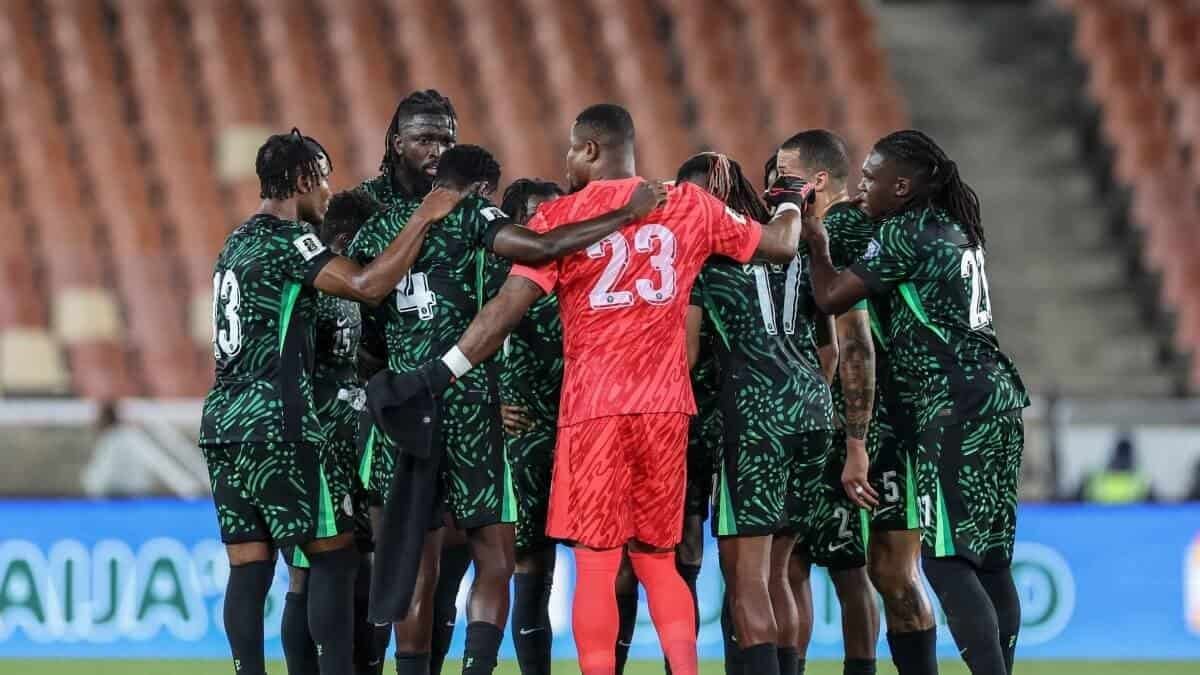
On paper, Nigeria should have been at the 2026 FIFA World Cup. The country is one of Africa’s most successful football nations. It is home to the continent’s largest population, one of its biggest football fan bases and an extraordinary production line of talent. From Victor Osimhen and Ademola Lookman to Alex Iwobi, Calvin Bassey and Wilfred Ndidi, Nigerian players feature prominently across Europe’s elite leagues.
Off the pitch, the numbers are just as striking. Between 2020 and 2025, Nigeria exported 2,324 professional footballers, averaging more than 386 players every year. By 2025, around 926 Nigerian footballers were playing professionally across 135 leagues worldwide, with a record 500 international transfers completed in a single year. Few countries, regardless of continent, possess that depth of football talent.
Yet when the World Cup kicked off across the United States, Canada and Mexico, Nigeria was nowhere to be found. For the second consecutive tournament, the Super Eagles watched from home.
For a nation that has long measured itself against Africa’s football elite, missing one World Cup could be dismissed as an unfortunate campaign. Missing two in succession points to something more fundamental.
The uncomfortable truth is that Nigeria’s problem is no longer producing footballers. It is producing a football system capable of matching their talent.
A Football Giant Missing From Football’s Biggest Stage
Nigeria’s absence from the 2026 World Cup is remarkable not simply because the Super Eagles failed to qualify, but because it breaks with decades of expectation.
After missing the 2022 and 2026 World Cups, Nigeria fans are positive they'll be at the 2030 tournament 🔒
— B/R Football (@brfootball) January 16, 2026
(w/ @milesxaddy) pic.twitter.com/nkfhTvwqyX
Since making their World Cup debut in the United States in 1994, the Super Eagles have become one of Africa’s most recognisable international teams. They qualified for six of the seven tournaments between 1994 and 2018, missing only Germany 2006, and established a reputation for producing gifted footballers capable of competing with the world’s best.
That consistency shaped an entire generation of Nigerian supporters. For many fans, World Cup qualification became less an ambition than an expectation. Every four years, the assumption was that Nigeria would be there.
That assumption has now been shattered. Missing both Qatar 2022 and the expanded 2026 tournament marks Nigeria’s longest absence from the World Cup since the country first emerged as a global football force.
The broader African picture magnifies the disappointment. The 2026 World Cup had 10 African representatives, yet the Super Eagles couldn’t get the ticket.
As African football broadened its presence, one of its traditional heavyweights disappeared from it. That contrast raises an uncomfortable question.
How did one of Africa’s richest football ecosystems become one of the tournament’s most notable absentees?
The Qualification Campaign Was the Symptom
The immediate explanation is familiar. Nigeria finished second in its qualifying group before losing the intercontinental play-off to DR Congo on penalties, ending hopes of reaching the World Cup.
In the aftermath, the Nigeria Football Federation challenged the eligibility of several Congolese players, but the appeal ultimately changed nothing.
The results, however, tell only part of the story. Qualification campaigns rarely collapse because of a single match. More often, they expose problems that have been developing for years.
Nigeria entered the campaign with one of the strongest squads in Africa, yet spent much of the qualifying process trying to answer questions that had little to do with football itself.
Who was leading the team? What tactical identity was the Super Eagles trying to build? Who was responsible for long-term planning?
Those questions remained unresolved for much of the campaign. The consequences became increasingly visible as qualification progressed.
A Team Without Continuity
International football offers very little time to build a successful team.
Unlike club football, where coaches work with players every day, national team managers often have only a few training sessions before competitive matches. That makes continuity one of the most valuable assets in international football. Teams that perform consistently over time tend to have a clear tactical identity, stable leadership and long-term planning.
Nigeria had none of those advantages during the 2026 World Cup qualifying cycle.
Between the start of qualification and the final play-off, the Super Eagles passed through four different managerial tenures.
José Peseiro, who guided Nigeria to the final of the 2023 Africa Cup of Nations, left after his contract expired in February 2024 following months of uncertainty over his future. Finidi George succeeded him but resigned after only two competitive matches. Augustine Eguavoen returned as interim manager before Eric Chelle was appointed in early 2025 to salvage the qualifying campaign.
Each appointment brought a different philosophy. Different tactical systems. Different coaching staff. Different ideas about player selection.
Rather than refining a clear football identity, the Super Eagles repeatedly found themselves starting again. That instability had its effect.
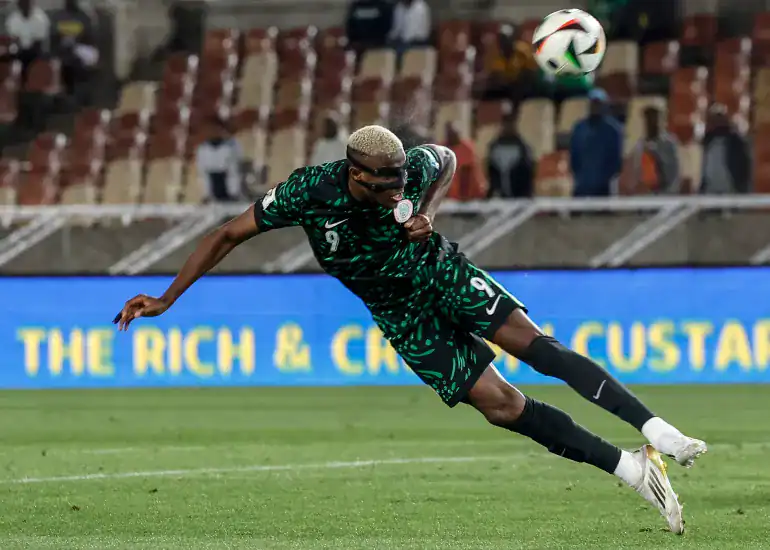
Modern international football rewards familiarity. Players who spend years working within the same tactical structure develop instinctive understanding. Defensive partnerships become stronger. Midfield combinations improve. Coaches spend less time explaining systems and more time refining them.
Nigeria rarely enjoyed that luxury. Instead, every international window became another period of adjustment.
The result was a team rich in individual talent but still searching for a collective identity.
The Bigger Problem Was Never the Coach
It is tempting to explain Nigeria’s struggles through the men standing on the touchline.
After every disappointing result, public debate usually follows a familiar pattern. The coach is criticised, calls for dismissal grow louder and attention quickly turns to who should take over next.
But changing coaches has rarely solved Nigeria’s football problems. In fact, frequent managerial changes have become one of their symptoms. The more difficult questions lie above the dugout.
How are coaching appointments made? Is there a long-term football philosophy that survives beyond individual managers? What technical structures remain in place when coaches leave? And perhaps most importantly, can any coach consistently succeed when the institutions around the team remain unstable?
Those questions have followed Nigerian football for years.
Successive administrations of the Nigeria Football Federation (NFF) have faced scrutiny over governance, financial management and long-term planning. Coaching appointments have often been delayed, contracts have become subjects of prolonged negotiations and administrative uncertainty has repeatedly disrupted preparations for major competitions.
More recently, controversy surrounded a $1.2 million FIFA grant earmarked for stadium development and youth football infrastructure after concerns were raised about how the money was being managed and whether the intended projects were being delivered.
Former Chelsea midfielder and Super Eagles captain John Obi Mikel has spoken publicly about experiencing similar problems during Nigeria’s campaign at the 2016 Olympic Games in Rio de Janeiro, where the team went on to win a bronze medal despite severe logistical difficulties.
“When I represented my country at the Olympics in Brazil, we had to fly there, and we waited from morning till night, waiting for a plane to take us to Brazil,” Mikel recalled on The Obi One Podcast.
“There was no plane to take us to Brazil because there was infighting behind the scenes. The government, I think, released the money, but the FA or whoever got the money refused to release it.”
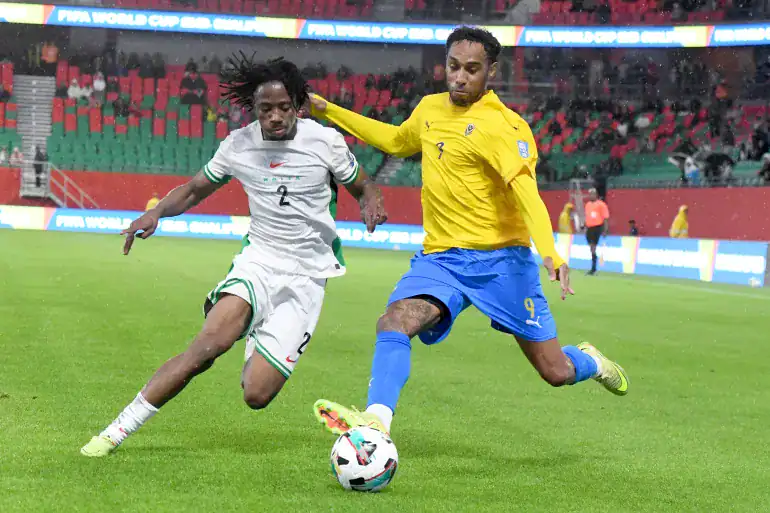
Also, leading up to Nigeria’s decisive World Cup play-off against Gabon, reports emerged that players and members of the technical crew boycotted training over unpaid allowances. It was another chapter in a pattern that has followed the Super Eagles across multiple generations.
The episode has become one of the most frequently cited examples of the administrative dysfunction that has periodically overshadowed Nigerian football.
Issues surrounding player bonuses, travel arrangements, accommodation and unpaid allowances have resurfaced under different administrations, suggesting that the problem extends beyond any single coach or federation official.
Elite international teams depend on more than talented footballers. They require trust between players and administrators. They require clear planning. They require professional structures that allow coaches to focus on football rather than organisational crises.
When those foundations weaken, even the most gifted squads begin to lose their competitive edge.
The Diaspora Gives Nigeria More Options And Greater Competition
Nigeria’s talent pool extends far beyond its borders. Over decades of migration, Nigerian families have established communities across England, France, Germany, Belgium, the Netherlands, the United States and Canada.
Those communities have produced generations of footballers eligible to represent both Nigeria and the countries of their birth.
For the Super Eagles, that should be a competitive advantage. Instead, it has become one of modern Nigerian football’s biggest challenges.
Bukayo Saka chose England. Michael Olise committed to France. Jamal Musiala opted for Germany. Folarin Balogun selected the United States. Eberechi Eze also pledged his future to England despite sustained interest from Nigeria.
Each decision had its own circumstances. Family background, personal identity, career ambitions and footballing opportunities all played important roles. But together they point to a broader reality.
International football has become increasingly competitive beyond the pitch. Modern footballers are not simply choosing passports. They are evaluating football projects.
Few countries illustrate this better than Morocco. In recent years, the country has transformed diaspora recruitment into one of its greatest strengths. Players like Achraf Hakimi, Hakim Ziyech, Sofyan Amrabat and Noussair Mazraoui were either born or raised outside Morocco but chose to represent their ancestral homeland.
The results have been visible beyond one tournament. Morocco reached the semifinals of the 2022 World Cup and reached the quarterfinals of this year’s tournament. It has also successfully positioned itself as one of Africa’s emerging football powers, culminating in its role as a co-host of the 2030 FIFA World Cup.
Nigeria has the potential to build a similar model. Its diaspora is one of the largest in Africa and continues to produce elite footballers across Europe’s leading academies. But attracting that talent requires more than history, passion or patriotism.
Players increasingly want to understand how a federation is run, how decisions are made and whether the environment will help them compete at the highest level.
That places governance at the centre of the conversation. A federation that projects professionalism, consistency and long-term ambition is often better positioned to attract elite talent than one that relies solely on tradition.
In modern international football, the competition for dual-national players begins long before they pull on a national team shirt. It is won through planning, trust and credibility.
The Cost of Missing the World Cup Goes Beyond Football
Missing a World Cup is often discussed as a sporting failure. In reality, it is also an economic one.
Qualification guarantees more than a place among football’s elite. It opens the door to FIFA prize money, commercial partnerships, sponsorship activations, broadcast opportunities and global exposure that can strengthen a nation’s football economy long after the tournament ends.
At the 2026 FIFA World Cup, African teams collectively earned more than $135 million. Morocco was the highest earner, pocketing $31.5 million thanks to its quarter-final finish.
The absence of the Super Eagles removed Nigeria from that ecosystem for a second consecutive World Cup. It also denied a generation of supporters the shared experience that only international football can provide.
For many Nigerians, the World Cup has always represented far more than a football tournament. It is one of the rare occasions capable of bringing together people across ethnic, religious and political divides in support of a shared national identity.
When the Super Eagles qualify, millions experience the tournament together.
Families gather around televisions. Streets empty during matches. Cities erupt after victories. For a few hours, football becomes one of the country’s strongest expressions of collective identity.
That shared experience was missing for a second consecutive World Cup. The financial losses can be calculated. But the cultural ones are far harder to measure.
The Lesson Africa’s New Football Powers Have Already Learned
The 2026 World Cup revealed something important about the direction of African football. Success is no longer determined by talent alone.
Morocco’s rise has been underpinned by years of investment in coaching, infrastructure and youth development. South Africa’s return to the World Cup followed renewed stability and a more coherent football project. Cape Verde continues to outperform expectations through organisation and tactical discipline despite its small population, while DR Congo’s qualification reflected the benefits of greater continuity after years of inconsistency.
These countries are different in size, history and resources. What they increasingly share is an understanding that football success is built long before the first whistle.
Nigeria possesses advantages that many of them can only envy. It has a population of more than 200 million people, one of Africa’s largest football diasporas, hundreds of professional players competing across the world, and a domestic passion for football that remains unmatched in many parts of the continent.
The challenge has never been finding talent. It has been creating the structures capable of harnessing it consistently.
The World Cup Is Not the Destination. It Is the Test
Missing the 2026 FIFA World Cup should not simply be remembered as another disappointing qualifying campaign. It should be remembered as a warning.
For years, Nigeria’s extraordinary ability to produce elite footballers has often masked deeper institutional weaknesses. Exceptional players have repeatedly rescued difficult situations, giving the impression that talent alone could overcome administrative shortcomings.
Modern football has become too competitive for that. The countries making sustained progress are those where governance, coaching, player development, sports science and long-term planning move in the same direction.
That is the standard Nigeria must now aspire to. Because the question facing the Super Eagles is no longer whether they have enough talent to compete with the world’s best. The evidence suggests they do.
The real question is whether Nigerian football can finally build institutions worthy of the players it continues to produce.
Until that happens, every new generation of gifted footballers will carry the weight of solving problems they did not create. And one of Africa’s greatest football nations will continue to risk becoming a spectator at the very tournament it once expected to grace.
About the Author



0 Comments