
How Football Manager and EA Sports Are Quietly Building Football’s Most Tactically Literate Generation

On 12 May 2024, within the iconic Wembley Stadium, 132 years of club legacy rested on the outcome of one crucial penalty kick.
As the crucial penalty found the back of the net, propelling Bromley Football Club into the English Football League for the very first time, a 23-year-old on the sidelines burst into a celebration that was anything but conventional for a coach. Just six months ago, Nathan Owolabi was leading tourists through the iconic Wembley concourses. Now, he was celebrating in the technical area, playing a crucial role as part of the backroom team.
Owolabi didn’t secure the position based on top-tier playing experience or a costly UEFA certification. His main asset was a strategic intellect honed through countless hours spent on Football Manager.
Hired as a Support Performance Tactician, through an Xbox and Sports Interactive initiative called The Everyday Tactician, his main assignment leading into the National League play-off final was researching penalty tactics. When the shootout ended 4–3 in Bromley’s favor, his virtual preparation paid off in real-world glory, proving that the leap from a console screen to a professional touchline is no longer science fiction.
“How it started. How it finished.”
How it started. How it finished. https://t.co/ZOlpwzkmWL pic.twitter.com/ZJIzrzjOSQ
— Football Manager (@FootballManager) July 22, 2024
Owolabi’s journey is the perfect example of a clever marketing ploy. The campaign behind it won eight Cannes Lions, including three Titanium Lions. Take away the commercial gloss and the plain truth remains: a young man gleaned enough genuine football intelligence simply from simulating that he could be relied upon by a veteran manager, Andy Woodman, in a room where big tactical calls were made.
And it worked.
Owolabi is not an outlier. He is the earliest visible example of a silent revolution. A whole generation of fans, analysts and aspiring coaches is getting a deep tactical education on a screen long before they ever step foot in a coaching course or an elite academy.

That’s a small story with huge implications for the game of football in Africa. In cities like Accra, Nairobi, Johannesburg, and Cairo, a generation of digitally native fans is quietly acquiring tactics, gaining a deep understanding of the game that was previously restricted for decades to expensive coaching badges, exclusive academy access, and licenced analysis software costing five figures per year.
This generation is breaking down barriers and embracing the complexities of the sport like never before. The gatekeepers are still in play. They no longer hold the same dominance over knowledge as they once did.
An Open-Source Football MBA
Football broadcast coverage revolves around key moments: goals, errors, controversies, and outcomes.
Football Manager and its primary rival, Konami’s eFootball, centre on systematic approaches. What were the reasons behind the transfer’s failure? What factors are contributing to the squad’s ageing? What factors contribute to the academy’s lack of performance? What causes the press to falter when facing a back three formation? What factors contribute to the unsustainability of wages?
These are the enquiries that technical directors, sporting directors, chief scouts, and head coaches face on a daily basis. The game presents the same questions to the individual controlling the device.
The depth is truly impressive. Football Manager uses a vast database developed by a network of more than 1,300 scouts worldwide, monitoring hundreds of thousands of active players across various leagues. That does not meet the criteria for promotional material. In 2014, Sports Interactive established a strategic partnership with Prozone Recruiter, the scouting software used across the Premier League, effectively incorporating the Football Manager database into the recruitment platform.
EA Sports FC 26, formerly known as FIFA, has shifted its emphasis towards a more arcade-style experience in the gaming landscape. The FC IQ tactical engine now utilises Opta match data and AI models that emulate off-the-ball movement across more than 50 distinct positional roles. That isn’t suitable as a party game. That is a comprehensive guide to positional play, showcased on a console.
Each of the three major titles serves a unique role. Football Manager embodies the strategic foresight characteristic of a sporting director.
EA Sports FC instructs players on how to interpret team formations and recognise pressing cues while they are in action. eFootball, a leader in mobile gaming throughout Africa, presents a concise street-corner format that demands quick tactical decisions. Together, they outline the framework of a contemporary football club.
What the Gaming Data Reveals About Africa’s Next Wave
BY THE NUMBERS · AFRICAN GAMING AND FOOTBALL-SIM ADOPTION
- 349 Million
Total estimated gamers across the African continent, according to the African Games and Esports Economy report, rapidly approaching the total reach of traditional football broadcasting. - 46.5 Million
Nigeria’s active gaming population, the largest volume market on the continent, driving up to $300 million in annual gaming revenue. - $368 Million
Egypt’s recorded gaming market revenue is $368 million, making it the highest-earning individual country market in Africa. - 87%
Share of African gamers who play on mobile devices, the primary engine driving titles like eFootball and pocket simulation tools into daily life. - $4.1 Billion
Projected size of the African gaming market by 2031, up from $2.29 billion in 2026, marking one of the fastest growth trajectories in global tech. - $100,000
Prize pool for FIFA’s inaugural Football Manager World Cup, establishing official governing-body validation for a competition built entirely on tactical intelligence.
These figures are quite substantial. Egypt has emerged as the leading gaming revenue market on the continent, generating approximately $368 million. Nigeria boasts the largest gaming population, totalling 46.5 million individuals, with market projections indicating a rise to $1.3 billion by 2028. With 87% of gamers using mobile devices, the mobile-first structure of African gaming aligns perfectly with eFootball. Konami has positioned eFootball as the preferred mobile football simulation since its separation from FIFA in 2023.
The FIFAe World Cup 2025, featuring eFootball, brought together nominated players from 62 FIFA member associations. Africa is well-represented. In Nigeria alone the ecosystem now includes a professional EAFC player scene led by John Okam (Killerfreak), community managers like Odusote David (@playwithtomide, whose Make Africa Esports Great Again initiative bridges West, East, and Southern African competitive circuits), Faruk Manzo, and the country’s most prominent female EAFC player, Stefkaly.
“A good amount of esports is rooted in online multiplayer games, and Africa doesn’t exactly have the best infrastructure,” notes Ghanaian esports strategist Kwesi Badu.
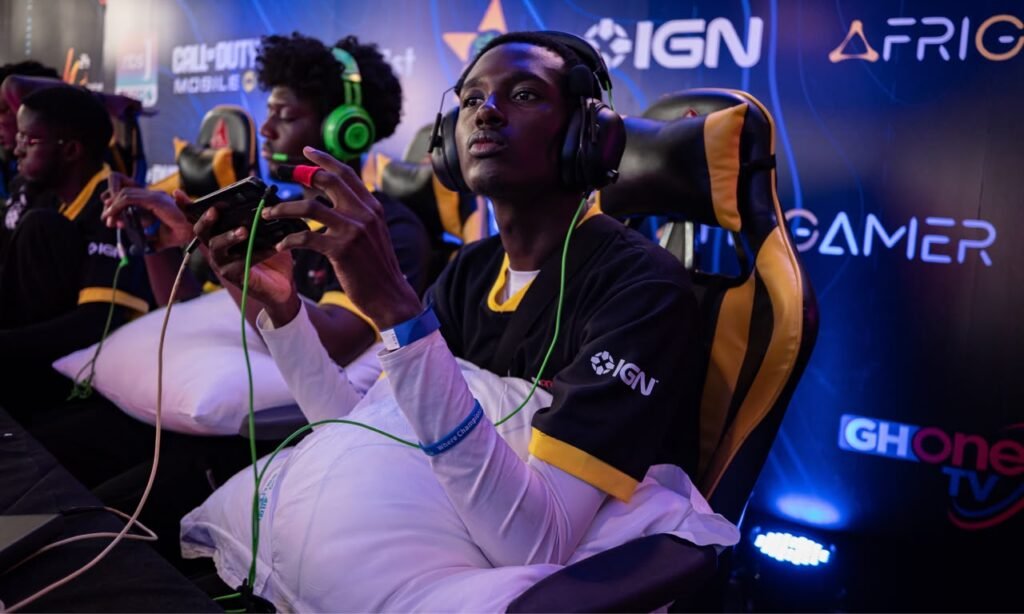
Distant servers mean high ping, leaving players at a distinct disadvantage during intercontinental play. But local publishers are taking action to address the issue.
Through strategic partnerships with major developers, Africa’s Carry1st has helped deploy local servers for major competitive titles including Valorant and Call of Duty: Mobile. This is a critical shift that ensures Africa’s emerging tactical minds have the physical infrastructure they deserve.
The African Frontline: Where the Tactics Actually Get Talked About
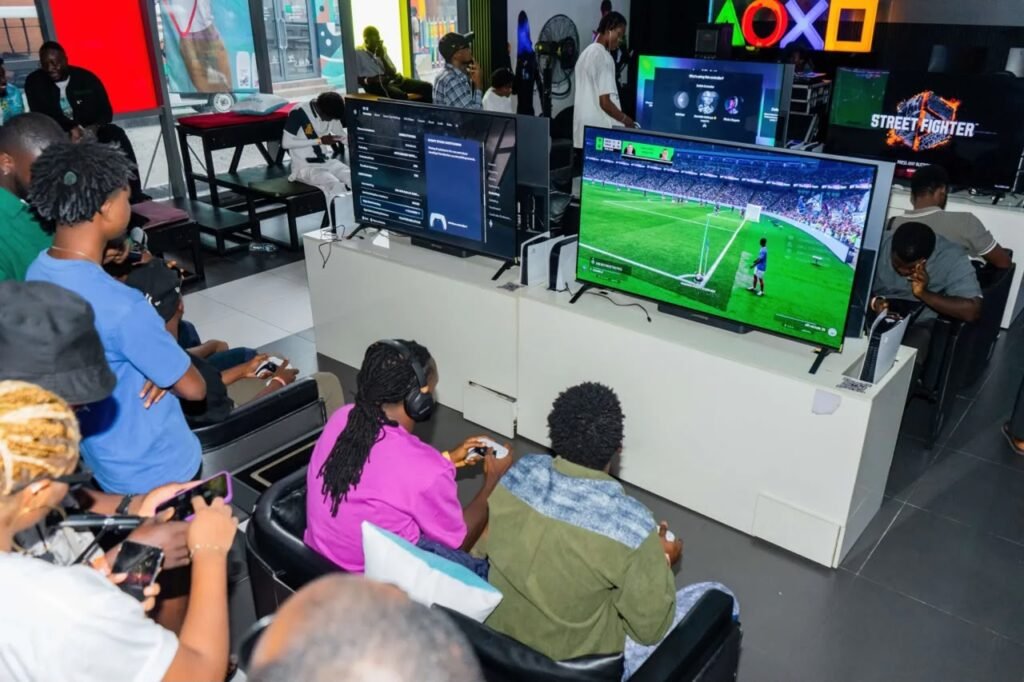
Observe the conversations among young African football enthusiasts regarding the game today. The language has evolved. Previous generations debated individual excellence — who stands out as the best striker, whose left foot is more aesthetically pleasing.
The current generation discusses the balance between an inverted full-back and a traditional overlapper. They discuss succession planning, age curves, and wage-to-turnover ratios. They assess squad depth based on profile, rather than solely on quality. They reference expected goals. They reference the urgent PPDA.
That language did not come from a coaching course. It came from Football Manager forums; EA FC comment sections; tactical YouTube; and X (Twitter), Twitter spaces, and threads that dissect a Premier League match at 11pm Lagos time because the community is that engaged.
Nigerian sports content creator Benard Emuobosa — better known as Coach B.I has built one of the continent’s biggest tactical football YouTube channels off exactly this kind of analytical, systems-first football conversation. He is not the exception; he is the leading edge of a much larger creator layer that includes tactical breakdowns, transfer analysis, and squad-building videos across Twitter, TikTok, and Instagram.
According to Games Industry Africa’s November 2025 Nigeria report, Nigeria’s gaming story has evolved from neighbourhood FIFA battles in cafés to a formalised structure of leagues, university tournaments, brand partnerships, and creator economies.
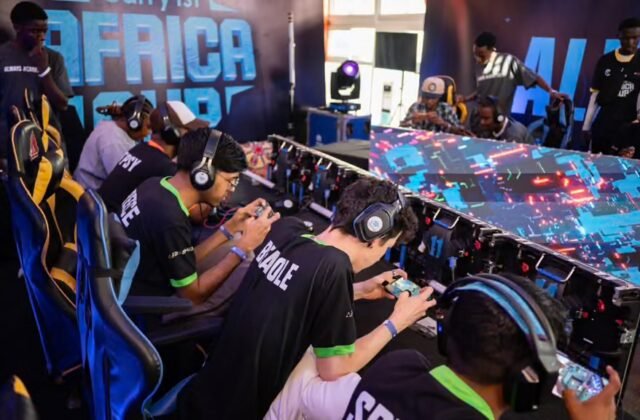
South Africa’s Mamelodi Sundowns runs its own annual Esports Championship. MTN, FNB, and Nedbank sponsor jerseys, streams, and venues at events like the Nairobi PUBG Mobile Africa Cup and Ghana’s Royal Esports Cup FC26 tournament at Manhyia Palace. The Lagos-based Africa Gaming Expo runs from 24 to 27 March 2026, featuring structured competitive brackets in FC26, eFootball, and mobile titles.
The integration into global esports institutions has now begun. The inaugural 2024 Football Manager World Cup, organised by FIFA, had a prize pool of $100,000. In the context of competition, that figure is modest; however, symbolically, it carries significant weight.
The global authority of football has endorsed a competition focused solely on simulated football intelligence, emphasising planning, scouting, tactical setup, and long-term strategic decision-making over reflexes and manual skills. These are the same skills that command a seven-figure salary for a technical director.
When the Game Meets the Boardroom
The notion that a video game could impact real football seemed far-fetched in 2005. It can no longer be overlooked.
Bolton first-team data analyst Adam Cooper has publicly stated that Football Manager is “really good for people trying to get into coaching or trying to transition from playing to coaching”. That is not fandom; it represents a functional feedback mechanism between the game and the industry.
Owolabi was not handed a token role for publicity. His penalty research directly shaped the shootout strategy at Wembley that delivered Bromley FC’s historic promotion. He forged that tactical intelligence in a digital simulation, not in a traditional academy.
The broader implications for African football are profound. A teenager in Ibadan or Kigali experimenting with tactical engines is building spatial expertise that frequently outstrips local grassroots infrastructure. This does not render formal qualifications like the CAF Pro License obsolete. Rather, it reveals a fundamental shift: the baseline level of football knowledge across the continent is rising outside the formal system far faster than traditional institutions can cultivate it inside.
What African Clubs Should Actually Do With This
The Nathan Owolabi campaign deserves serious consideration as a model, rather than being viewed as a mere novelty.
A top-flight club from Nigeria, Ghana, South Africa, or Kenya could launch its version as early as tomorrow. Initiate a call. Apply a filter, for example, by completing the equivalent of a five-year rebuild at a lower-league African club in FM. Conduct interviews with the leading candidates. Assign one of them to a five-month backroom placement, where they will shadow a technical director or the head of recruitment. Inexpensive to a considerable extent. The signal is vast.
The Egyptian Premier League has a domestic data-analysis market that requires professional development. Moroccan clubs, capitalising on the Atlas Lions’ current commercial success, might collaborate with Sports Interactive to implement grassroots data-scouting initiatives across French-speaking West Africa. None of this is imaginary. It simply calls for club executives to recognise the ecosystem for what it truly is: an untapped, underutilised reservoir of talent for the football operations positions that African clubs will require in the coming decade to remain competitive both commercially and technically with Europe and the Gulf.
And the CAF has its chance. A CAF-endorsed African Football Manager tournament, inspired by the FIFAe World Cup format but tailored for Africa, would feature scholarships to formal coaching programmes for the top four finishers. This initiative would require less than half of the budget allocated for one AFCON opening ceremony and would create a legitimate talent identification pipeline for football operations roles.
Across Africa right now, thousands of future directors of football are attending lectures on how the game actually works, and most of them do not yet know what they are doing. The clubs and federations that first recognise them will be a decade ahead of those that do not.
About the Author



0 Comments