
Chawinga Makes Ballon d’Or History as African Heritage Dominates the Men’s Top 10
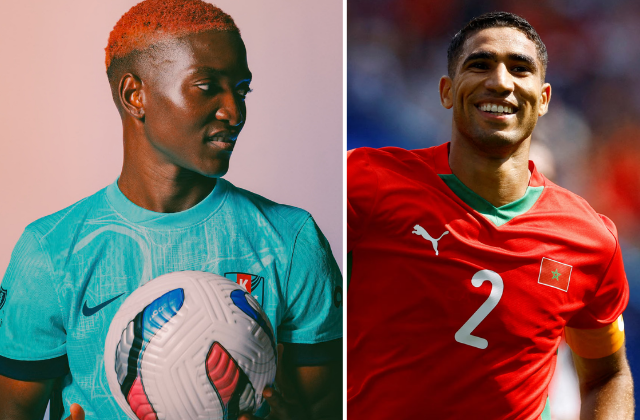
Temwa Chawinga finished tenth in the 2026 women’s Ballon d’Or, which her club, Kansas City Current, says makes her the first African woman in the top ten since the award began in 2018. Harry Kane won the men’s prize in London on Monday. On that list, only two African nationals made the top 30, and the better-placed of them, Achraf Hakimi, finished 13th.
Kane Wins In London
Kane, 33, won the men’s Ballon d’Or at the London Palladium after scoring 73 goals for club and country. It was the 70th ceremony and the first outside France, staged as a tribute to Sir Stanley Matthews, the first winner, in 1956. Kane said Christiano Ronaldo presenting the trophy made the moment a dream come true. On stage, he thanked the club that raised him: “I wouldn’t be where I am today without Tottenham.” He also said Bayern coach Vincent Kompany, who is recovering in hospital after collapsing at training last week, had phoned to encourage him.
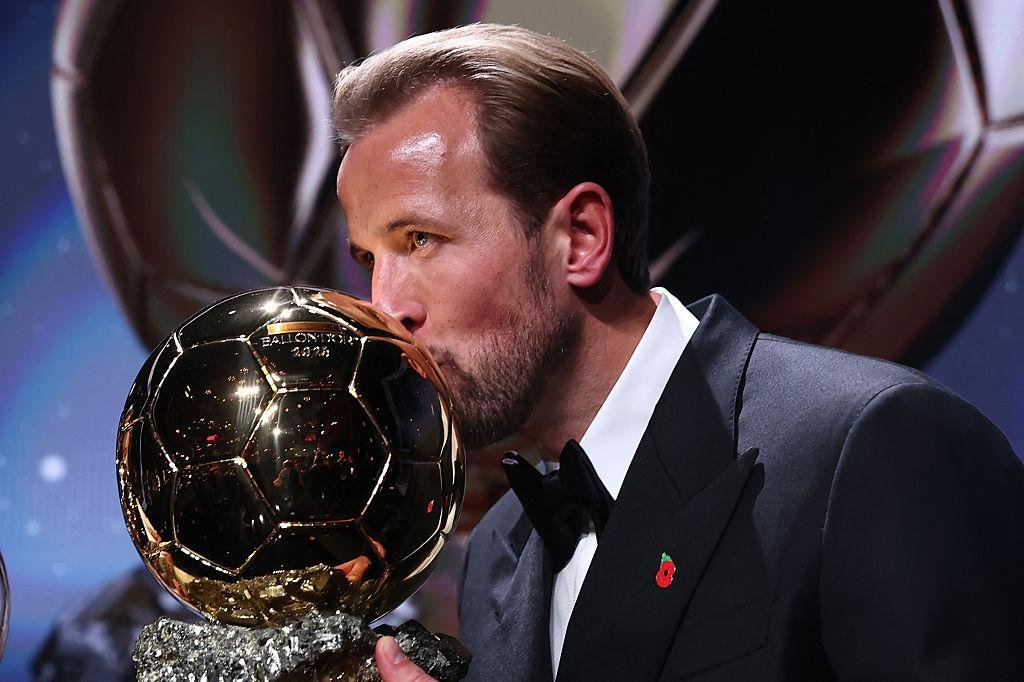
He is the first Englishman to win since Michael Owen in 2001, and a year ago he finished 13th. Jamie Carragher said Kane could not have won it at Tottenham, because the trophy follows team success. This summer Kane captained England to third place at the World Cup, scored six goals and passed Gary Lineker as the country’s leading scorer at the tournament, with 14 World Cup goals in his career. He has said he wants to win the award again next year. England manager Thomas Tuchel told him that England are “lucky to have you as our leader.”
Elsewhere, Alexia Putellas won a third Ballon d’Or Féminin, Paris Saint-Germain were named Men’s Club of the Year and Bukayo Saka took the Socrates Award. The ceremony started 45 minutes late, at 8.45 pm.
Four Of The Men’s Top Ten Have African Heritage
The African numbers sit below the winner. Four of the men’s top ten have African heritage, meaning a parent from an African country: Kylian Mbappé in second, Lamine Yamal in third, Ousmane Dembélé in seventh and Michael Olise in ninth. Strip out Kane, and the rest of the podium has African heritage.
France’s captain, Mbappé, plays for Real Madrid and has a Cameroonian father and an Algerian mother. He told The Bridge podcast that he would have chosen Cameroon had he picked an African team, OkayAfrica reported, and he had scored eight goals at the World Cup by the quarter-final.
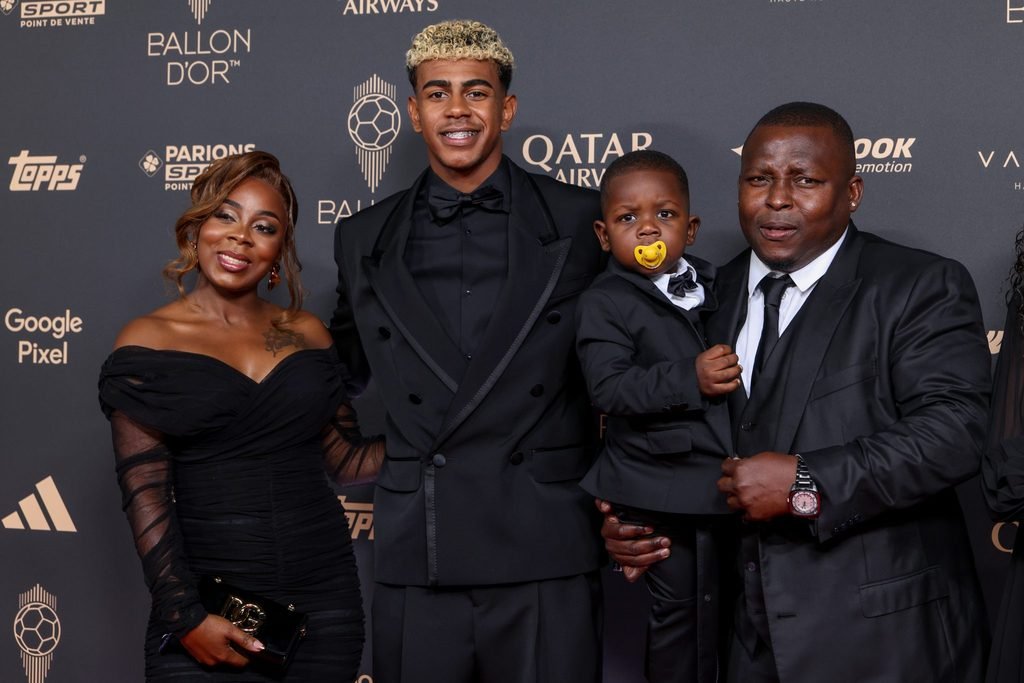
Yamal was born in Spain to a Moroccan father, Mounir Nasraoui, from Larache, and an Equatorial Guinean mother, Sheila Ebana, from Bata. He plays for Spain, and Fouzi Lekjaa, the president of Morocco’s football federation, has said Morocco tried to sign him. He returned from a hamstring injury to play at the World Cup, where Spain beat France in the semi-final in Dallas and Argentina in the final, and at 19 he won the Kopa Trophy for the best young player for the third year running.
The reigning winner, Dembélé, was born in Vernon, France, to a Malian father and a mother of Mauritanian and Senegalese descent. By the quarter-final, he had scored five World Cup goals, and his club, Paris Saint-Germain, had won a second straight Champions League.
For a Nigerian reader, Olise is the closest to home. He was born in Hammersmith, London, to a Nigerian father and a French-Algerian mother, and Gernot Rohr, who coached the Super Eagles until 2021, says he scouted Olise at Reading in 2019 and tried to invite him. Olise declined because he already believed his future lay with a European team, Rohr says. Rohr put him on a standby list for 2021 Africa Cup of Nations qualifiers, but he never played for Nigeria, which missed this summer’s World Cup while Olise played in it for France.
Olise moved from Crystal Palace to Bayern Munich in 2024, the year he won Olympic silver with France, and he has said he feels strong connections to Nigeria, Algeria, France and England. At Bayern, he plays alongside the winner.
“African heritage” is the accurate phrase for all four, and none of them holds African nationality: Mbappé, Dembélé and Olise play for France, and Yamal plays for Spain. What separates them from the African nationals further down the list is the federation each player chose, since Hakimi came through Real Madrid’s academy and still picked Morocco. Cameroon, Algeria, Morocco, Equatorial Guinea, Mali, Mauritania, Senegal and Nigeria each have a family tie to one of the four.
The shortlist also leans towards Europe by design. France Football picks the 30 men, judged on a season that ran from 3 August 2025 to 19 July 2026, and journalists from the top 100 countries in FIFA’s men’s rankings each rank ten of them, Forbes reported. Of the 30, 27 play for European clubs, and PSG, Real Madrid, Bayern, Arsenal and Barcelona supplied 24 of them.
Lionel Messi finished fifth from Inter Miami after taking Argentina to the World Cup final, so reputation carries weight as well as geography, but the shortlist leaves little room for players based elsewhere. The ranking records what the global press watched, and most of that was European club football. Spain alone placed three players in the top ten: Yamal, Rodri in fourth and Fabián Ruiz in tenth.
The African Nationals In The Men’s Top 30
Hakimi finished 13th, the best place for any African man. Sadio Mané tied for 29th with Arsenal’s William Saliba. Those two are the only African nationals in the men’s top 30, and no African national finished in the top 12. Four years ago Mané finished second to Karim Benzema in the 2022 voting and won the inaugural Socrates Award, and no African national has won the men’s award since Liberia’s George Weah in 1995.
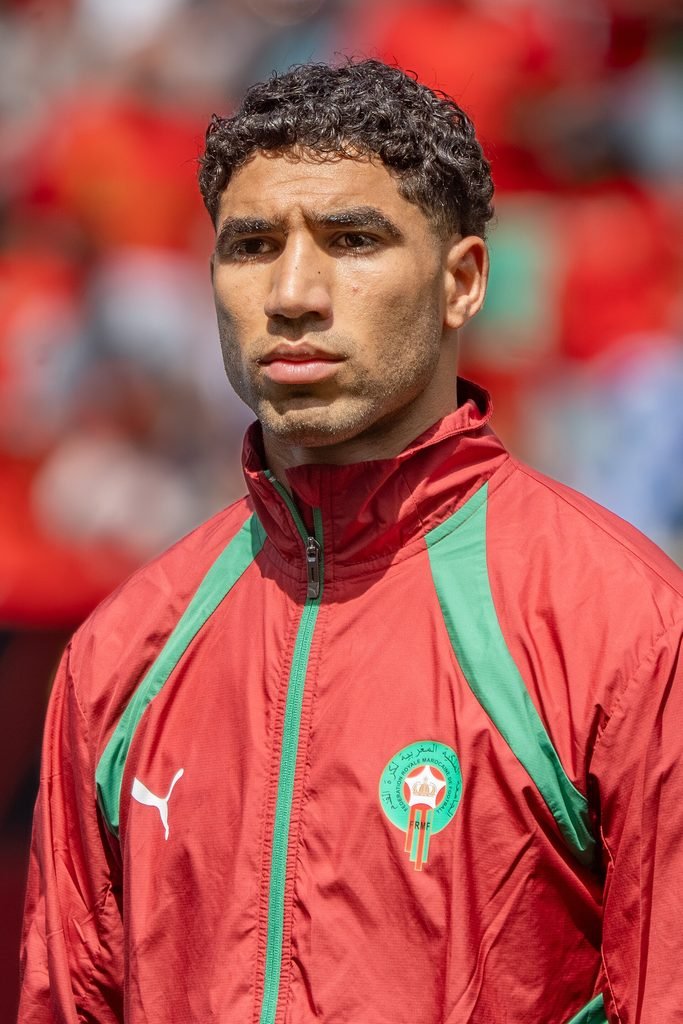
Hakimi, on the shortlist for a second straight year, captains Morocco and plays for Paris Saint-Germain, who beat Arsenal in the Champions League final in Budapest on 30 May and put a record ten players on the shortlist. Three of them finished above him: Khvicha Kvaratskhelia in sixth, Dembélé in seventh and Ruiz in tenth. Mané plays for Al-Nassr in Saudi Arabia, outside the European leagues that supply 27 of the 30 names.
The World Cup explains part of the gap. Nine African teams reached the knockout rounds, more than ever before: Algeria, Cape Verde, Côte d’Ivoire, DR Congo, Egypt, Ghana, Morocco, Senegal and South Africa. None reached the semi-finals. Senegal led Belgium 2-0 in the round of 32 and lost 3-2 after extra time, conceding a late penalty, and Mané retired from international football soon after. Morocco beat the Netherlands on penalties in the round of 32 and reached the quarter-final, four years after becoming the first African team to play in a World Cup semi-final. After the exit, Hakimi wrote on X that Morocco “continues to write its history.”
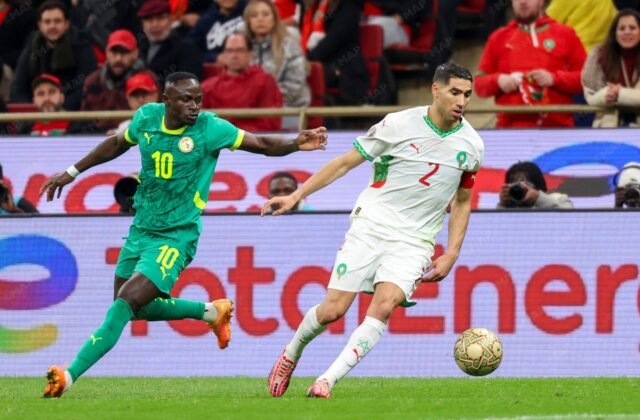
That quarter-final put the diaspora pipeline on one pitch. In Boston, Hakimi, born in Madrid to Moroccan parents, faced Mbappé and Dembélé, who both have African heritage and play for France. Morocco goalkeeper Yassine Bounou saved a first-half penalty from Mbappé, but Mbappé scored in the 60th minute, and Dembélé added a second in the 66th. France had 22 shots to Morocco’s five, and the 2-0 scoreline matched the 2022 semi-final between the same teams.
Chawinga Breaks Into The Women’s Top Ten
The women’s Ballon d’Or is a separate ranking, and it is where an African national broke through. Putellas won it, and Chawinga, the Malawi forward, finished tenth, one place behind England’s Alessia Russo and below Poland’s Ewa Pajor, Jamaica’s Bunny Shaw and Haiti’s Melchie Dumornay. Spain placed three players in the women’s top ten, Putellas, Patri Guijarro and Clàudia Pina, as it did in the men’s. The previous best by an African woman was Zambia’s Barbra Banda, 12th in 2024, AfricaSoccer reported. Banda fell to 18th this year. Chawinga rose seven places from 17th in 2025, and this was her second nomination.
Aitana Bonmatí, who won the previous three editions, missed most of the season through injury and was not shortlisted. The jury follows a design similar to the men’s: representatives from the top 50 nations in the women’s rankings each rank ten players from 30 nominees, Forbes reported.
Chawinga is 28 and Malawi’s vice-captain. She won the NWSL’s Most Valuable Player and Golden Boot awards in 2024 and 2025 and in 2025 became the first NWSL player to score 20 goals in a regular season. For the voting period, AfricaSoccer reports 15 goals and three assists in 22 matches.
Kansas City won the 2024 NWSL x Liga MX Femenil Summer Cup and the 2025 NWSL Shield with her in the side. Before that, she won four consecutive Chinese Women’s Super League titles with Wuhan Jianghan University from 2020 to 2023 and finished as the league’s top scorer in 2022 and 2023. In 2023, the International Federation of Football History and Statistics named her the world’s best top goal scorer.
Kansas City is the only NWSL club with two players on the shortlist. Its second, Brazil goalkeeper Lorena, was a finalist for the Yashin Trophy and tied for 28th. Only seven clubs in the world had more than one player in the women’s top 30: Kansas City, Barcelona, Manchester City, Bayern, Lyon, Arsenal and Chelsea. Six of those are European, and Chawinga reached the top ten by way of China and the United States.
Her summer with Malawi added to the case. Malawi were debutants at the 2026 Women’s Africa Cup of Nations and the lowest-ranked nation in the field, 153rd in the world, yet they beat holders Nigeria, Egypt, Ghana and Algeria to reach the final in Rabat. Temwa scored five goals before the final, and her sister Tabitha, the Malawi captain who plays for Lyon, scored four, AFP reported. Cameroon won the final 3-0 on 16 August, and Temwa was just wide with a low shot in a second-half scramble. Reaching the semi-finals had already qualified Malawi for the 2027 Women’s World Cup in Brazil, alongside Cameroon, Algeria and Morocco.
In Malawi, fans hailed the result as a proud moment for the country and for African women’s football, Nyasa Times reported, and Vice-President Jane Ansah joined First Lady Gertrude Mutharika in congratulating her. Ansah said the result raised Malawi’s profile and showed that local talent can compete with the best, and she urged young Malawians to draw on it ahead of the Scorchers’ World Cup debut.
Kane took the trophy, and the African numbers sit further down: two African nationals in the men’s top 30 and one African woman in the women’s top ten. Chawinga takes Malawi to Brazil next year for the country’s first Women’s World Cup.
About the Author


0 Comments