
Nairobi 2029: The World Athletics Championships Finally Come to Africa
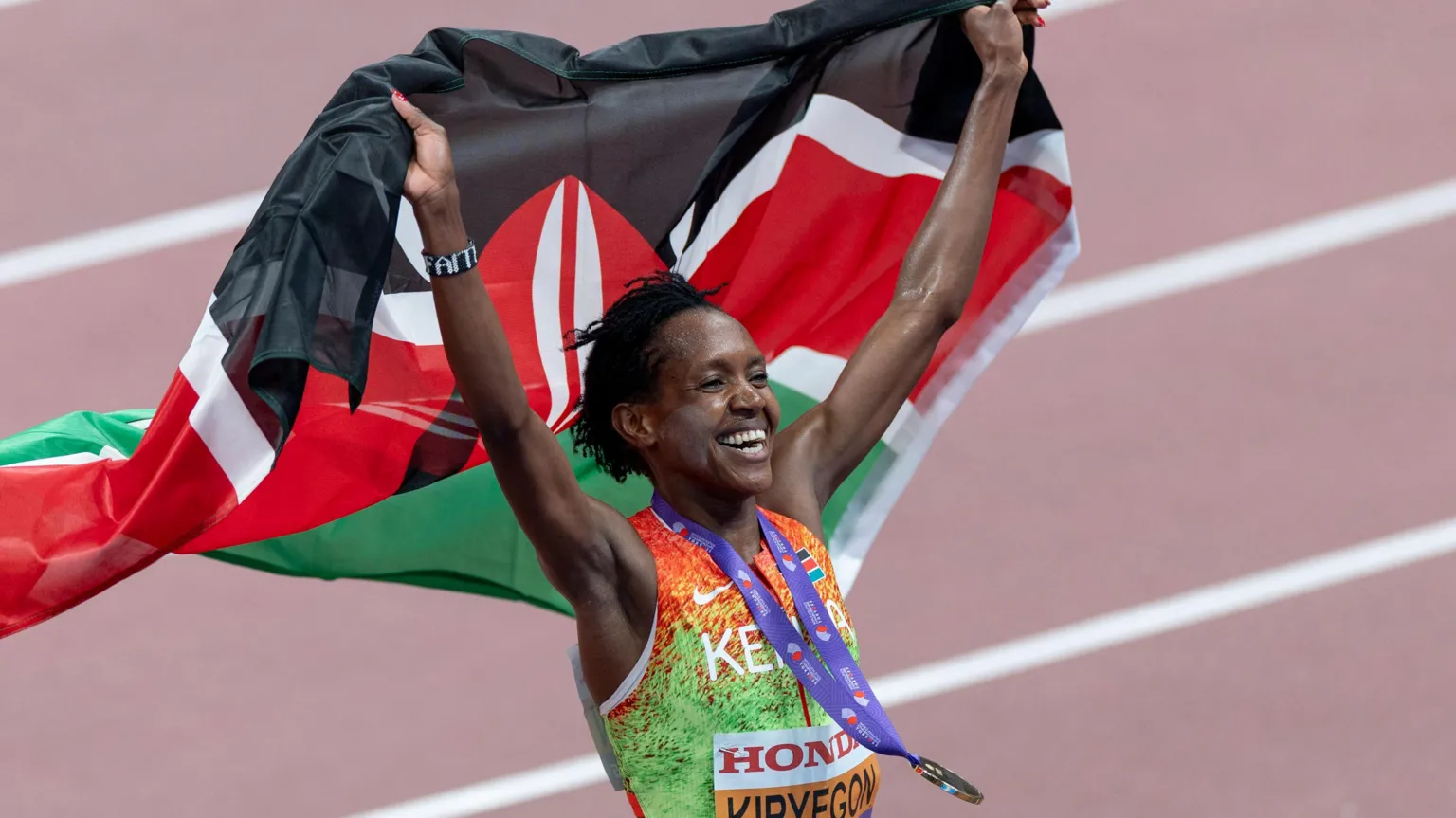
In April, Sabastian Sawe crossed a finish line in London in 1:59:30, the first man to run an official marathon under two hours. He was born in Barsombe, a Rift Valley village, to a father who farmed maize; he was raised mostly by his grandmother, and BBC reporting on his rise once called him “the pacer who forgot to stop”, after he ran away with a race he was only meant to be pacing. He broke his sport’s oldest barrier abroad. Five months later, the sport is coming to him.
On 15 September, World Athletics awarded Nairobi the 2029 World Athletics Championships, the first time the senior outdoor championship has been held in Africa. Munich takes 2031. World Athletics president Sebastian Coe said the governing body had been “fortunate to have four outstanding bids for 2029 and 2031”, with Nairobi, Munich, London and Rome all assessed together before the Council split the two editions between them.
Why Kenya?
Kenya had bid before, for 2025, and lost to Tokyo. Evaluators reportedly raised concerns about stadium readiness and development timelines at the time. Barnaba Korir, who worked on the successful 2029 bid, put it more simply: “there were areas that we did not score well.” This time, Kenya returned with financial guarantees, a rebuilt stadium underway, and a number that mattered as much as either: 68% of Kenyans surveyed rated their interest in athletics as high, against a global average of 39%, giving Kenya the highest net promoter score, a measure of how likely fans are to recommend the sport, of any market World Athletics tested.
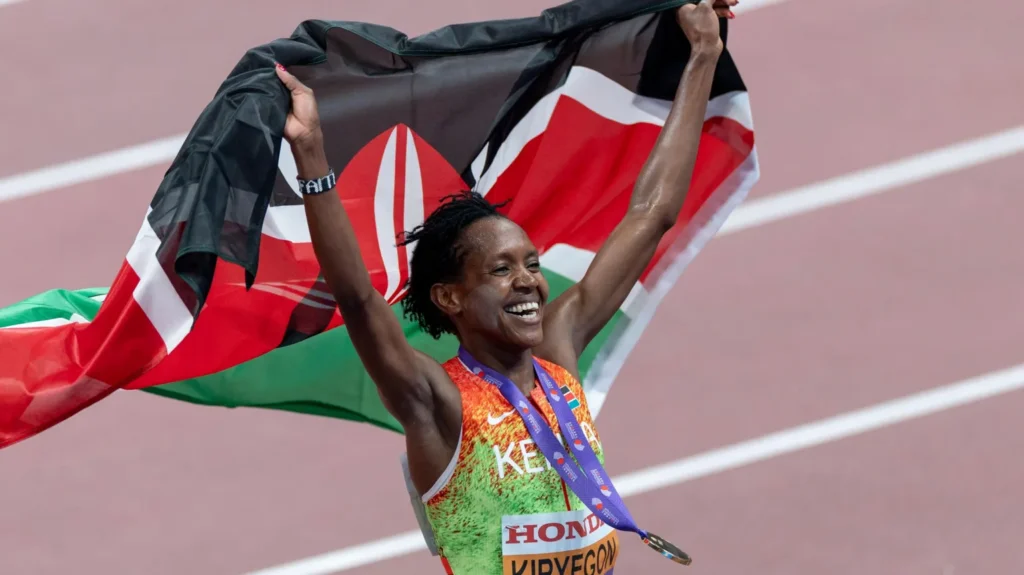
Athletics ranks second only to football among Kenyan sports, by World Athletics’ own account. Sprinter Ferdinand Omanyala said hosting had “always been a dream” for Kenyan athletes, most of whom have only ever competed for medals somewhere else.
Why This is Different for Africa
Africa is not new to hosting global athletics. Kampala ran the World Cross Country Championships in 2017, Nairobi itself hosted the World U18s that same year and the World U20s in 2021, and Gaborone staged the first World Athletics Relays held on the continent in 2026. The senior outdoor World Championships—the specific first Nairobi representation and the event that sits below only the Olympics are not included. It also isn’t only Kenya’s moment. Ethiopia, Kenya’s fiercest distance-running rival, sits in the same highest-risk doping tier, and Morocco and South Africa carry their share of the continent’s track history, which means 2029 will be read across the region as proof the continent can host, not just supply talent to someone else’s stage.
Who Gets To Run At Home
The more compelling question isn’t which Kenyan legend will be there in 2029. It’s which generation will still be. Coe, announcing the decision, named Faith Kipyegon, Vivian Cheruiyot, Eliud Kipchoge, Hellen Obiri and David Rudisha among the athletes who “shaped the history” of the sport, a list that includes the 800m and 5,000m as well as the marathon. Kipyegon, Emmanuel Wanyonyi, Beatrice Chebet and Mary Moraa currently carry that range into the present. Four years is a long time in elite sport. Some of them will still be competing at Kasarani. Others may be watching whoever replaces them. Nobody gets to know that yet, and that uncertainty is part of what makes a home championship worth watching rather than just attending.
The Uncomfortable Question
Kenya remains in the Athletics Integrity Unit’s Category A, the tier combining the highest doping risk with the highest level of athletic success. The AIU’s current list includes eight federations for 2026: Belarus, Bahrain, Ethiopia, India, Kenya, Nigeria, Russia and Ukraine. That status brings extra testing: athletes must complete three unannounced, out-of-competition tests in the ten months before a major championship. The AIU’s own Global List of Ineligible Persons, last updated 1 July 2026, is where the specific count comes from: 148 Kenyan names among 736 worldwide, second only to India’s 161, by one outlet’s tally of that list.
Marathon world record holder Ruth Chepng’etich is currently serving a three-year ban.
Kenya’s government pledged $5 million a year for five years toward testing and investigations in 2022, after Coe warned that suspension was possible. That funding stopped in 2024, which Xinhua reported followed the tax protests that swept the country that year, before officials recommitted to the pledge in 2025. What’s unresolved isn’t whether Kenya deserved the bid. It’s whether four years is enough time to demonstrate that reforms interrupted once can be sustained through a global spotlight.
Can Nairobi deliver?
Nairobi has done something close to this feat before. The 2017 World U18 Championships filled Kasarani with 60,000 fans a session, with no major security incidents reported across the week, and World Athletics pointed to that event as the foundation for the 2029 bid. It’s a smaller precedent than a senior World, but a real one. The stadium requirement itself is precise: a minimum of 30,000-seat capacity holding a Class 1 Athletics Facility Certificate, a standard about track and field measurement accuracy, not just seats filled. Kasarani, mid-overhaul for AFCON 2027, which Kenya is co-hosting with Uganda and Tanzania, is projected to hold around 48,000, clearing that bar on paper. President Ruto has personally backed the bid, telling World Athletics that his government would deliver “world-class security systems to ensure a safe, secure and welcoming environment” and expedited visas for arriving delegations.
AFCON gives Kasarani a major live test two years before the Worlds. It doesn’t answer the rest. The bigger test isn’t the stadium. It’s whether the organising committee, the county authorities and the transport network can function as one system for ten straight days of global athletics, at a scale nothing in Nairobi has attempted before.
What remains after 2029?
That’s the real stakes of this bid. A championship this size can leave behind a certified stadium, trained officials, and a generation of young Kenyans who watched the world’s best compete at home instead of on television. It can just as easily leave behind a venue built for two loud weeks and quiet in between, once the broadcasters and sponsors move on to Munich. Which of those Kenyans gets to benefit will depend on planning that is happening now, not on anything that happens in 2029 itself.
Sawe ran his 1:59:30 on borrowed roads. Kenya has spent decades sending its best to compete somewhere else. Now somewhere else is home.
About the Author





2 Comments
Investors, Athletes and Dakar’s Mayor to Meet at AFRICA RISE’s New Playbook Summit - African Football News
Investisseurs, athlètes et maire de Dakar se rencontreront au sommet « New Playbook » d’AFRICA RISE - BOX18 Africa