
The $20B FIFA Mutiny: How UEFA and CAF Are Turning Gianni Infantino’s Scrapped Stake Sale into a Civil War
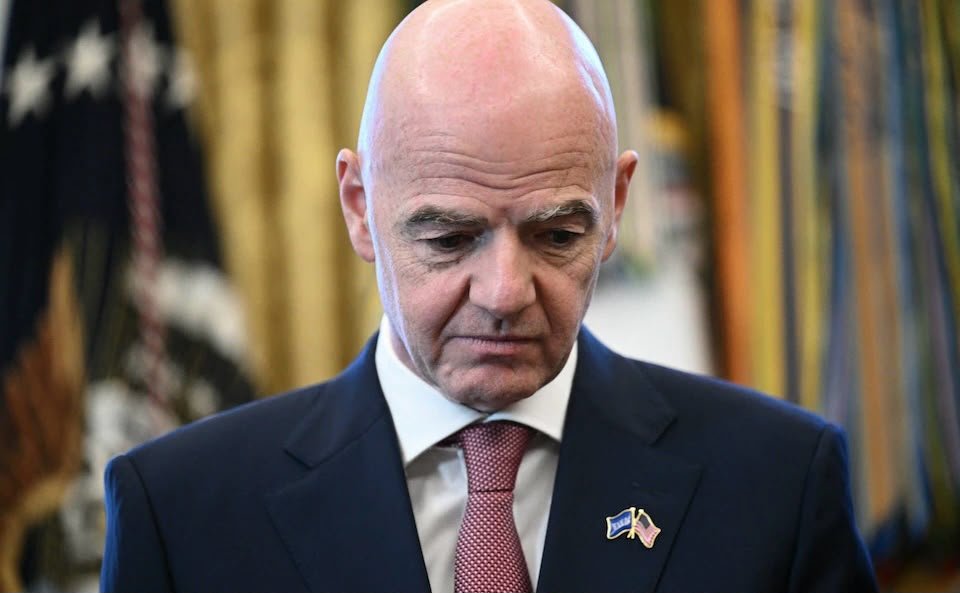
Gianni Infantino spent years building a strong political coalition inside FIFA. Then, within days, his plan to turn the governing body’s commercial machine into a $20 billion investment vehicle blew up in his face.
FIFA Forward Enterprise was supposed to raise up to $4.2 billion by selling minority stakes in a FIFA-owned commercial subsidiary. Instead, the proposal triggered an institutional revolt.
UEFA has declared that it has lost confidence in Infantino, CONCACAF and the Asian Football Confederation have joined the challenge, and several national associations have withdrawn their support for his re-election. Infantino scrapped the plan on 1 August and apologised. It did not end the fight.
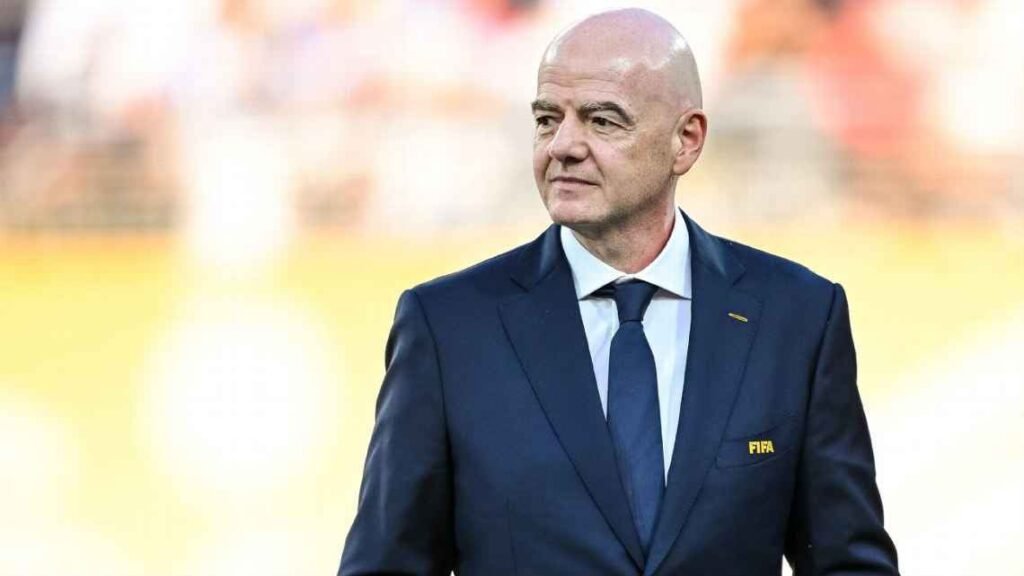
Africa’s 54 votes give Infantino his strongest political shield, but CAF’s endorsement is not the same thing as 54 guaranteed votes. Reuters reports that some African federations are keeping their options open, while countries including Egypt, Morocco and Niger have backed him and Malawi’s federation president has defended his record on development.
The question heading into the 2027 FIFA Congress is therefore bigger than whether Infantino can survive the FFE disaster.
It is whether he can keep the coalition that has carried him through FIFA’s corridors of power.
Infantino Put a Price on FIFA’s Crown Jewels
FIFA proposed creating a new commercial subsidiary that would bring together broadcasting, sponsorship, licensing, ticketing, hospitality and the operational delivery of its major events. The organisation would retain control, while outside investors would buy minority, non-controlling interests.
FIFA put an implied equity valuation of $20 billion on the vehicle and planned to raise as much as $4.2 billion from investors. FIFA’s stated argument was to bring in long-term capital, unlock commercial value and recycle more money into football development.
On paper, it was a financial engineering exercise. In football politics, it was something much bigger.
FIFA’s commercial rights sit at the centre of a global money machine. The World Cup is the crown jewel, but the package also includes the rights attached to other FIFA competitions and events.
Handing minority stakes in that machine to private investors would have created a new layer of financial interests around properties that continental confederations, leagues and national associations regard as part of football’s institutional ecosystem.
UEFA and other confederations complained that they had been blindsided. Regional bodies said they had learned about the proposal through the media, while UEFA warned that the plan threatened to commodify the sport and raised concerns about governance and transparency.
FIFA said the scheme could expand development funding dramatically. The organisation proposed an optional $20 million in immediate Fast Forward funding for projects and a further $20 million per member association for the 2027–30 Forward cycle, compared with the $8 million currently budgeted.
That was the political genius of the proposal. It put commercial capital and football development in the same conversation.
It also made FIFA’s opponents wonder whether the development cheque was becoming part of a much larger redistribution of power.
Why UEFA Went To War
European football has built a big commercial ecosystem of its own. The Champions League, domestic leagues, club broadcasting deals, sponsorship markets and European competitions generate billions without UEFA needing FIFA to fund their basic football infrastructure.
That gives UEFA room to fight over governance.
FIFA’s proposed structure threatened to move a different kind of money into the hands of outside investors while increasing FIFA’s commercial reach. UEFA’s concern was therefore about more than one proposal arriving without enough consultation. It was about who gets to shape the commercial direction of world football.
If FIFA can create a commercial subsidiary, attach some of its most valuable rights to it, bring in institutional investors and use the proceeds to expand its development programmes, it strengthens FIFA’s financial and political centre.
That can leave continental confederations negotiating with a more powerful Zurich.
UEFA did not want to wait and see where that road led.
UEFA declares loss of confidence in Gianni Infantino's leadership. 🚨
— Sky Sports News (@SkySportsNews) August 1, 2026
In a statement, UEFA added: "The proposal has gone. The task of rebuilding trust in FIFA has only just begun." 🗣️ pic.twitter.com/bZYNxrL8hQ
By the end of July, the dispute had escalated into threats of non-participation in FIFA competitions. After FFE was withdrawn, UEFA made clear that FIFA had to provide assurances that similar attempts would not happen again. UEFA also said its loss of confidence in Infantino remained.
That second demand is the one Infantino cannot solve with a press release. The money can be returned, but the trust problem cannot.
Infantino Has a Tie With Africa
CAF has 54 member associations. UEFA has 55. On a spreadsheet, the two blocs almost cancel each other out.
In reality, African football’s relationship with FIFA is much more complicated.
FIFA says its Forward programme has invested $5 billion in football development over the past decade. For the 2027–30 cycle, Forward investment is expected to rise to $2.7 billion. All 211 member associations are entitled to funding.
That money reaches places where commercial football revenue often does not.
Malawi offers a useful example. Its federation president, Fleetwood Haiya, told Reuters that FIFA investment in grassroots and women’s football helped create the conditions for Malawi’s historic qualification for the 2027 Women’s World Cup.
He said he still preferred Infantino, while acknowledging that the collapse of FFE raised questions about how smaller associations would receive comparable funding in future.
That is a much more revealing African position than simply saying CAF likes Infantino.
For Malawi, FIFA money has a visible football footprint.
For Morocco, FIFA’s relationship is also tied to a country that is now one of the continent’s most powerful football economies and is co-hosting the 2030 World Cup. Morocco has backed Infantino alongside Qatar, Egypt, Lebanon, Sudan and Mauritania.
Those countries do not all have identical interests. Neither does Africa.
Reuters reported on 13 August that CAF’s formal endorsement does not guarantee all 54 African votes. African federations have previously voted independently of CAF’s preferred candidate, and some are taking a wait-and-see approach until they know whether a serious challenger emerges before the November 18 nomination deadline.
That changes the political calculation.
CAF’s President Patrice Motsepe and the body’s executive committee can support Infantino as a bloc. Individual federations still hold their own ballots. And that makes Africa something more interesting than Infantino’s political shield.
CAF Is Protecting More Than Infantino
African football has spent decades trying to close a financial gap with Europe. The continent produces elite players but retains a much smaller share of the money generated by the global football economy. Many domestic leagues struggle commercially, while national associations depend on international tournament income, sponsorship and development funding to keep their programmes running.
FIFA Forward sits inside that reality.
When FIFA increases development funding, the effect is felt in places where a European club can simply call on a much deeper commercial market.
That does not make African federations incapable of criticising FIFA. It means they have a different risk calculation.
If Infantino goes, what happens to the funding model he has expanded?
Whoever replaces him would have to answer that question before asking African associations to abandon him.
That is why the opposition needs more than a governance argument. It needs an African offer.
Telling African federations that Infantino is too powerful will not be enough. A challenger would have to explain what happens to Forward funding, infrastructure programmes, women’s football, youth development and the political influence African football has gained inside FIFA.
Europe can afford to make governance its first question. An underfunded federation in Africa has to ask what comes after the vote.
The Opposition Has Grown. It Still Has No Election Winner
Infantino’s opponents are no longer confined to UEFA.
CONCACAF and AFC have joined UEFA in demanding changes, while several national associations have withdrawn their support. New Zealand became the latest notable defection on 14 August, withdrawing its backing for Infantino even as the Oceania Football Confederation itself expressed support for him.
That gives Infantino’s opposition a strong standing. It does not yet give them the votes.
FIFA has 211 member associations. A candidate facing one challenger needs 106 votes for a simple majority. That makes the arithmetic hard for UEFA and the other oppositions.
They therefore need Africa, Asia, CONCACAF, Oceania or South America to defect in sufficient numbers. Infantino needs to prevent that coalition from forming.
Then There Is The Personal Damage
The Daily Telegraph reported allegations surrounding a six-figure departure payment made by UEFA to a former female employee during Infantino’s tenure as UEFA general secretary. UEFA has confirmed that a departure payment was made and said it complied with the rules in force at the time. It also said its rules have since been tightened.
Infantino strongly denies the allegations surrounding the relationship and any wrongdoing. FIFA has called the claims false and defamatory.
Those facts need to remain separate.
A payment has been confirmed. The alleged relationship and any suggestion that the payment represented compensation for misconduct have not been established as facts.
Politically, however, the timing is difficult for Infantino.
The allegations have resurfaced while UEFA is challenging his presidency, national associations are withdrawing support and his administration is fighting claims that power has become too concentrated around him.
The story therefore feeds the larger governance argument, even without proving misconduct.
His opponents are no longer fighting over the FFE proposal alone. They are fighting over the credibility of the man who proposed it.
Rabat Is Where The Numbers Become Real
FIFA has confirmed that its 77th Congress will take place in Rabat on 18 March 2027, when the presidential election is scheduled.
That gives both camps time.
Infantino can repair relationships, reinforce his African support and make sure the benefits of FIFA’s development programmes remain visible before the vote.
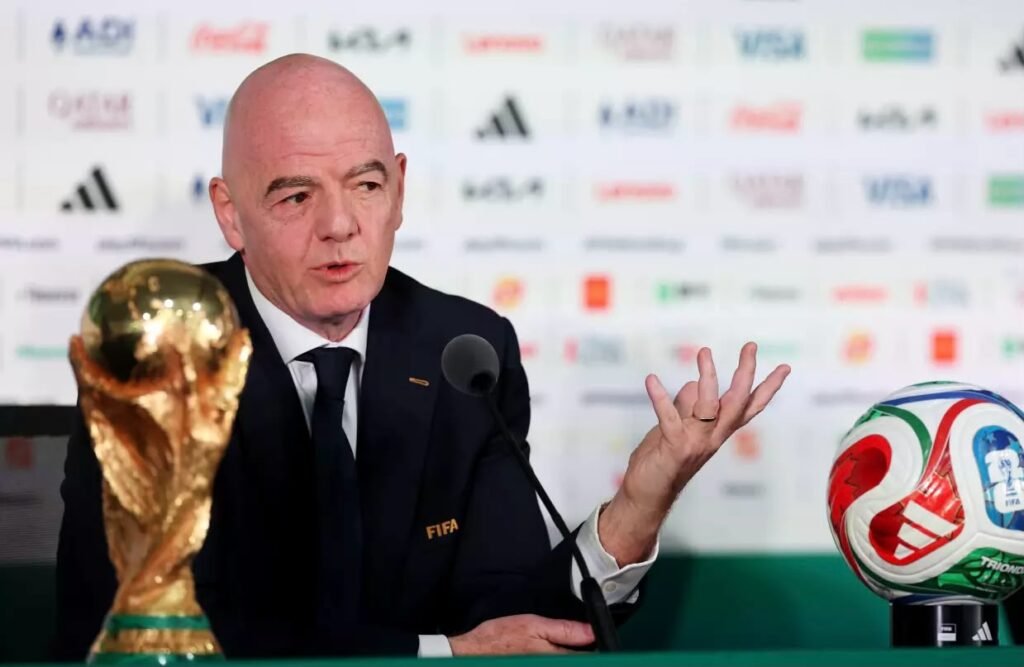
His opponents have a harder organisational task. They need a candidate. They need a programme. And they need an offer that can travel beyond Europe.
CONCACAF president Victor Montagliani, UEFA president Aleksander Ceferin, AFC president Salman bin Ibrahim Al Khalifa, Paris Saint-Germain president Nasser Al-Khelaifi, and President of the Norwegian Football Association Lise Klaveness have emerged as possible challengers to Infantino.
The $20 billion stake-sale plan is gone. The 2027 election is on the way.
There is a question hanging over Infantino’s presidency now. Can he keep enough of FIFA’s 211 member associations on his side to win another term, after the commercial gamble that triggered this revolt?


0 Comments