
Beyond “Here We Go”: The Hidden Chaos of Football Transfers

Millions of fans worldwide watch deadline-day broadcasts during every football transfer window, searching social media feeds for the coveted phrase “Here We Go!” We see high-definition videos of superstars stepping off of private jets, holding up crisp new jerseys, and signing multi-million-dollar contracts.
When Galatasaray paid Napoli €75 million for Victor Osimhen last summer, the contract contained a detail that was almost as important as the transfer fee. Napoli will receive 10% of whatever Galatasaray sells him for next. Osimhen doesn’t need to touch the pitch again for that clause to hold value. It’s already in position, ready to go.
🚨🟡🔴 BREAKING: Victor Osimhen to Galatasaray, here we go! Deal done and all documents have been approved.
— Fabrizio Romano (@FabrizioRomano) September 2, 2024
Osimhen’s release clause will be €75m with Napoli option to extend until 2027.
Loan move to Gala until June 2025, €9/10m salary covered.
No buy option, no obligation. pic.twitter.com/Cc7lAYPPW6
This is the first thing to understand about a transfer. The number in the headline is the opening line of the contract, not the closing.
Here’s the second thing. Osimhen’s name has been on some version of that ledger since he was a kid in Olusosun in Lagos, learning the game at Ultimate Strikers Academy. Wolfsburg paid to sign him from there. So did Charleroi, then Lille, then Napoli, then Galatasaray, each one buying him from the last.
According to FIFA’s regulations, each of those clubs is theoretically required to give a small percentage back to the academy that developed the player. Whether that academy has ever truly received the funds is a different, more complicated matter. Hang tight, because we’re about to dive in.
So what actually happens when a football transfer is announced?
Here’s the quick rundown. The fee that made headlines is just a single line in a much larger playbook. The document covers the details of agent fees, signing bonuses, appearance-based incentives, sell-on percentages, and two distinct FIFA payment systems.
It outlines training compensation and the solidarity mechanism, which are designed to ensure that funds flow back to the clubs that nurtured the player during their formative years.
For years, the final aspect has struggled to produce results for African academies. It is currently the most dynamic segment of the industry, and it is critical to understand it fully.
The fee is the opening bid, not the invoice
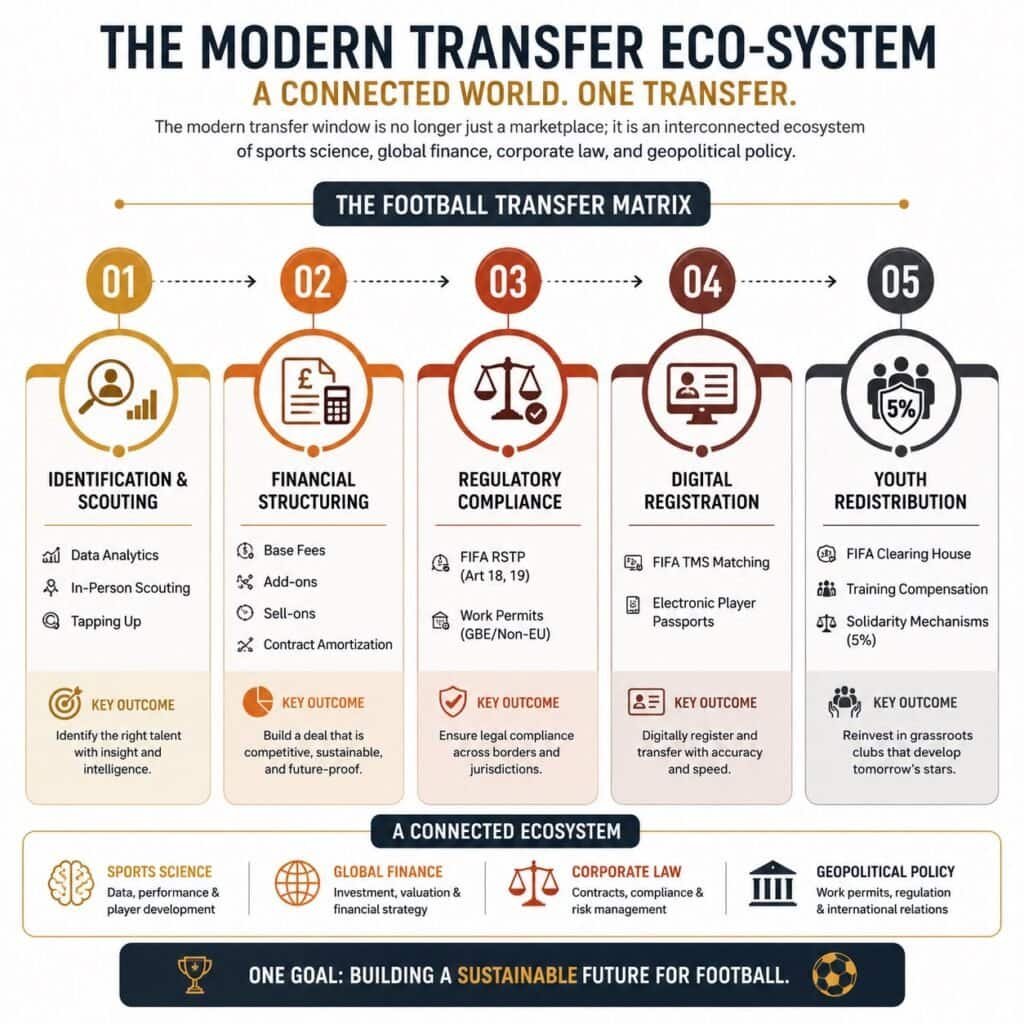
Most transfers kick off with scouting, often years before any journalist breaks the news. A recruitment team compiles a dossier on a player, including match footage, performance statistics, medical history, and character references.
When a club decides to make a move, it clearly understands how the player will integrate into its strategy. That’s why a modern transfer operates more like a corporate acquisition than a straightforward buy.
The reported fee rarely matches what’s paid on day one. A deal splashed as “£30 million” might really be £20m guaranteed, £5m if the player hits a set number of appearances, and £5m additional if the purchasing club secures a spot in European competition.
Those extras are just standard add-ons, typically included in nearly every deal that exceeds a certain size. It’s one of the key factors that allows two clubs to present varying figures for the same transfer while both maintaining their integrity.
Once both sides show interest, the teams hash out the transfer fee. It’s uncommon to see a transaction where the payment is made all at once. Instead, agreements are organised through:
- Guaranteed Base Fees: Disbursed in consistent payments over a span of multiple years.
- Performance Add-Ons: Bonus payments linked to player appearances, team achievements, or personal honours (such as qualifying for the Champions League or finishing on the Ballon d’Or podium).
What agents are actually negotiating
Agents often find themselves painted as the antagonists in every transaction, taking a slice for simply making a call. In the real game, the savvy players are hashing out wages, contract duration, release clauses, and image rights all at once alongside the transfer fee. If you get the fee right but miss the other aspects, it’s still a losing play.
Nigeria and Ghana have experienced a significant surge of FIFA-licensed intermediaries establishing robust operations in this field over the last few years. Bodies such as the African Football Agents Association are established to transform a field that traditionally relied on informal agreements and personal connections into a more structured and professional environment.
Release clauses: the number designed to end the conversation
A release clause, also called a buyout clause, is a specific amount included in a contract that allows any club to pay that sum and initiate discussions with the player directly, without needing consent from the selling club.
In Spain, the law mandates that every professional contract in La Liga includes a specific clause, which is why the country has become known for some of the most iconic instances in football history.
Neymar’s buyout clause at Barcelona was established at €222 million. When Paris Saint-Germain settled the full amount in 2017, it marked the largest transfer fee ever recorded in the history of the game, a record that still stands today. Some clauses are truly attainable. Many clubs set their prices at a level that causes a buyer to reconsider rather than actually complete the payment.
African clubs rarely have the opportunity to include one of these in a transfer deal. On that side of the market, it’s clear that the buyer is still calling the shots when it comes to valuations. The next two mechanisms hold significant importance in the business of African football for precisely that reason.
Sell-on clauses
A sell-on clause hands a selling club, or an academy, a cut of whatever fee a player commands the next time he’s sold.
Right to Dream, the Ghanaian academy that signed Mohammed Kudus at 12, went a step further than that. In 2015, it bought Danish top-flight side FC Nordsjælland outright, marking the first time an African not-for-profit had ever bought a European club. From that point on, every academy graduate who made it to Denmark was playing for a club Right to Dream actually owned.
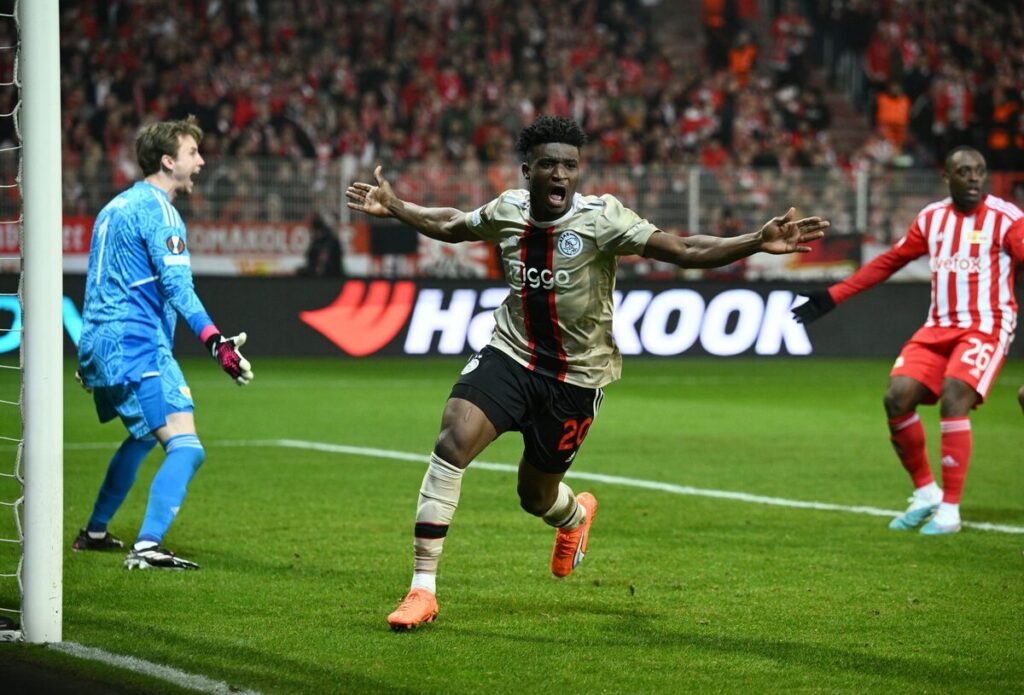
Kudus joined Nordsjælland as a free agent at 18. Two years later, Ajax paid €9 million for him. West Ham paid Ajax €43 million for him in 2023. Tottenham then paid West Ham a reported €63.8 million for him last summer.
Right to Dream had no direct stake in either of those last two deals on paper. But under FIFA’s solidarity rules, a foreign academy that trained a player between the ages of 12 and 23 is entitled to a cut of every transfer that follows, even a purely English-to-English sale between West Ham and Tottenham, because Kudus’s own history carries an international dimension with him wherever he goes.
Ernest Nuamah moved to Lyon for €25 million. Ibrahim Osman moved to Brighton for €19.5 million. Kamaldeen Sulemana moved to Rennes for €17 million. All three attended the same academy. This is what a truly modern African football business looks like: a scalable pipeline with its own financials.
The African Pipeline
Africa’s position in the global transfer landscape showcases significant export potential while also revealing economic fragility beneath the surface. FIFA transfer market analyses show that sub-Saharan giants such as Nigeria and Ghana are consistently among the top exporters of professional football talent, facilitating hundreds of outbound transfers each year.
While these transfers rack up significant fees, most of the financial power remains concentrated in the European leagues. Top players such as Victor Osimhen, Achraf Hakimi, and Bryan Mbeumo hold impressive market values, highlighting that while African talent shapes the landscape of elite football today, the institutions on the continent only retain a small fraction of the wealth created.
The funds that actually make it to African clubs are frequently just a small portion of the announced amount. Numerous transactions include intermediary clubs in the lower tiers of European leagues that act more as short-term storage solutions than authentic development environments.
In one noteworthy instance, a young player is quickly transferred through a “stepping-stone” club; the African club that nurtured him only gets a meagre training fee, and large amounts of the final transfer fee are diverted into agent commissions, offshore arrangements, or the intermediary club itself.
Since they don’t appear in the official records, academies that are unregistered or have insufficient documentation frequently find themselves totally excluded from solidarity payments. The claims are further complicated by the fact that some African associations have not fully recorded outbound transfers, according to FIFA’s reports.
For its continental competitions, the Confederation of African Football (CAF) has worked to professionalise club licencing and registration, bringing some regulations closer to those of UEFA standards and extending registration windows to give clubs greater flexibility. These are positive steps, but they address only part of the ecosystem.
Intra-African transfers have seen significant growth as the financial power of stronger domestic leagues and clubs in the Gulf or North Africa starts to rival the offers from lower-tier European teams. Some players are weighing the reliability of consistent play and better pay at home against the uncertain appeal of sitting on the sidelines in Europe.
Clubs such as Mamelodi Sundowns, Al Ahly, and Esperance are true giants in the game, showcasing their ability to invest heavily in elite players from all over the continent. This not only strengthens their squads but also gives players invaluable experience in the CAF Champions League.
Domestic leagues throughout Sub-Saharan Africa frequently face challenges due to inconsistent contract enforcement, resulting in numerous contractual conflicts. Players occasionally encounter issues such as delayed salary payments, clubs extending contracts without mutual agreement, or mishandling of their image rights.
The efforts of FIFPRO Africa, along with the revamped FIFA dispute chambers, have played a crucial role in ensuring that African domestic players now have the same legal footing to address contract violations.
Training Compesation and the solidarity mechanism, explained properly
These are the two FIFA systems behind Right to Dream’s numbers, and they apply whether or not an academy is savvy enough to go and buy its own European club.
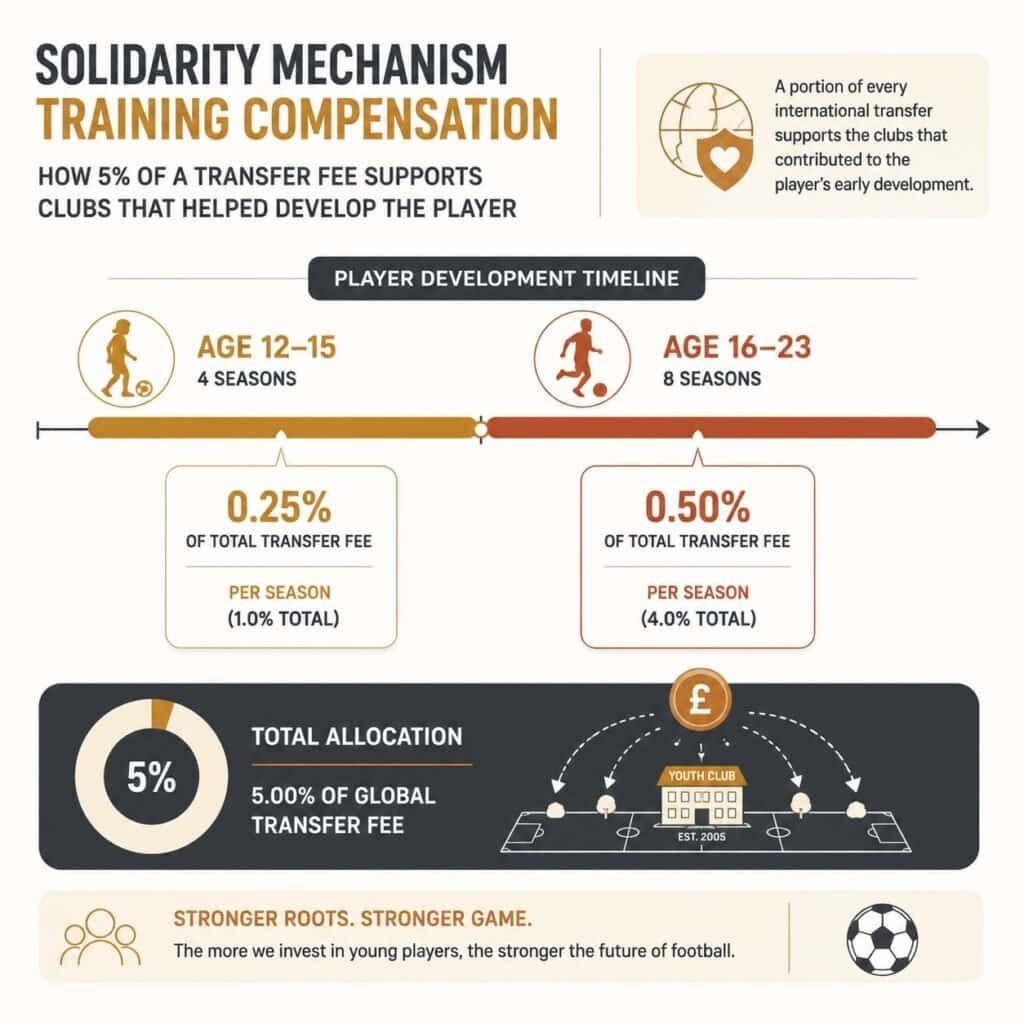
Training compensation is a one-off payment. It’s due when a player signs his first professional contract or moves to a club in a different country before the end of the season of his 23rd birthday, and it rewards whoever trained him between the ages of 12 and 21.
The solidarity mechanism keeps paying out for a player’s entire career. FIFA sets aside 5% of every international transfer fee, whether for a loan or a permanent transfer, and splits it between every club that had the player registered between the calendar years of his 12th and 23rd birthdays, with the later teenage years weighted to count double compared to the under-16 years. Sell a player for €10 million, and €500,000 is carved out before the selling club sees a cent of the rest.
On paper, that’s a solid benchmark for every academy in Lagos, Accra, Bamako, or Dakar that has churned out a professional player. In practice, it’s been one of the sport’s quieter controversies. According to Soccer Laduma, a South African outlet, these payments are collected only about one time in ten globally and even less frequently in Africa, as many academies lack the legal resources to pursue what they are owed.
Loan Deals: The transfer that isn’t quite a transfer
Not every move is permanent. A straight loan sends the player back to his parent club once the agreement ends. A loan with an option to buy allows the receiving club to secure the player permanently, but they aren’t obliged to do so. A loan with an obligation to buy automatically converts once the player meets certain conditions, usually appearances, a promotion, or qualifying for Europe.
Osimhen’s transfer to Galatasaray kicked off as a loan in 2024, eventually morphing into a permanent deal a year later. This approach is becoming increasingly common among clubs, allowing them to assess a player’s fit before committing to the full transfer fee upfront.
Add it all together: the fee, the extras, the agent’s share, the sell-on clause, training compensation, and solidarity payments. A deal that’s said to be worth £20 million often ends up costing more than that and benefits a larger group than what the official announcement suggests.
The Final Whistle: Why It Matters
When you see a player put pen to paper on deadline day, you’re witnessing the result of years of meticulous legal matching, international banking regulations, and scouting networks that stretch across the globe.
Transfers in the sport will always encompass more than just athletic agreements. These are transactions executed in line with the rules of the game. Africa faces significant hurdles, such as ensuring that its players receive a fair share of the value they generate, protecting the vulnerable from being taken advantage of, and building robust local institutions that allow migration to be considered a viable career path instead of a last resort driven by economic necessity.


0 Comments