
The African Ledger on Lionel Messi: 13 Fixtures, an Unbroken Record, and a Farewell Match
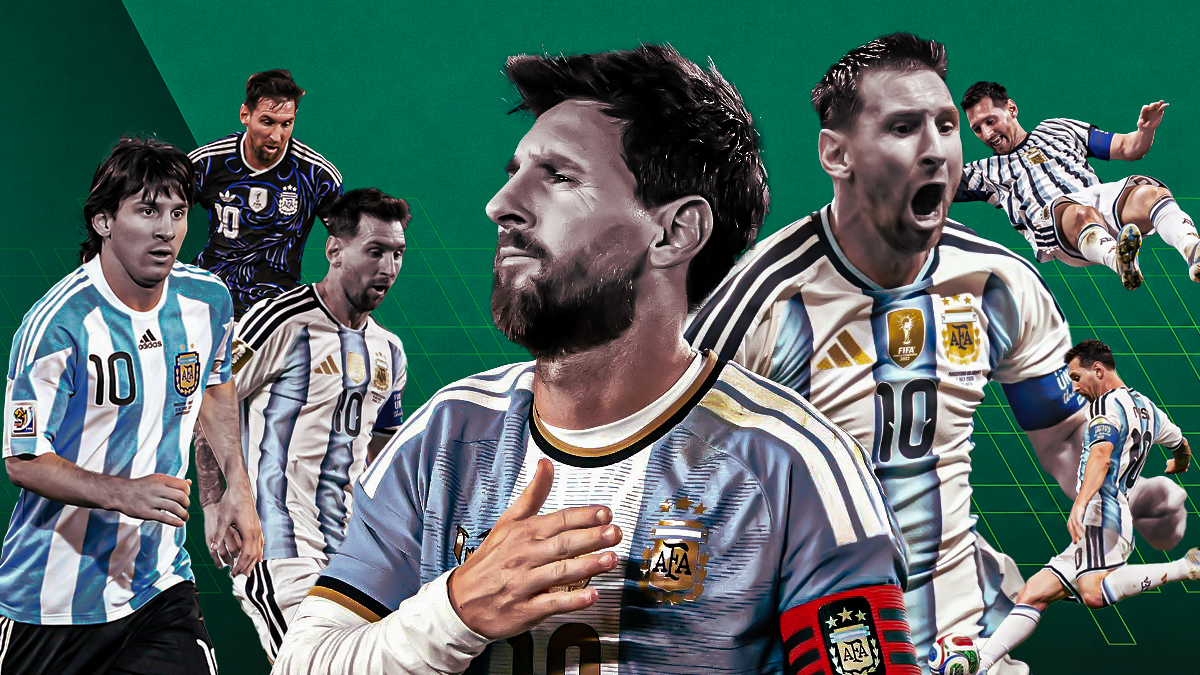
Lionel Messi played thirteen senior internationals against eight African nations, from Angola in 2006 to Benin in Buenos Aires, and Argentina won every one. Cape Verde and Egypt came closest this summer.
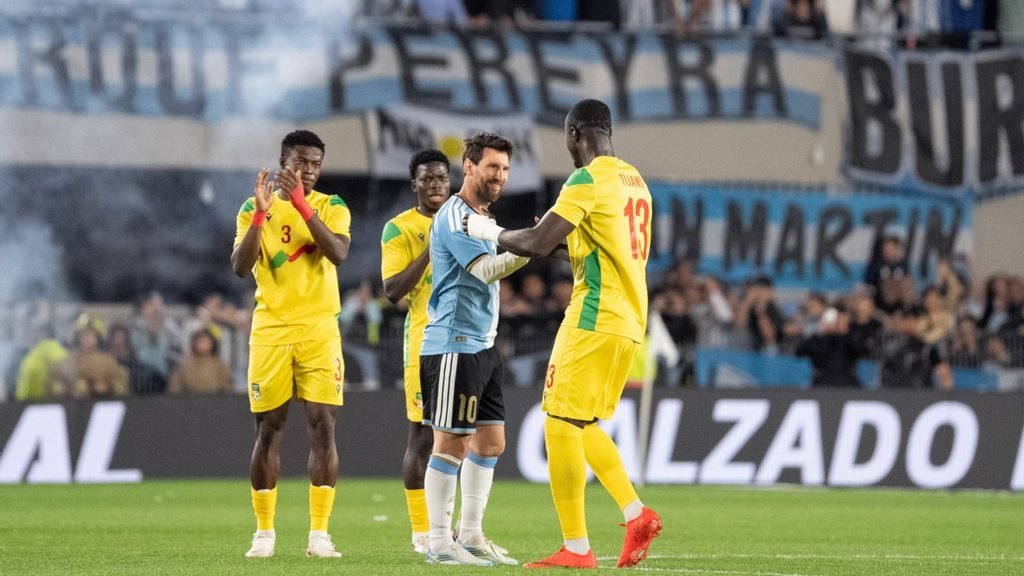
It was after the final whistle at the Estadio Monumental on October 6, after the 3-0, after the penalty, after eighty-five thousand people had spent the nite singing a man out of international football. Argentina were circling the pitch in celebration. Benin had travelled nearly twenty hours to be there, had just lost, and wanted to applaud him as he passed. His assistant coach said that several of them had grown up idolising him.
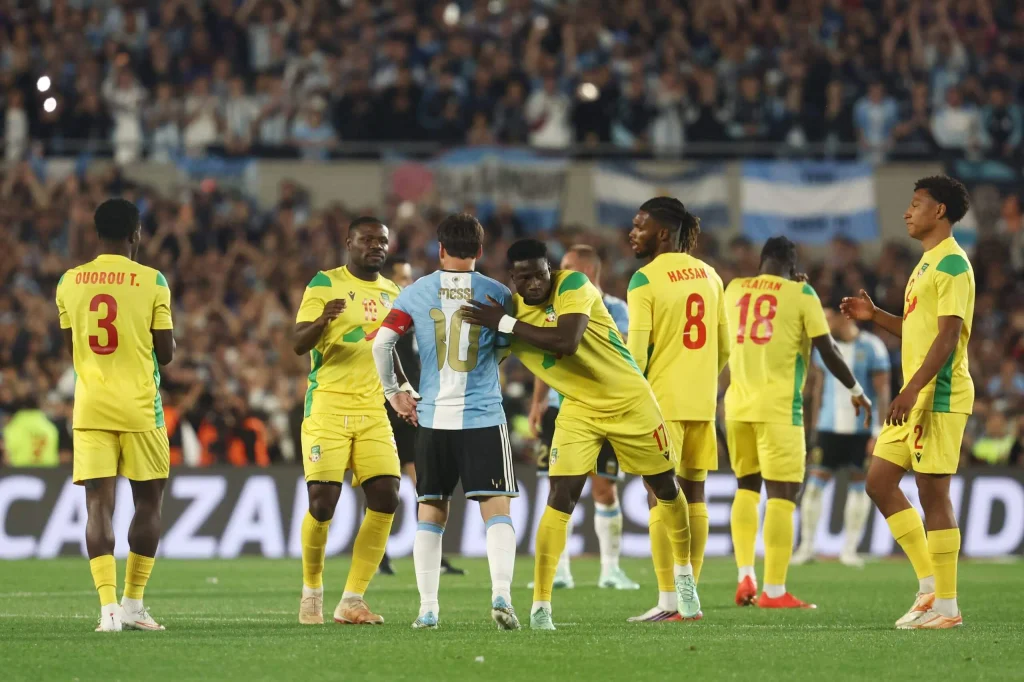
Head coach Gernot Rohr had already spoken on the French radio show Rothen s’enflamme. Benin asked for photographs and shirts and got neither. Security kept the players out of the tunnel and the dressing room. The flowers they brought, in the yellow, red, and green of the national flag, didn’t get through either. The one souvenir Rohr took home was a Messi shirt from 2018 that he’d handed to Lionel Scaloni, who had it signed and gave it back.
The only shame is that the Argentines gave us nothing.
GERNOT ROHR, BENIN HEAD COACH, TO RMC
The night had other moments, and they pointed the other way. When play stopped in the tenth minute for the stadium’s ovation, footage shows Benin players walking over to greet Messi, who received them.
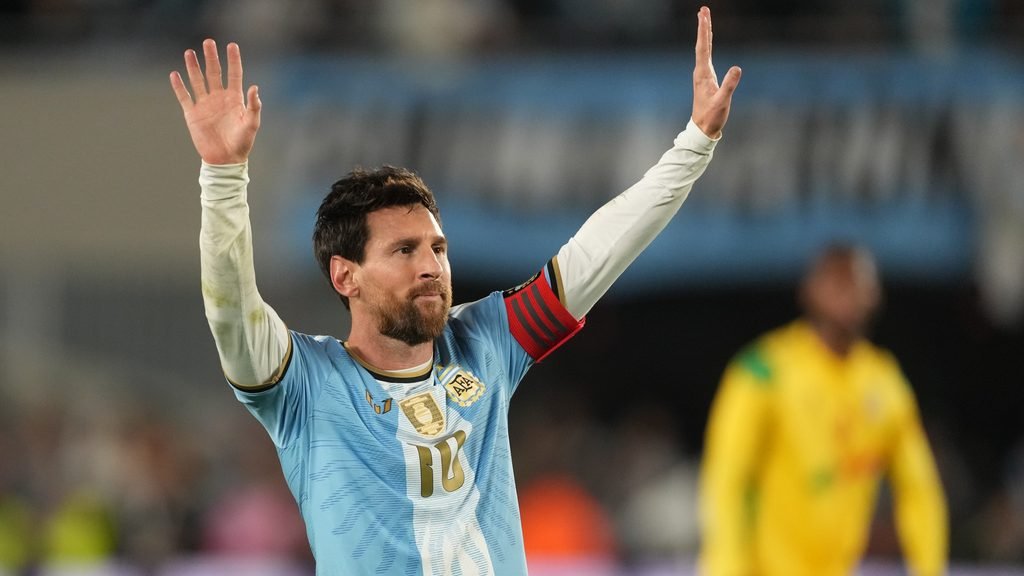
In a separate interview with Pan Africa Football, Rohr lauded Messi’s humility and said the trip will be an experience his young players will never forget. At full time a Benin player pushing hard for a selfie got a cold reaction until his teammate Amiro Amadou pulled him away, and plenty of people online read that as a snub in its own right. Other people online said the Benin players had been told to stay back for the duration of the ceremony. IBTimes UK reported that no one yet knows why Messi changed direction or what instructions security received.
To weigh what Benin did and didn’t get, it helps to see what African football has contributed to Messi’s record. He has played thirteen senior internationals against African sides. Argentina won every one.
PART ONE / THE RECORD
Thirteen Matches, Thirteen Wins, Thirteen Goals
The thirteen represent a diverse lineup of eight nations: Nigeria has made the mark four times, while Algeria and Angola have each secured their spot twice. The remaining nations—Mauritania, Zambia, Cape Verde, Egypt, and Benin—have each made one appearance. Exhibition matches matter. Messi found the back of the net in nine matches, wrapping up the season with a total of thirteen goals. That number pops up three times in one table, showcasing his impressive performance.
| DATE | OPPONENT AND OCCASION | ARGENTINA | MESSI |
|---|---|---|---|
| 30 May 2006 | Angola, friendly | W 2-0 | Came off the bench |
| 5 Jun 2007 | Algeria, friendly, Camp Nou | W 4-3 | Two goals, both penalties |
| 12 Jun 2010 | Nigeria, World Cup, Johannesburg | W 1-0 | Played |
| 6 Sep 2011 | Nigeria, friendly, Dhaka | W 3-1 | One assist |
| 25 Jun 2014 | Nigeria, World Cup, Porto Alegre | W 3-2 | Two goals |
| 26 Jun 2018 | Nigeria, World Cup, St Petersburg | W 2-1 | One goal |
| 14 Nov 2025 | Angola, friendly, Luanda | W 2-0 | One goal, one assist |
| 27 Mar 2026 | Mauritania, friendly, Buenos Aires | W 2-1 | Second-half substitute |
| 31 Mar 2026 | Zambia, friendly, Buenos Aires | W 5-0 | One goal, one assist |
| 16 Jun 2026 | Algeria, World Cup, Kansas City | W 3-0 | Hat-trick |
| 3 Jul 2026 | Cape Verde, World Cup Round of 32, Miami Gardens | W 3-2 after extra time | One goal: his corner led to the winner |
| 7 Jul 2026 | Egypt, World Cup Round of 16, Atlanta | W 3-2 | Penalty saved, then the equaliser |
| 6 Oct 2026 | Benin, farewell, Buenos Aires | W 3-0 | One penalty, two assists |
Compiled by BOX18 Africa from FIFA records and the match reports.
Add the four youth and Olympic matches Messi played against African teams (Egypt and Nigeria in 2005, Ivory Coast and Nigeria in 2008), and it is 17 from 17.
PART TWO / UTRECHT TO CAMP NOU
The Four Wins That Came Before the Record
The youth and Olympic matches are not included in the thirteen, but they are where the story begins.
FIFA World Youth Championship Netherlands 2005
Argentina’s under-20s met their first African opponent on 14 June 2005, in Group D at the World Youth Championship in the Netherlands, having lost their opener to the United States. Messi scored in the 47th minute against Egypt, and Argentina won 2-0.
The final came on 2 July at the Stadion Galgenwaard in Utrecht, in front of 25,000 people that included Sepp Blatter. Nigeria were chasing Africa’s first under-20 title. Messi won a penalty and scored it himself in the 40th minute. Chinedu Ogbuke levelled on 53 with a diving header from an Olubayo Adefemi cross. On 72, Monday, James brought down a substitute named Sergio Aguero, and Messi sent the second penalty into the right corner.
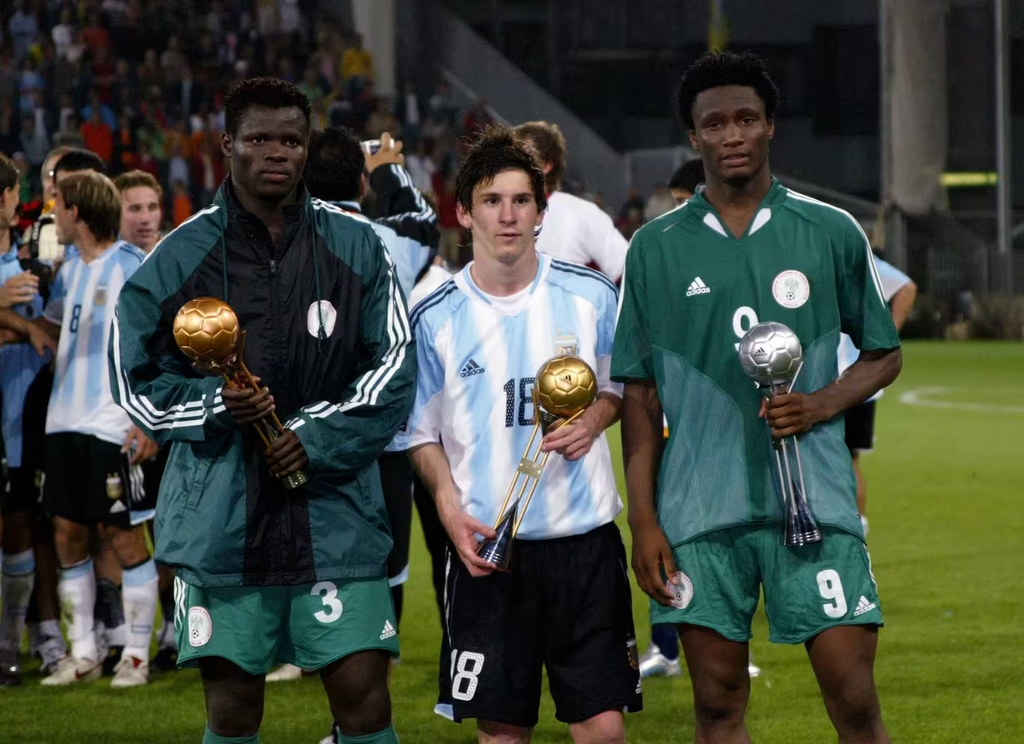
Messi finished with six goals and the Golden Ball. John Obi Mikel took the Silver Ball and had not let it go thirteen years later. “Messi has kept on stealing awards from me,” he said ahead of the 2018 World Cup. Samson Siasia, Nigeria’s coach that night, had a drier verdict: “If you play in the final like this, you don’t give up penalties like that.”
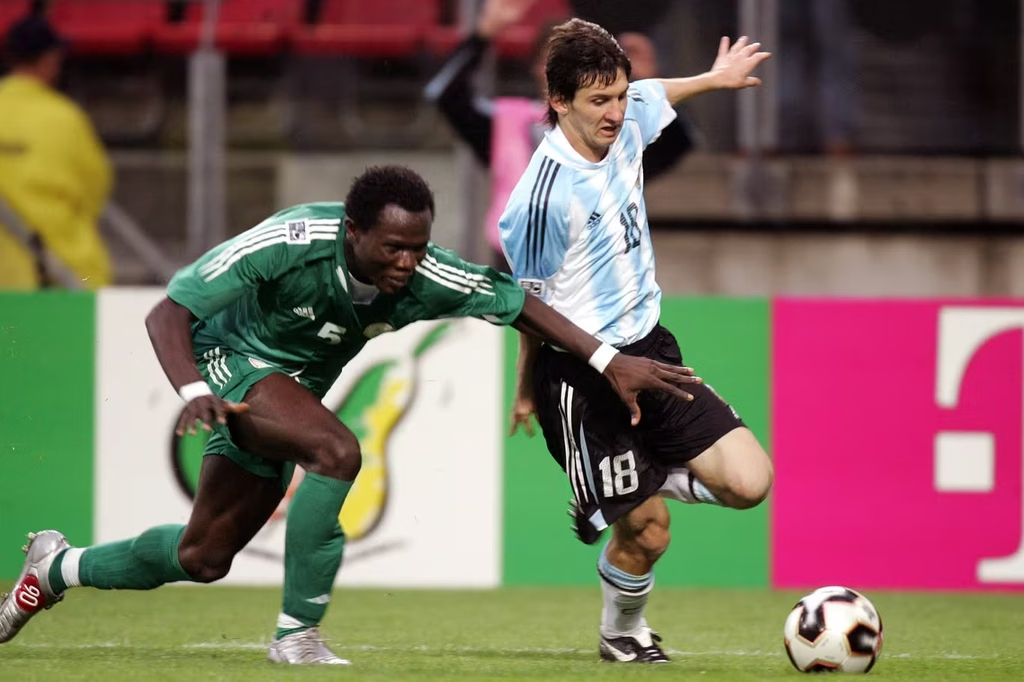
Benin were in the Netherlands too, one of twenty-four nations at the tournament where Messi won his first global title. Twenty-one years later, they were the opposition for his last match.
Senior football came next. On 30 May 2006, ten days before the World Cup in Germany, Messi came off the bench in a 2-0 friendly win over Angola. On 5 June 2007, he played against Algeria at Camp Nou, his club’s home ground, and scored twice from the penalty spot in a 4-3 win, the first brace of his Argentina career. Algeria scored three that night. He would score three more against them nineteen years later.

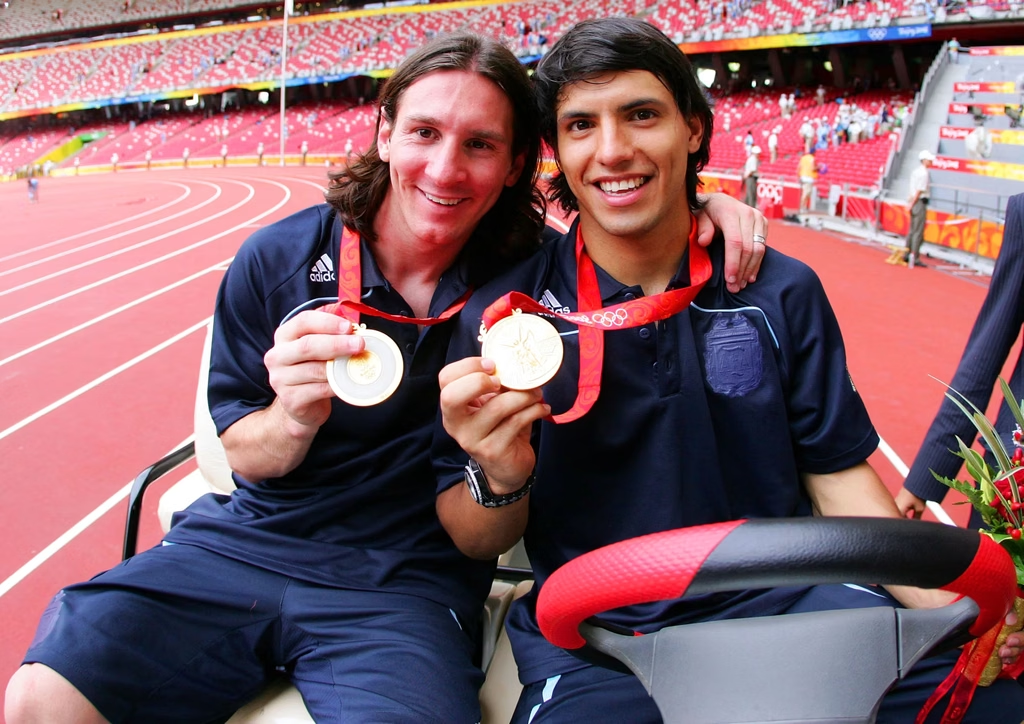
At the Beijing Olympics in August 2008, he scored against Ivory Coast on 43 minutes in a 2-1 opening win, then played in the gold-medal match against Nigeria on 23 August, which Angel Di Maria decided with a goal on 58.
Until the 2021 Copa America, 2005 and 2008 were the only two trophies Messi had won in an Argentina shirt. Both finals were against Nigeria.
PART THREE / NIGERIA
Four Meetings, Four Defeats, and One Result Without Him
Nigeria have been drawn against Argentina in the group stage of five World Cups. Messi played in the last three.
Johannesburg, 12 June 2010. Argentina opened their tournament with a 1-0 win at the first World Cup staged in Africa. Mikel missed the game through injury.

Dhaka, 6 September 2011. A friendly in front of 36,000 people, Argentina won 3-1, with Messi credited with an assist.
Porto Alegre, 25 June 2014. Messi scored twice, and so did Ahmed Musa for Nigeria. Argentina won 3-2 and both teams went through the group.
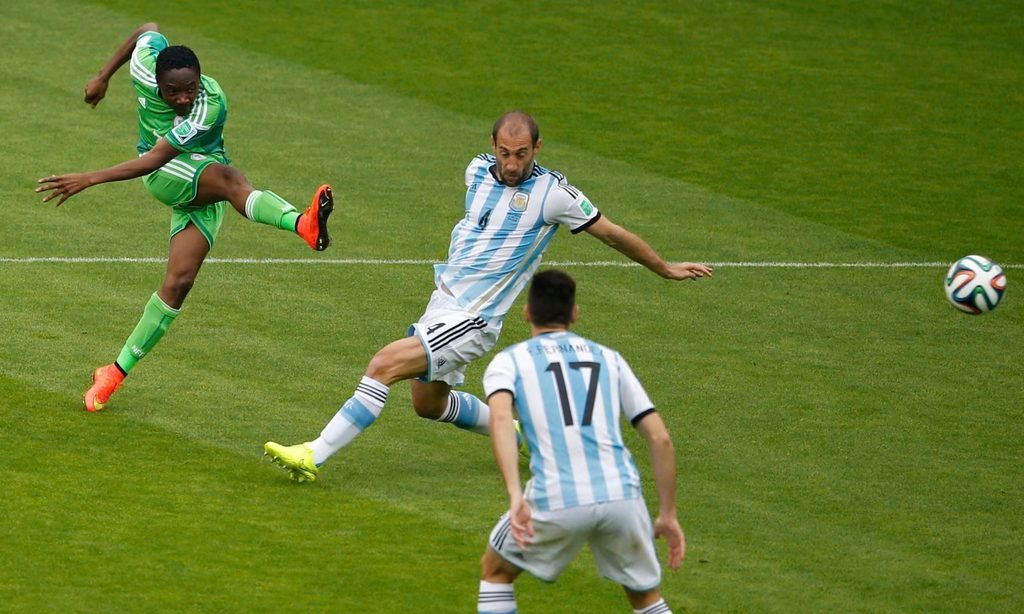
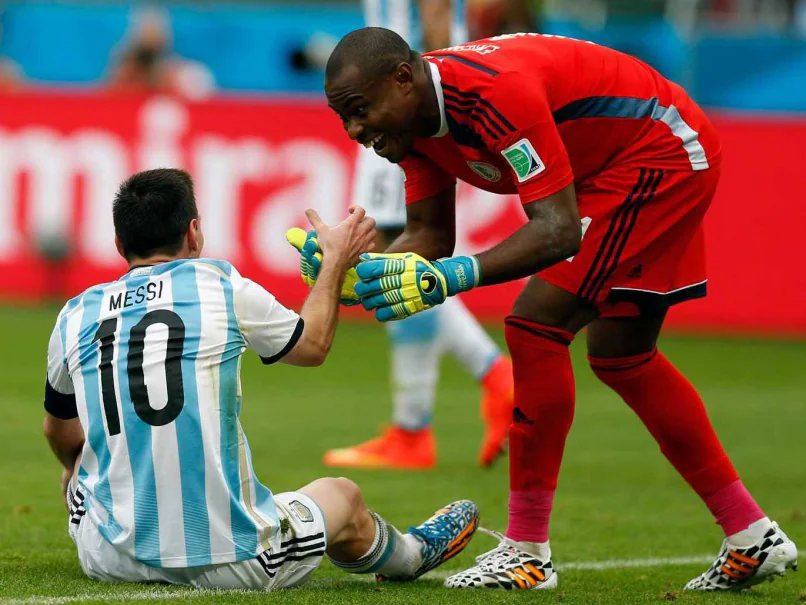
Nigeria did beat Argentina in this era. On 14 November 2017, in a friendly in Krasnodar, the Super Eagles came back from 2-0 down to win 4-2, with Alex Iwobi scoring twice. Messi had been left out after an agreement with Barcelona. Rohr, Nigeria’s coach then, was in no doubt why. “Argentina played without Lionel Messi; it is not the same team,” he said.
St Petersburg, 26 June 2018. Argentina needed a win to stay in the tournament. Messi scored in the 14th minute. Victor Moses levelled from the penalty spot in the 51st minute. Marcos Rojo scored the winner in the 86th minute. A draw would have sent Nigeria through and Argentina home, and Rohr was in the Nigeria dugout for it. Four years later, Messi lifted the World Cup in Qatar. Without Rojo’s goal in St Petersburg, the road there looks different.
Eight years after that night, Rohr stood on the touchline at the Monumental as Benin’s coach. He has beaten Argentina without Messi, lost to them with him, and then watched his own players go home without a photograph.
PART FOUR / 2025 TO 2026
The Year Africa Came Closest
Angola reportedly paid $12 million to host Argentina on 14 November 2025, for a match marking 50 years of independence. More than 50,000 people attended. Messi set up Lautaro Martinez’s opener and scored the second himself.
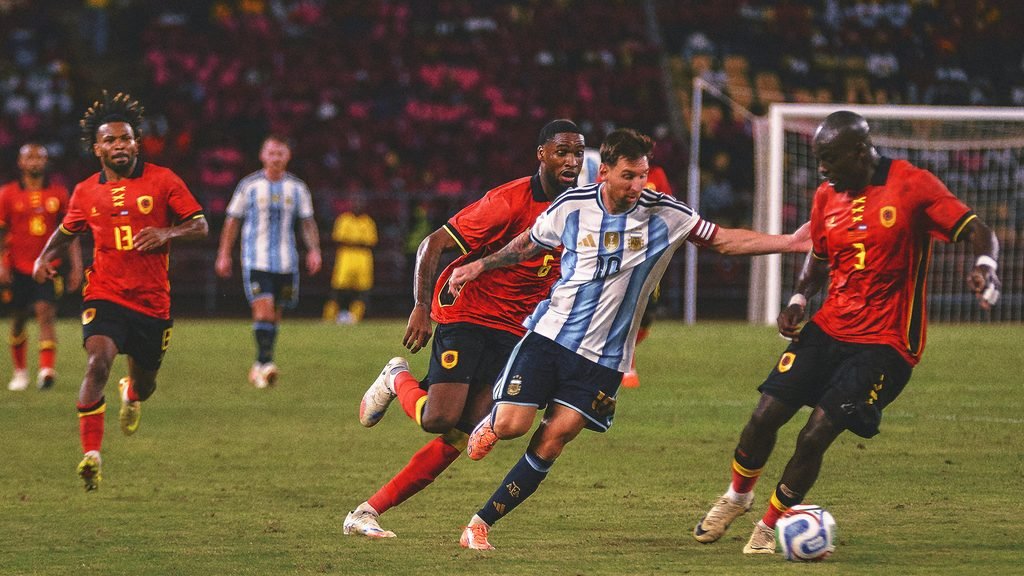
Lionel Messi Scores Again for Argentina in Win Over Angola
Mauritania and Zambia followed at La Bombonera in March, Mauritania losing 2-1 with Messi on as a substitute and Zambia losing 5-0 with Messi scoring one and setting up another.
At the World Cup he opened against Algeria in Kansas City on 16 June with the first hat-trick of his World Cup career, goals at 17, 60, and 76 minutes, which took him level with Miroslav Klose on 16 World Cup goals.
Then the African sides started to push back. Cape Verde, a country of about half a million people, had drawn 0-0 with Spain on their World Cup debut. In the Round of 32 in Miami Gardens on 3 July, Messi opened the scoring. Deroy Duarte equalised on 59 minutes. Lisandro Martinez put Argentina ahead in extra time, Sidny Cabral levelled again on 103, and the winner came on 111 when Cristian Romero’s header from a Messi corner deflected in off Cape Verde’s Diney Borges. It went down as an own goal.
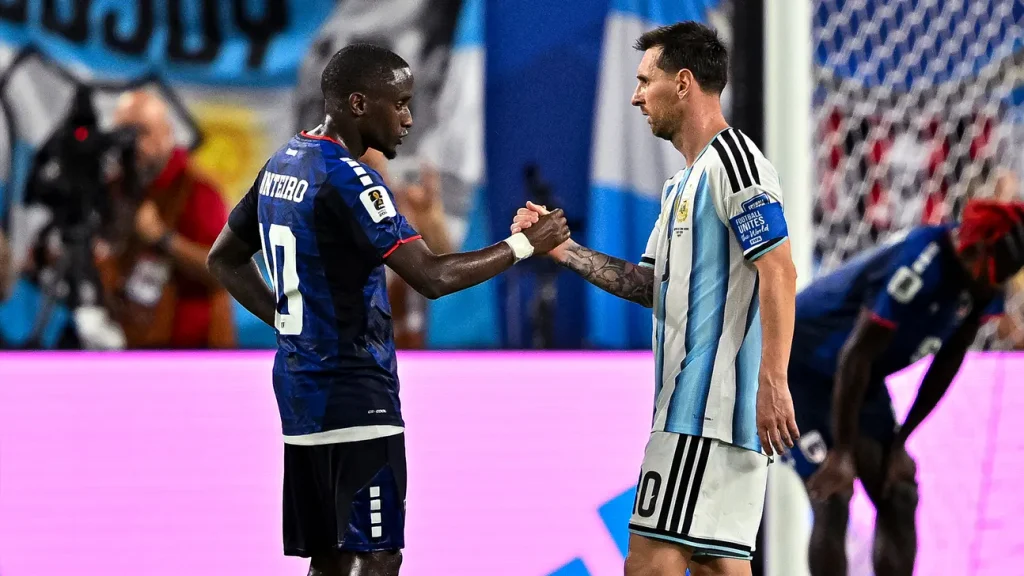
Messi, Argentina Defeat Cape Verde 3-2 In Extra time, Advance To Round Of 16
Four days later, Egypt held a lead over Argentina for more than an hour in Atlanta. Yasser Ibrahim found the back of the net in the 14th minute, while Mostafa Mohamed added another goal in the 66th minute. Goalkeeper Mostafa Shobeir made a crucial save in the first half, denying a penalty taken by Messi. Romero found the net on 78 minutes, followed by Messi levelling the score on 82 with a stunning half-volley that rattled in off the crossbar. Enzo Fernandez then clinched victory in stoppage time, heading home a precise cross from Lautaro Martinez. Egypt saw a goal disallowed by VAR following the halftime break, and a member of their coaching staff received a red card after the decisive goal.
Argentina faced a tough defeat in the final against Spain in New Jersey, with Messi visibly emotional as he struggled to make an impact on the match. Nine out of the ten African teams in the tournament made it to the Round of 32, setting a new record for the continent. The two teams that faced Argentina pushed them to extra time and even managed to overcome a two-goal deficit in just four days. The record stands strong. It had never faced such intense pressure.
PART FIVE / BENIN
The Final Masterclass on the pitch
Benin were ranked 93rd in the world when the fixture arrived. By Adelakun’s account, the squad learned they would travel to Buenos Aires only a few days before the start of their camp for the opening 2027 Africa Cup of Nations qualifiers.
Before the match their mood sounded close to gratitude. Defender Mohamed Tijani said the squad didn’t even need to prepare: “We just want to enjoy it. That’s all.”
At the coin toss, captain Sessi D’Almeida handed Messi a replica of the Agojie Amazon monument that stands in Cotonou, a statue of the women warriors who guarded the kings of Dahomey. A letter from Benin’s government, published by Actualites 229, dedicated the gift to Messi’s wife, Antonela Roccuzzo, honouring her as the strong woman beside him. It also formally invited Messi and his family to visit Benin.
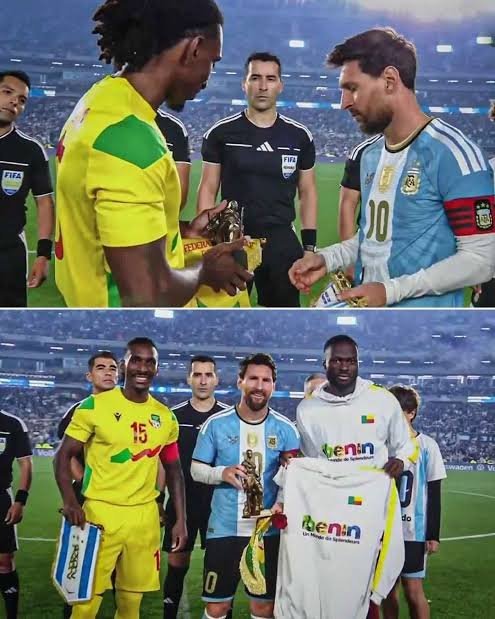
What Benin were paid for the night, or what it cost them to go, hasn’t appeared in anything we could find.
The table above shows how much African football has contributed to the career being celebrated that night.
THE BALANCE
The Invitation Is Still Open
African opponents supplied both of his youth and Olympic finals, his first brace for Argentina, his first World Cup hat-trick, and the two most anxious afternoons of his last tournament. Benin supplied a statue and a night.
What came back, by Benin’s account, was a lap of honour that turned away, a security cordon, and one signed shirt that Rohr had to route through the opposition manager.
Benin’s government put an invitation in writing, on the same letter as the statue, asking Messi and his family to come and see the country. The statue was for Antonela. The invitation was for all of them. We found no public reply as of 22 October.
Thirteen fixtures, thirteen wins, and one invitation still waiting on an answer.
The Eternal Number 10
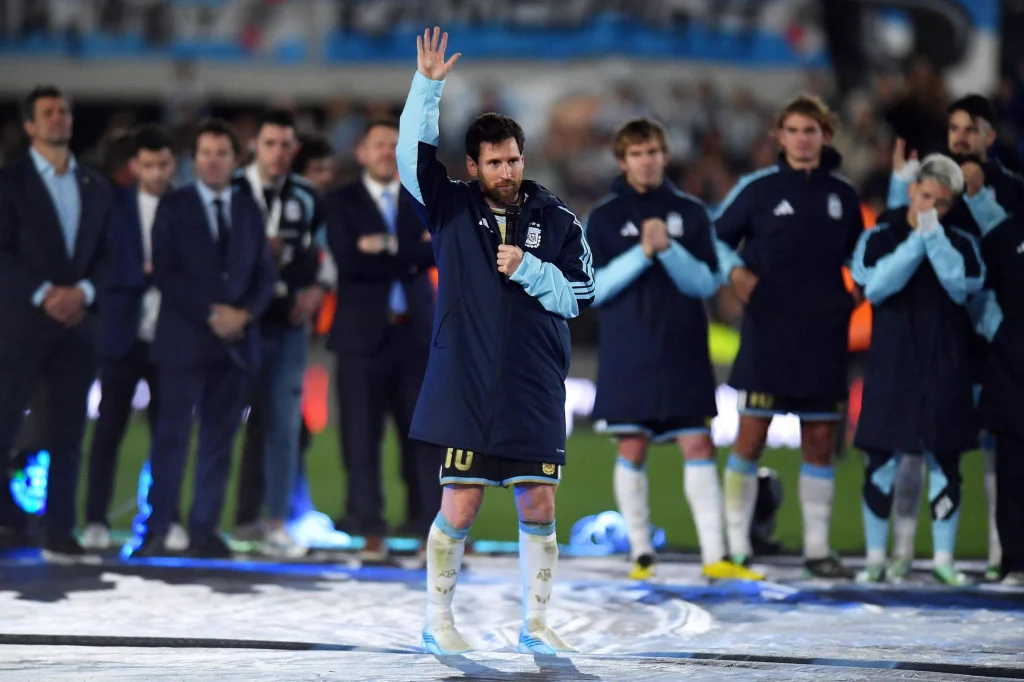
As the lights dimmed at the Monumental, the overarching takeaway for us is clear: Messi’s retirement from international football is not just an Argentine milestone; it is the closing of a golden epoch in global football. Messi’s international career began in a final against Nigeria in Utrecht in 2005, when he was a teenager scoring penalties for the under-20s. It ended against Benin in Buenos Aires in 2026, with eighty-five thousand people singing him off.
In between came an Olympic gold, a Copa América, a World Cup, and a second Copa América. Africa was in the story from the first match to the last. He faced African teams thirteen times as a senior and won every time. Nigeria gave him his first trophy and tested him in three World Cups. Angola, Algeria, Cape Verde, and Egypt each took something out of him along the way.
Messi will be remembered for the trophies and the goals. From the dusty pitches where kids lace up boots bearing his name across Lagos, Cotonou, Cairo, and Cape Town to the grandest arenas in world sport, the legacy. The Eternal Number 10 endures. Gracias, Leo.
About the Author


0 Comments