
How King Promise Took Chelsea’s New Anthem Back to Nungua
A kit launch, a Nungua pitch, a games room and the generation that Michael Essien created among Chelsea fans. This is not about the club coming to Ghana. It is about Ghana’s Chelsea generation coming home.
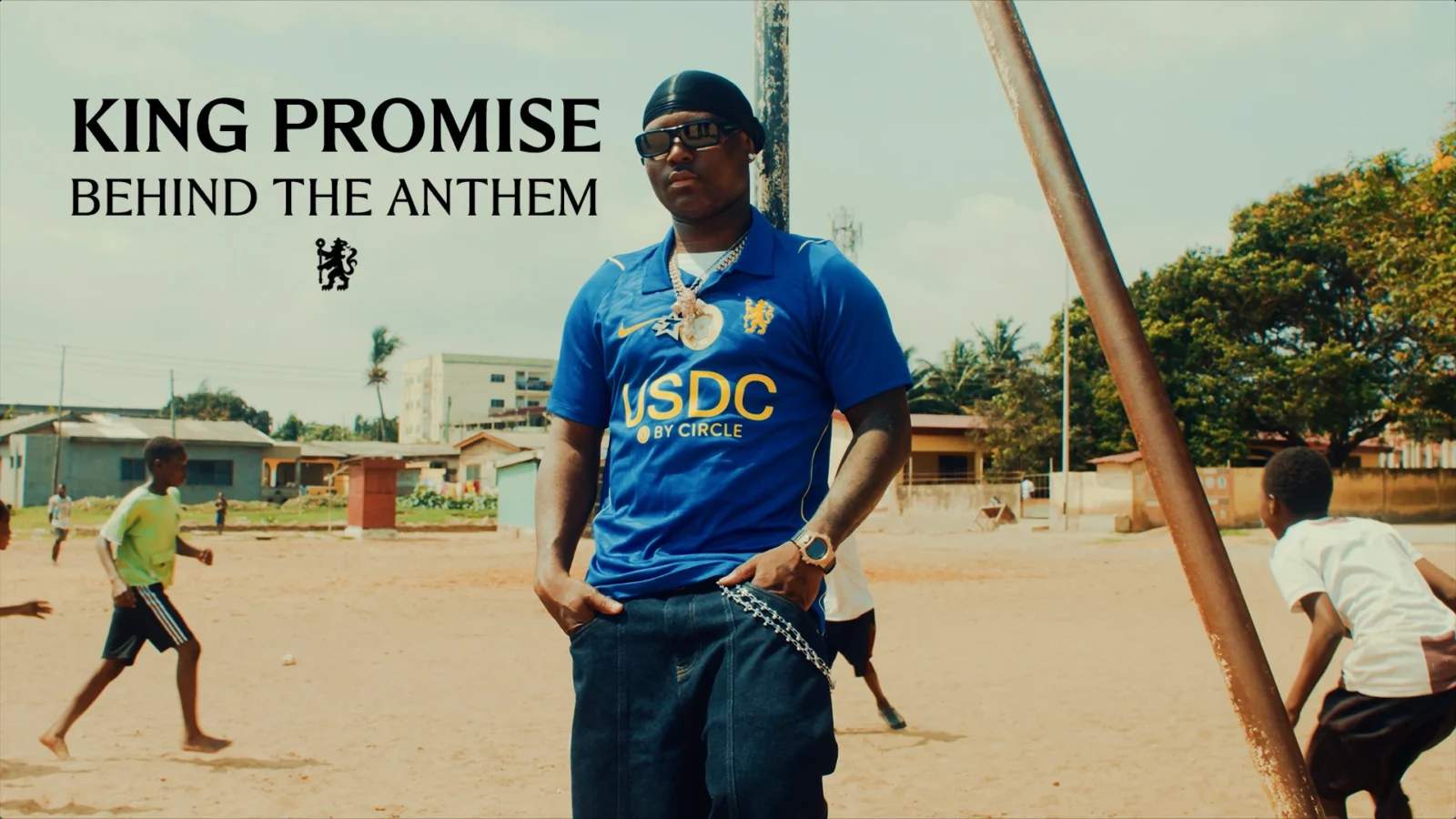
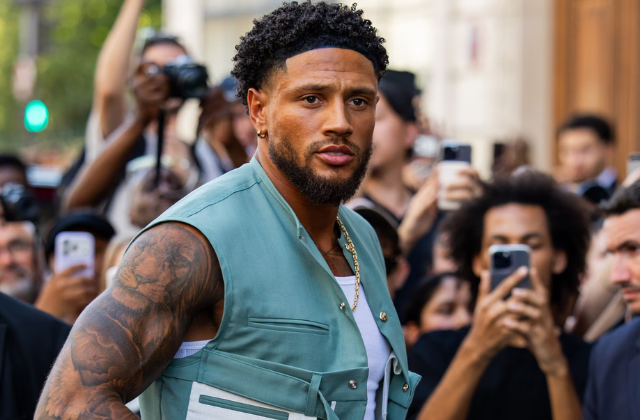
King Promise used to pay to watch Chelsea play at a game centre. Now he sits next to the bench at Stamford Bridge. “I used to pay at the game centre to watch them play,” he wrote on X after “Can’t Tame Us” dropped, remembering the Nungua SDA Park where he first played. That post is the best thing in this entire campaign. It is also the part Chelsea didn’t write.
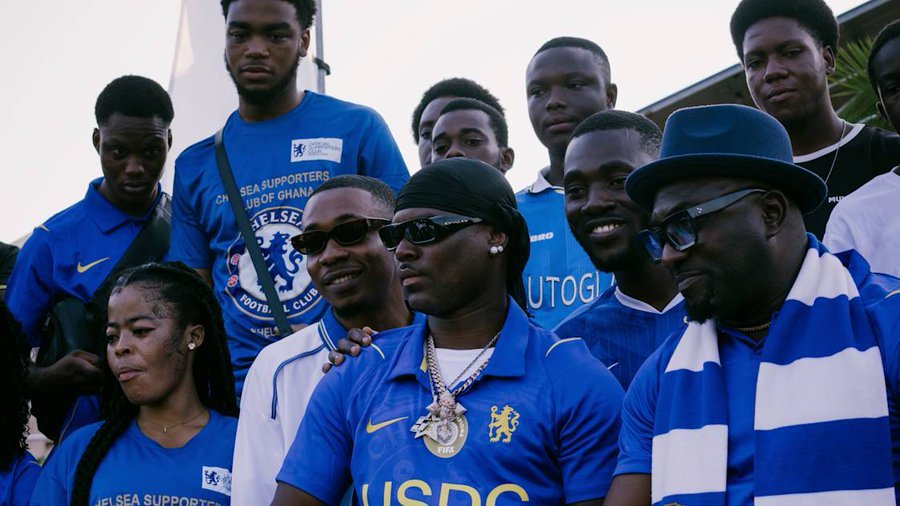
Call the project what it is: a kit launch that doubled as a homecoming. The homecoming is doing the work. Chelsea says the Rent Paid Football Exhibition Tournament — an event founded and hosted by King Promise was the first appearance of its new home kit on African soil. Chelsea brand director Scott Fenton says King Promise “came to us with the idea for the track.” The activation ran on 5 September at McDan Park, with teams captained by King Promise and former Ghana captain André Ayew, and was streamed globally.
The structural reason why a kid in Nungua supports a London club is one man. Chelsea signed Michael Essien for £24.4m in 2005, making him the most expensive African footballer at the time. For King Promise’s generation, a Ghanaian in that shirt was a reason to watch and a reason to stay. “Essien was one of the reasons why I became a proper Chelsea fan,” he told SoccerBible in 2022 and has since credited Essien with “putting on for the continent.” In that shirt, Essien won two Premier League titles and reached a Champions League final. All those nine years at Stamford Bridge have had a half-generation of Ghanaian Chelsea fans downstream.
The official video, on YouTube, shows a Chelsea shirt on a washing line outside a Ghanaian house, with a Ghana flag in the corner. The shirt is not in a boardroom. Director Derrick Arthur shot it at Nungua SDA Park and at the tournament in two locations that map King Promise’s journey in less than two minutes. It puts the campaign’s cultural weight exactly where it belongs: on a pitch where he paid to watch games before anyone at Stamford Bridge knew he existed.
“This is less Chelsea reaching Ghana than Ghana’s Chelsea generation reaching back.”
Chelsea calls the project part of its “London to the World” approach to culture. Whose world, exactly? The phrase sends culture outward from London. This project ran the other way, and Chelsea’s own caption for his Stamford Bridge visit reads: “King Promise is home, bringing his latest Can’t Tame Us track to our stadium.” Home. Ours. The grammar gives it away.
“I’m not sure if Chelsea loves Ghana more than Ghana loves Chelsea,” wrote X user Kojo Manuel, cited by Yen.com.gh. The reaction publicly recorded so far is overwhelmingly Ghanaian. Chelsea markets the song to fans “across Africa.” Until supporters from Kenya, Nigeria, or South Africa weigh in, it remains a Ghanaian hit with continental ambitions — which is success, but different.
Arsenal applied the same logic a year earlier. Its 2024/25 Africa-inspired away kit launched with a film scored by Ghanaian-British producer Juls, who says the collection was shot in his hometown in Sierra Leone. Put the two campaigns together, and a pattern emerges: identify a market, find a local creative the fans already believe, and build the club’s story around them. The logic is that culture creates affinity before a club ever asks a fan to buy something. So far, only two clubs have done this, so it is not yet a trend. It is a strategy worth naming.
The track was released through Sony Music West Africa and 5 Star Entertainment as part of a partnership that King Promise says also covers a documentary, a video, and the tournament. Chelsea has made its cultural investment visible. The commercial infrastructure behind it remains private.
No shirt-sales figures for Ghana, no local retail plans, and no academy ties have been published. ASVG Media read that the point of converting fandom into merchandise sales, digital engagement, and sponsor value is a plausible analysis. It is not Chelsea’s stated aim.
The orphanage line is the specific test. Chelsea’s release lists the Nungua Orphanage as a beneficiary of every Rent Paid activation. It has not said how that support works or what the numbers are. A club that wants community credit should publish the number. Until it does, the charity line is a brand asset.
Chelsea did the difficult part well. It let a real fan lead. A Nungua park gave the campaign a face and a place no agency could have invented. The test is what comes next: a second African market, a published account of what Nungua actually receives, and a deal structure that treats the artist as a partner rather than an endorser. If those arrive, “London to the World” means something specific. If not, the kit launched beautifully, and the generation it spoke to will remember it exactly as they remember Essien — as a moment when the club showed up, without ever quite staying.
About the Author


1 Comment
Nigerian Executive Lola Ogunbote Named Head of Football Operations at Chelsea Women - African Football News