
How Shalom Rayhamen Built Lagos Life Overnight and Drew Millions Inside
Built in twelve hours by software engineer Shalom Rayhamen, Lagos Life captured four million players in nine days, turning everyday West African urban survival into a global multiplayer phenomenon.
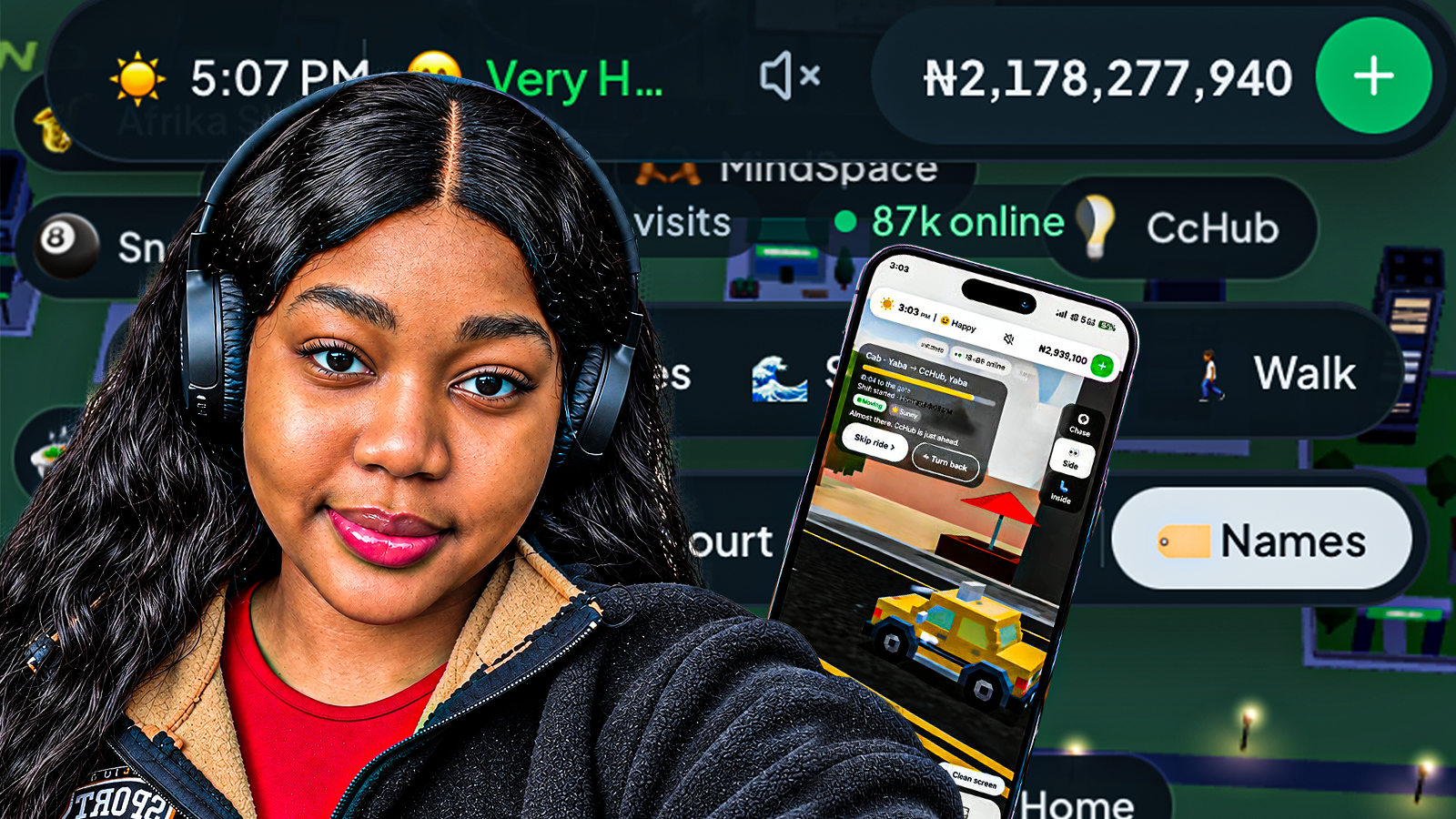
Nepo soft life or Lapo loan, your starting balance is just pure luck. Rent hits every Saturday. Welcome to Lagos Life.
That’s the play in Lagos Life, the browser-first Life Simulator built by a Nigerian developer in under 12 hours. It was launched on X at around 7 am on October 1, 2026, and then the creator took a well-deserved rest. Software engineer Shalom Rayhamen celebrated Nigeria’s 66th Independence Day by sharing the demo link on her social media profile.
She built a VIRTUAL Lagos overnight. millionS moved in.
By October 6, well over two million unique players had registered. Nine days after launch, the counter reached 4.7 million users, with over 100,000 players active at peak hours. Rayhamen’s startup, Vatar, unexpectedly found itself at the centre of the biggest digital gaming boom and breakout in West Africa this decade.
Rayhamen took a smarter path, building directly for her audience: young Nigerians with data budgets and entry-level smartphones. Building Lagos Life with lightweight, browser-native code removed the barriers of native app distribution and hardware limitations. By serving the experience over a standard URL, she made seamless, cross-platform participation accessible to users anywhere in Nigeria.
What makes Lagos Life so appealing is how seamlessly it integrates gaming, street hustle, and football culture into a single digital square. Traditional Western life simulators require players to build quiet suburban homes or manage corporate grids. Lagos Life immerses players directly in West African urban survival.
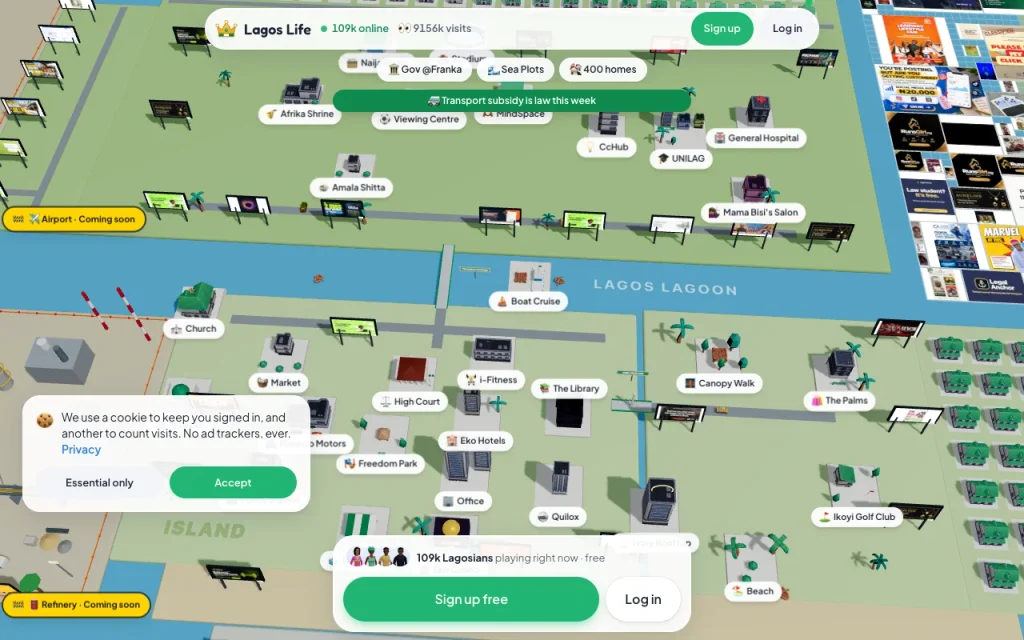
Football in Lagos Life isn’t a city-wide aesthetic; it’s built right into the game’s life simulation mechanics. The sport, like jobs and nightlife, is associated with specific venues on a map. At Oga Sunday’s Surulere viewing centre, players can spend ₦100 on ‘Watch EPL Match’ or ‘Argue Football’ to boost their avatar’s charisma stat. Teslim Balogun Stadium hosts a five-a-side match at 5:00 PM. Jerseys can be purchased at the gate for ₦8,000 using the same in-game naira that powers the lights.
Lagos Life stands out because it boldly forges its own path, steering clear of the typical Western gaming conventions. Lagos Life challenges players to face the gritty truths of urban existence in Lagos. Characters must hustle to accumulate virtual naira to cover rent for their virtual Lekki flats, navigate through congested road networks, operate yellow commercial buses, and manage their daily living costs.
The social dynamics developed quickly. Virtual Lagos had its own unwritten rules, because each avatar was a real human player, not a computer bot with a script. Players formed informal transport unions, held impromptu beach parties, ran for political office, and bartered goods. Nigerian businesses quickly recognised the opportunity, securing virtual billboard space in the game to display real-world ads to millions of roaming Gen Z avatars.
Rayhamen is 26 years old and hails from Port Harcourt. She is a software developer who secured a UK Global Talent visa in 2023. In a published interview, she traced the story back further than the viral week. She recounted a story about a father whose finances dwindled, a time when she and her brother alternated attending school and an internship in Abia in 2018, where she struggled with a Chromebook that barely functioned for coding, her first paid position earning ₦60,000 in 2020, and then landing a remote job that paid $1,000 a month. As a child, she loved playing The Sims 3, always hoping to create a world where the characters could live in a place that felt like home.
Amala Shitta. Quilox. The agbero on the road, she said, comes from her father’s stories. ‘The clock runs on Lagos time,’ she said.
Five million registrations. Massive early scale Before the Big Funding Arrived.
The unexpected emergence of Lagos Life drew significant commercial interest. When an online investor publicly offered $100,000 on social media platform X to acquire the game, Rayhamen swiftly dismissed the offer, asserting that her long-term valuation target for the platform was set at one billion dollars.
By 7 October, she reported 3 million registered users within just six days. On 8 October, she shared a total of 4 million, attracting 103,359 players and garnering 30.5 million visits. On the morning of 9 October, the funding post indicated 4.7 million. That afternoon she posted 5 million. Her X account is the primary document.
On 9 October she announced that Vatar, the parent company, had closed a $500,000 angel at a ten million dollar valuation, backed by prominent tech founders including Abdulhamid Hassan, Mono’s chief executive; Nathan Nwachuku, Terra Industries’ chief executive; and Olugbenga Agboola, Flutterwave’s chief executive. The post. “Lagos is just the beginning. We’re building entire worlds, and there’s so much more to come.”
Shalom’s background showcases her remarkable pace and exceptional technical skills. She had already invested years in developing software before embarking on her journey with Lagos Life. Her deep understanding of the technical aspects allowed her to successfully scale Lagos Life during a spike in server traffic.
Vatar has successfully broadened the game universe, now featuring virtual representations of Abuja and Port Harcourt alongside Lagos. Plans encompass real-world reward integrations that allow virtual points to be exchanged for mobile airtime and food deliveries, in addition to player-run elections and local police governance.
What the Future of Localized Browser Gaming Holds
The rise of Lagos Life shows a fundamental change in the way African audiences engage with digital entertainment. For years, global gaming studios viewed Africa mainly as a field for rolling out major console games or simple mobile adaptations. Lagos Life showed that a strong cultural connection combined with lightweight web delivery can surpass the user acquisition speed of multi-million-dollar foreign studios.
This niche holds distinct growth vectors over the coming years:
The blueprint established by Lagos Life will invite replication across major African cities. Developers in Accra, Nairobi, Johannesburg, Dakar, and Cairo will build lightweight, browser-accessible simulations tuned to their own local slang, transport networks, street food scenes, and football club rivalries.
Browser worlds will turn into more and more shops for goods and ideas. Local street fashion brands can release digital jersey drops in virtual cities before making real clothes. Consumer brands and telecom companies will run interactive campaigns that let players turn in-game achievements into real airtime, tickets to a derby match or restaurant coupons.
Developers in Accra, Nairobi, Johannesburg, Dakar, and Cairo will build lightweight browser-based city simulators that are specific to their local slang, public transport, music scenes, and football club rivalries. The young people in Africa will not live in generic virtual worlds but in digital twins of their cities.
In-game achievements can lead to real-life airtime, match tickets for local derbies, or food delivery vouchers. This is possible for telecommunications companies, beverage brands, and sports betting operators to run interactive campaigns.
Lagos Life Rewrote the Playbook FOR AFRICAN GAME DEVELOPERS
Lagos Life showed African independent developers a smarter way to get a huge audience: you don’t need millions of dollars in venture capital or high-end 3D graphics. A simple game can show that there is a huge demand by having fast execution, rock-solid back-end infrastructure, and a true understanding of the local culture.
For the African diaspora, a simple browser-based grid becomes a living digital home ground, allowing young people separated by thousands of miles to share jokes, manage daily hustle, and navigate familiar urban rhythms inside a space built entirely for them.
About the Author



0 Comments