
Nine New Managers: The Most Unpredictable Premier League Season.
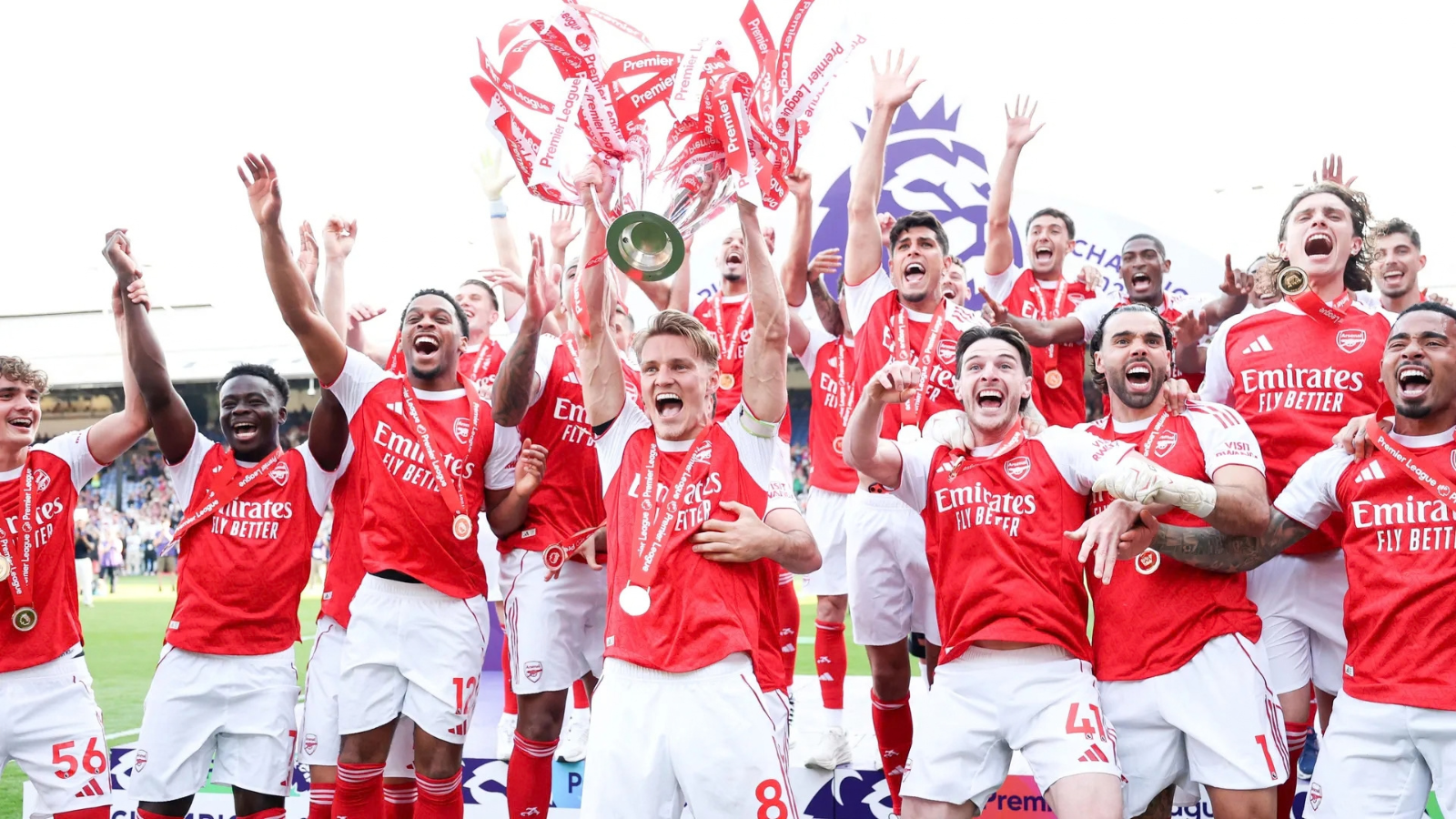
The 2026-27 Premier League season kicks off with a groundbreaking shift in management, unprecedented spending on transfers, the lingering effects of the World Cup, and a greater influence of African players in title discussions than ever before in the league’s 35-year journey.
Riccardo Calafiori met a through ball from Myles Lewis-Skelly after 23 seconds in Cardiff, cut across Gianluigi Donnarumma and slotted it into the bottom left corner. Arsenal were ahead inside half a minute. By the time Martin Ødegaard rolled a third goal into an empty net three minutes after half-time, it was already a statement.
The 2026 Community Shield finished 3-0. Arsenal over Manchester City. The reigning Premier League champions brushed aside the 2025-26 FA Cup winners in Enzo Maresca’s first competitive match in charge of City after Pep Guardiola. It was not just a curtain-raiser result. It was an announcement.
Arsenal, who ended a 22-year wait for the Premier League title by holding off Manchester City on the final day of the 2025-26 season at Selhurst Park, are now defending it. The Premier League season has officially started, and we’re gearing up for some thrilling surprises ahead. The most consequential question in English football is whether this is the beginning of a new Arsenal era — or whether the pack, having had a summer to recalibrate, is already closing in.
This marks the first Premier League season since 1985-86 that kicks off without any of the legendary figures like Sir Alex Ferguson, Arsène Wenger, José Mourinho, Jürgen Klopp, or Pep Guardiola in the managerial hot seat. That group has clinched 26 out of the league’s 34 championships. Their time is over.
Arsenal: Defending Is a Different Game
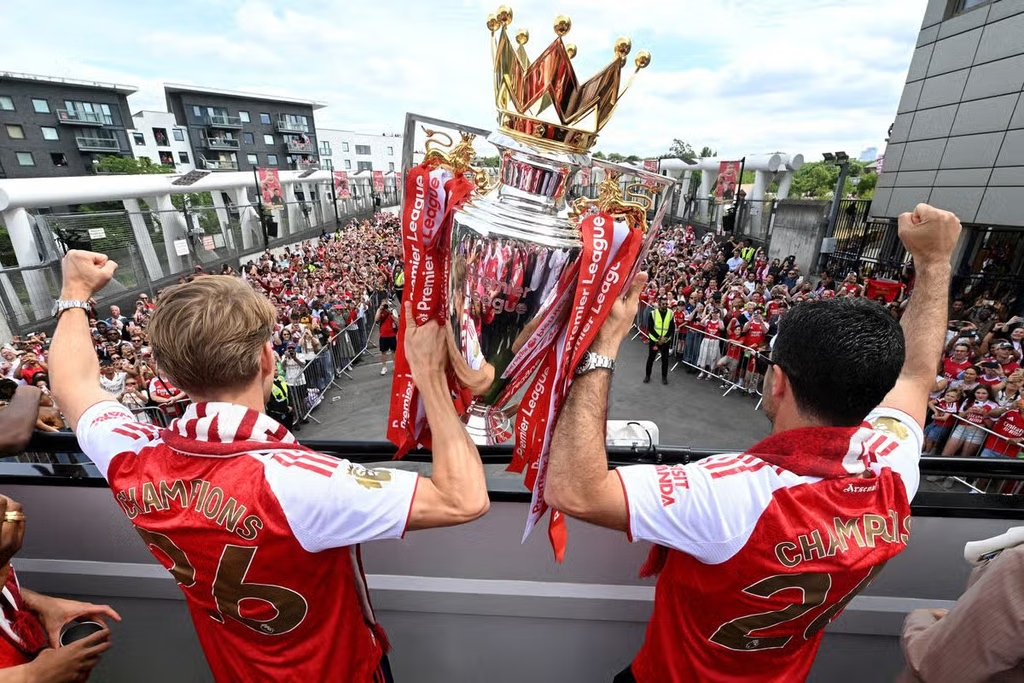
Arsenal spent the summer the way champions do when they’ve earned the right to be picky. They hired four people. All three were signed for big fees. None of them are panic signs.
Bruno Guimarães arrived from Newcastle for £75m on 8 August, joining a midfield that already includes Declan Rice, Martin Zubimendi, Mikel Merino, and Ødegaard. Arsenal’s sporting director Andrea Berta described the signing directly: “Bruno can play as a defensive midfielder and as a box-to-box player. He combines quality with quantity and has provided goals and assists for his team every year. Bruno will allow Mikel to further develop our playing style and will also increase our internal competitiveness, which is essential for maintaining the standards required when we are aiming to win major trophies.”
Ezri Konsa joined for £55m from Aston Villa as cover and competition at centre-back, while Greek winger Christos Tzolis — who scored 22 goals and provided 29 assists in all competitions for Club Brugge in 2025-26 — came in for £34m to replace the departing Leandro Trossard.
A stable sense of self is something Arsenal have that their opponents do not. Since assuming control in December 2019, Arteta has remained at the Emirates longer than any other English manager in the top division. He defeated Guardiola, Klopp, and Conte. Their successors will not be able to outlive him. All of the systems are in place, the culture is deeply ingrained, and the team finally has depth worthy of the Champions League during his tenure.
Whether Arsenal can be competitive this season is not the question. What matters is whether they can reproduce that hunger. The first championship in 22 years sent shockwaves through the Emirates. Dominating the competition for two years in a row would prove something else entirely: that they are here to stay, not just a one-season sensation.
Manchester City: What Does Post-Guardiola Actually Mean?
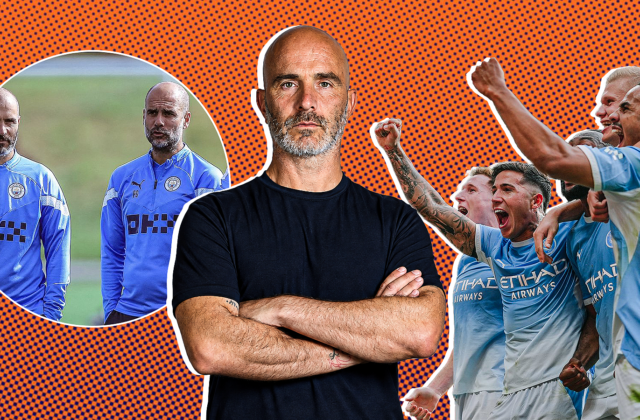
Enzo Maresca kicked off his tenure as Manchester City manager with a solid 3-0 victory against Cardiff. That scoreline won’t be the ultimate measure of his time in charge, but the way it unfolded highlighted the magnitude of the undertaking ahead. City failed to maintain control, had difficulty applying pressure, and were often outpaced to the ball during the first half. Maresca told reporters afterwards that the game was one to forget, that the squad needed improvement, and that more recruitment remained possible.
The more significant issue lies in the structure itself. Guardiola stepped down after an impressive tenure of over eight years, during which Manchester City established themselves as the unrivalled powerhouse in the history of English football. The system he crafted the strategic positioning, the tailored player profiles, the meticulous tactical details in every training session was completely his own design. Maresca steps into a team filled with top-tier talent that has spent years honing its ability to follow precise positioning on the pitch. Now it’s someone else’s turn to take the lead.
Guardiola Left 20 Trophies Behind. Can Enzo Maresca Build Something of His Own?
The club invested significantly to facilitate the transition. Enzo Fernández made his way to the squad from Chelsea in a blockbuster deal worth a staggering £125m, tying the British record. Elliot Anderson hails from Newcastle. The team is still packed with talent, featuring Erling Haaland, Phil Foden, Bernardo Silva, and Kevin De Bruyne. They are still in contention for the championship. However, the paper and pitch represent distinct documents, and the 2026-27 season will reveal which iteration of City endures after the exit of the individual who moulded it.
The Premier League has seen its share of powerhouse periods in the past. Ferguson, Wenger, Guardiola. They all came to an end. What never ceases is the drive to create the next champion.
Nine New Managers: A Record That Tells You Everything About Modern Football
No Premier League season in the competition’s 35-year history has started with more managerial debuts. Nine clubs. Nine new permanent bosses. The previous record of eight was set in 2016-17 — the summer that included Guardiola arriving at City and Conte at Chelsea, with the Italian winning the title at the first attempt. The class of 2026-27 is: Enzo Maresca (Manchester City), Andoni Iraola (Liverpool), Xabi Alonso (Chelsea), Matthias Jaissle (Newcastle), Marco Rose (Bournemouth), Pierre Sage (Crystal Palace), Álvaro Arbeloa (Fulham), Gary O’Neil (Ipswich Town), and Oliver Glasner (Nottingham Forest).
Out of the nine, five are stepping into the Premier League managerial arena for the first time: Alonso, Sage, Arbeloa, Rose, and Jaissle.
The change in management has broader significance that often goes unnoticed. This marks the first Premier League season since 1985-86 that kicks off without the presence of legendary managers like Ferguson, Wenger, Mourinho, Klopp, or Guardiola in any coaching role. Among those five, they clinched 26 out of the 34 titles in the history of the Premier League. Their presence defined the expectations for the league’s landscape. Their absence completely changes the game plan.
Chelsea and Xabi Alonso: The Most Expensive Rebuilding Project in British History
Chelsea wrapped up the previous season in 10th place. Tenth place. After investing over £1 billion in transfers over the last three years, they ended up finishing behind Brentford, Crystal Palace, and Fulham. Liam Rosenior has been let go from his position. Xabi Alonso was appointed on a four-year deal with a specific mandate: turn a squad that had been assembled rather than built into something that thinks and plays as a team.
The summer that followed broke records. Morgan Rogers from Aston Villa for £117m — a new British player transfer record, overtaking the £116m Manchester City paid for Elliot Anderson. The combined Chelsea outlay reached roughly £470m, making them the Premier League’s second-biggest summer spenders behind City. Alonso told reporters his plan was to build a squad with “both the technical quality and the mental fortitude required to compete at the highest level.” The blueprint in words is clear. The proof on the pitch is the entire point of the season.
Chelsea have a key advantage in the 2026-27 season that other teams would eagerly swap for: the absence of European competition. Stamford Bridge missing out on European competition last season means Alonso can focus on training every midweek instead of dealing with travel commitments. For a manager looking to implement a new system within a squad put together by three different coaches over four years, that timeframe could be crucial.
Liverpool, Manchester United, and Newcastle: Three Different Problems
Liverpool kicks off the season with Andoni Iraola at the helm, looking to shake off the burden of an uneven 2025-26 campaign. Arne Slot has been let go from his position. A replacement was secured in Iraola, who established his reputation at Bournemouth and has since navigated one of the most demanding roles in management. His initial six matches in the Premier League will be against teams that have recently appointed new permanent managers. Newcastle, Nottingham Forest, Ipswich, Fulham, Bournemouth, and Manchester City. Each one of them is adjusting their game plan. Liverpool’s initial fixtures should provide Iraola with the opportunity to instil his strategies before he faces tougher challenges ahead.
Manchester United kicked off the season with a 2-0 loss to newly promoted Hull City — a result that would have sparked intense media scrutiny two years ago but now feels different. Michael Carrick, who secured his position in January 2026, is cultivating a project with a level of patience that has been rare in the recent managerial history of United. The third-place finish last season was a positive development. Whether it leads to ongoing Champions League contention this season is the pivotal question that shapes his time in charge.
Newcastle kicks off their campaign under the leadership of Matthias Jaissle, who was appointed on 5 August, leaving him with just a couple of weeks to prepare before the season’s first whistle blew. He comes in boasting two consecutive AFC Champions League Elite titles from his stint in Saudi Arabia. English football operates on a unique level. What the league handed him first was a 1-1 stalemate at home against Liverpool on opening Sunday — a result that, considering the influx of nine new managers and the typical early-season turmoil, seemed fitting.
The African Chapter: From Talking Points to Title Conversations
Six years back, Liverpool stood tall as the defending champions, with Mohamed Salah and Sadio Mané making a significant impact as the standout African stars in the Premier League. Both are now missing from the English scene. Who steps in for them? The straightforward truth is that no one steps in to fill their roles one by one. However, the presence of African players in the 2026-27 Premier League is more widespread, showing up across major clubs and taking on greater tactical roles than ever since the days of Liverpool’s dominance.
The key players are not just supporting roles. Many players are the foundation upon which their clubs are built.
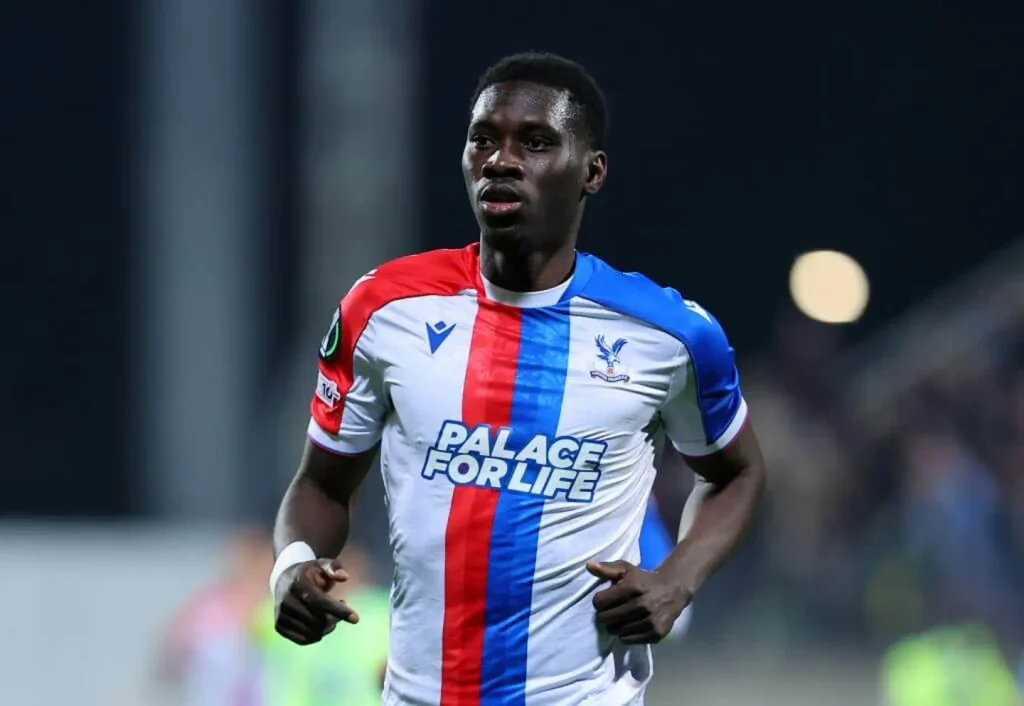
Ismaïla Sarr, Crystal Palace: The Most In-Form African Footballer Entering This Season
Kick off with the figure that should be leading every pre-season discussion. Last season, Ismaïla Sarr found the back of the net 21 times across all competitions for Crystal Palace, matching the club’s Premier League-era single-season scoring record established by Andy Johnson in the 2004-05 season. He had a standout performance at the 2026 World Cup, scoring four goals in four matches for Senegal, equalling Roger Milla’s record for the most goals by an African player in a single World Cup. He is also Senegal’s all-time leading scorer at the tournament. He was named Conference League Player of the Season after scoring nine goals as Crystal Palace won their first ever European trophy. He was also named Crystal Palace’s Players’ Player of the Year. He was also the man who scored the equaliser in the 2025 Community Shield against Liverpool.
Sarr played 45 matches and made 15 appearances for his national team during the 2025-26 season, finding the back of the net 28 times overall. He’s 28 years old. He is entering the prime years for an offensive player. He’s achieving this with a Crystal Palace team that has just had the most successful season in the club’s history. This is not an athlete waiting for his moment. This is a player right in the thick of the action.
Semenyo and Marmoush at Manchester City: Africa’s Most Dangerous Attacking Partnership?
Antoine Semenyo joined Manchester City from Bournemouth in January 2026 for a fee that tripled his wages. He had already netted 10 goals in the Premier League before the transfer window slammed shut. He’s quick, physically imposing, and at just 24 years old, he’s locked into a five-and-a-half-year deal that shows City views him as a key player for the long haul, not just a backup.
At just 18 years of age, having shone at the FIFA World Cup 2026, Morocco’s Ayyoub Bouaddi has moved from Lille to Manchester City.
The Semenyo-Marmoush combination, connecting two African forwards at the same title-chasing club, could be one of the Premier League’s most compelling attacking partnerships to track this season.
Mbeumo and Amad Diallo at Manchester United: The African Spine of a Club in Transition
Bryan Mbeumo moved from Brentford to Manchester United in 2025 for £65m, arriving with 27 combined goal involvements in his final Brentford season. He finished his first United season with 16 goals and six assists in 2025-26. The Forbes Africa pre-season preview flagged him as one of the most closely watched African players entering the new campaign, noting that he ‘will be one to watch as United look to mount a serious title challenge.’
Amad Diallo kicked off the season as a guaranteed starter, netting two goals in four matches for Ivory Coast during the World Cup. He’s back at Carrington, ready to battle for the starting position on the right flank. He then sustained a training injury ahead of the opener against Hull that could keep him out until October. It is an early setback for a player whose World Cup form had raised expectations for his 2026-27.
United’s opening 2-0 loss to Hull — a result that will surely sting for Michael Carrick and spark the usual chatter — doesn’t carry much significance over the course of 38 matches. What it highlights is the significant responsibility that rests on Mbeumo to spearhead the attack with Amad out of action. He is now the leading African figure at Old Trafford, taking centre stage rather than playing a supporting role.
Kudus at Tottenham, Iwobi at Fulham, and the Wider African Footprint
Mohammed Kudus joined Tottenham from West Ham for £55m and missed the 2026 World Cup through injury, a tournament where his compatriot Semenyo was the Ghanaian story. He enters this season with something to prove. The Tottenham that Roberto De Zerbi inherited is rebuilding aggressively, and Kudus’s blend of strength, pace, and ability to play multiple attacking roles gives him the profile to be one of Spurs’ most important players if the system clicks. The Soccer Bullet pre-season analysis noted directly: “If Tottenham’s new system clicks, Kudus could be one of the biggest beneficiaries.”
At Fulham, Alex Iwobi is preparing for what is likely to be his most experienced campaign in the Premier League so far. The Nigerian has proven to be a reliable asset for Fulham, showcasing his ability to contribute both creatively and defensively under various managers. While he may not always be in the spotlight for scoring goals, his consistent performance is crucial for the team’s overall success. With Álvaro Arbeloa as the new manager, Iwobi’s role as a leader will be more prominent, especially as he faces Alonso’s Chelsea in his Premier League debut on the opening weekend.
The Biggest Question of All
In a season with no historical playbook — no Guardiola, no inherited dominant structure, nine new managers, a record transfer window, and the shadow of a World Cup that ended five weeks before the league started — the only certainty is that someone will surprise. Someone will find an identity faster than expected. Someone will collapse. The table in March will look nothing like the pre-season predictions.
In the realm of African football, the dialogue has already evolved. The initial inquiry at the beginning of the Salah-Mané era was whether players from Africa could maintain their performance in the high-stakes environment of English football. That question has been settled. The ongoing discussion takes a fresh angle: can players from Africa step up to guide teams vying for the Premier League title? Sarr, Semenyo, Bouaddi, Mbeumo, Kudus, and Amad Diallo are some of the standout players making an impact this season.
About the Author



2 Comments
Xabi Alonso Has Chelsea’s Next Chapter in His Hands.
Premier League says Manchester City broke financial rules for nearly a decade - African Football News: Live Scores, Transfers & Sports Culture | BOX18 Africa