
Guardiola Left 20 Trophies Behind. Can Enzo Maresca Build Something of His Own?
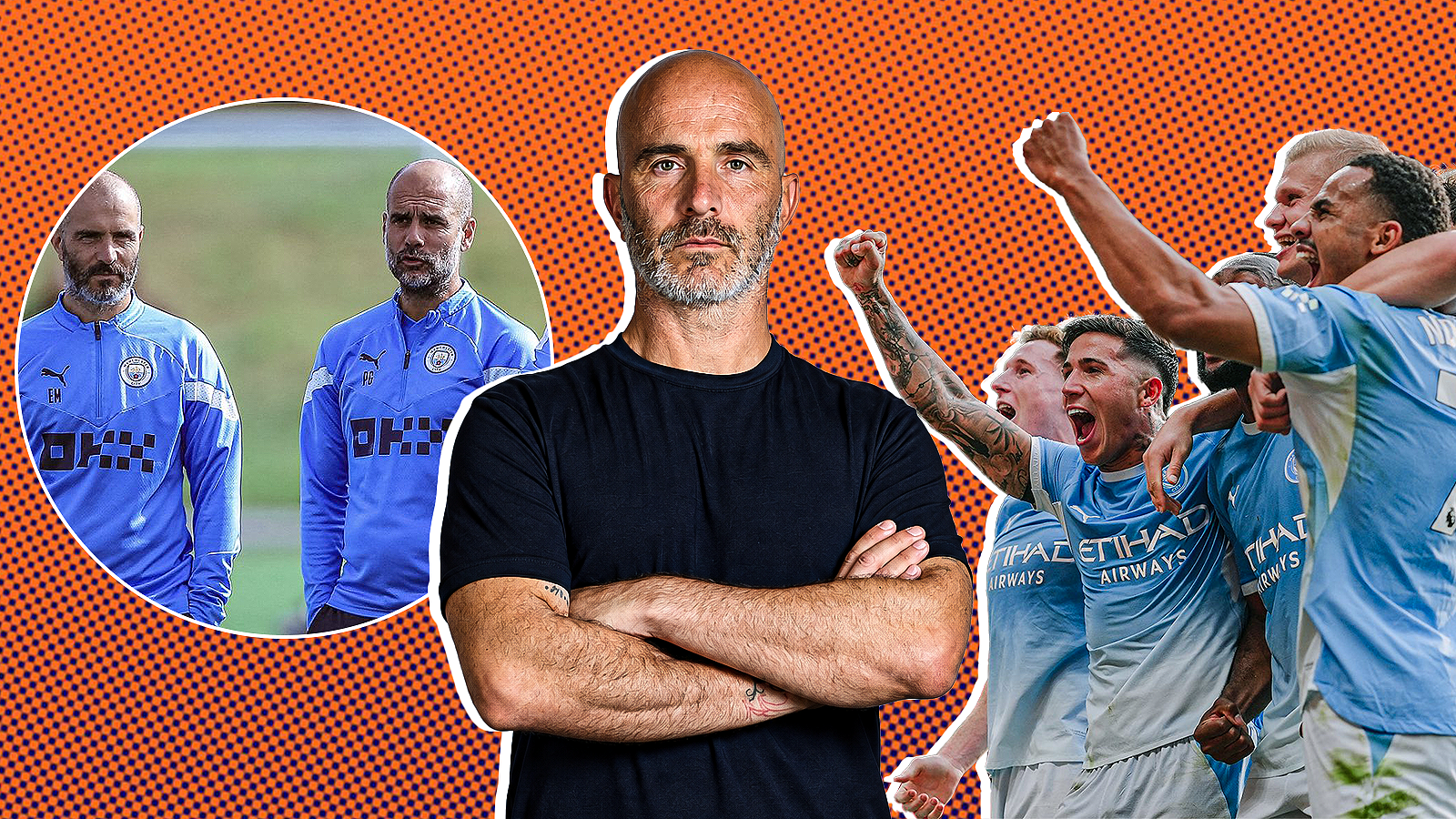
Pep Guardiola left Manchester City with 20 major trophies after a decade in charge.
He won six Premier League titles, the Champions League, three FA Cups, five League Cups and the Club World Cup. He also led City to the first treble in the club’s history in 2023 and four consecutive league titles.
City have now handed the job to Enzo Maresca, who knows the club almost as well as anyone could.
Maresca worked with Guardiola during the 2022/23 season, when City won the Premier League, FA Cup and Champions League. Before that, he had coached City’s Elite Development Squad to the Premier League 2 title in 2020/21.
Three years after leaving Guardiola’s staff, Maresca is back as the manager.
🚨🔵 BREAKING: Enzo Maresca has a total verbal agreement with Manchester City, HERE WE GO!
The Italian manager has always been considered the ideal candidate to replace Pep Guardiola.
Deal in place and Maresca will sign an initial three year deal at #MCFC. 🇮🇹
New era, soon. pic.twitter.com/njb3sXRl7w— Fabrizio Romano (@FabrizioRomano) May 19, 2026
City did not choose Maresca by accident
There were other candidates who could have taken Guardiola’s place. City chose someone who had already worked inside the club and understood how it operated.
The club confirmed that Maresca had been part of its succession planning for some time. City also said confidential talks took place with him in late 2025 about returning in a leadership coaching role if Guardiola decided to leave.
Maresca knew what he was walking into.
He knew the coaches. He knew the academy. He knew the standards. He knew Guardiola.
That experience explains why City were comfortable putting him in charge.
It also creates the first question around his appointment.
ALSO READ: From Kanu to Salah: How 10 African Strikers Rewrote the Premier League Scoring Charts
Can Maresca use what he learnt from Guardiola without becoming Guardiola’s successor in name only?
Guardiola’s comparison will be difficult to escape
Guardiola did not just win trophies at City. He changed the club’s expectations.
Before he arrived in 2016, City had won two Premier League titles. By the time he left, they had six under him. He also delivered the club’s first Champions League title and helped turn City into one of Europe’s dominant teams.
Maresca is therefore taking over a club that expects to win. That is different from taking over a club that is trying to recover.
At his first press conference as City manager, Maresca acknowledged the difficulty of following Guardiola and pointed to the problems Manchester United and Arsenal faced when they tried to replace Sir Alex Ferguson and Arsène Wenger.
The lesson is simple. A successful manager leaves behind more than trophies. He leaves habits, expectations and a way of playing that can become part of a club’s identity.
Maresca has to respect that history while giving City something of his own.
Maresca has already built a career away from Guardiola
Maresca’s path since leaving City is important because it shows that this appointment is about more than familiarity.
He left Manchester for Parma in 2021, although that spell lasted only a few months. He returned to City the following year before taking his next major opportunity with Leicester City.
That is where his reputation changed.
Maresca won the Championship title with Leicester in 2023/24 and returned the club to the Premier League with 97 points. Chelsea then hired him.
It was a different test. He inherited a young, expensive squad and was expected to produce results quickly.
With him, Chelsea finished fourth in the Premier League, won the UEFA Conference League and then won the Club World Cup. The Conference League final ended in a 4-1 victory over Real Betis, while Chelsea beat Paris Saint-Germain 3-0 in the Club World Cup final.
Maresca left Chelsea in January 2026 after City confirmed that discussions about a possible return had taken place while he was still in charge at Stamford Bridge. Maresca said the decision to leave was his own and apologised for the disruption his departure caused Chelsea.
He had won a Championship title, a Conference League and a Club World Cup before this call came.
Now he has to prove that those experiences can prepare him for the pressure of succeeding Guardiola.
Maresca’s City already look slightly different
The first few weeks have offered more than results. They have given us a glimpse of the football Maresca wants.

City lost 3-0 to Arsenal in the Community Shield but responded with four consecutive wins: 2-1 against Bournemouth, 4-1 against Crystal Palace, 1-0 against Coventry City and 2-0 away to Porto in the Champions League.
Maresca has used a 3-2-2-3 structure in possession, with three players forming the first line, two midfielders behind two more advanced midfielders and the wingers staying high and wide. It gives City a different starting point from some of Guardiola’s recent setups.
There is also a difference without the ball.
At Chelsea, Maresca often used an aggressive man-to-man press. At City, he has moved towards a more zonal 4-2-4 defensive shape, with the front four helping close central passing lanes before City force opponents towards the wings.
That is a useful clue. Maresca is keeping City’s possession-based football, but he is not simply pressing the same way Guardiola did. He is changing the defensive structure and giving the wide players a clearer role in attack.
The tactical evolution is still early. But it is already visible.
And after the 2-0 win over Porto, City have now won four straight games under Maresca. The team is still being rebuilt, but the early results suggest that his ideas are taking hold.
City are changing the team around him
Maresca has not inherited the exact squad Guardiola left behind.
Manchester City spent about £458 million in the summer transfer window, according to figures reported after the window closed. The rebuild included £125 million for Enzo Fernández from Chelsea and a reported £116 million for Elliot Anderson from Nottingham Forest.
City also completed the signing of Ayyoub Bouaddi from Lille. The Morocco international joined on a five-year deal, with British media reporting the fee at about £86 million.
Iliman Ndiaye also arrived from Everton for a reported £65 million. The Senegal international has signed a five-year contract and gives Maresca another attacking option who can play from the wing or through the middle.
That gives the rebuild a useful African thread too. Bouaddi represents Morocco, while Ndiaye represents Senegal, giving Maresca two African internationals in a squad being reshaped around his ideas.
The midfield has changed too. Bernardo Silva has moved to Real Madrid, Rodri has joined Barcelona, while Nico González has moved to Newcastle United.
Those are major changes for a team that spent years built around familiar midfielders.
Maresca is therefore not being asked simply to keep Guardiola’s machine running. He has been given the chance to rebuild it.
That gives him freedom. It also removes one possible excuse.
If City succeed, this will become Maresca’s team. If they struggle, the changes around him will be part of the explanation, but Guardiola will no longer be there to carry the responsibility.
Can Maresca make Manchester City his own?
City do not need Maresca to erase Guardiola’s influence. The club’s best route forward may be to keep the principles that made it successful while allowing the new manager to change the details.
Maresca already appears to be doing that.
He has inherited a club that wants to control games, dominate possession and compete for every major trophy. But his use of the 3-2-2-3 shape, his wide wingers and his different pressing structure show that he has ideas of his own.
The new signings give him another opportunity. Fernández brings Premier League experience and creativity. Anderson gives him another midfielder who can control the tempo. Bouaddi and Ndiaye add youth, versatility and two more options as City reshape the squad.
The first month has also shown that Maresca can win without City looking exactly like Guardiola’s team.
That is important. Because the easiest way for Maresca to fail would be to spend the next three years trying to recreate the previous ten.
He has two jobs running simultaneously: keep City in the trophy conversation and make the team his own. Guardiola did both at once. That is where the comparison starts.
The biggest question is no longer whether Maresca knows Guardiola’s football. It is whether he knows what his own Manchester City should look like.
About the Author



1 Comment
Nine New Managers: The Most Unpredictable Premier League Season.