
South Africa’s VAR delay needs a Governance Scorecard before more Technology arrives
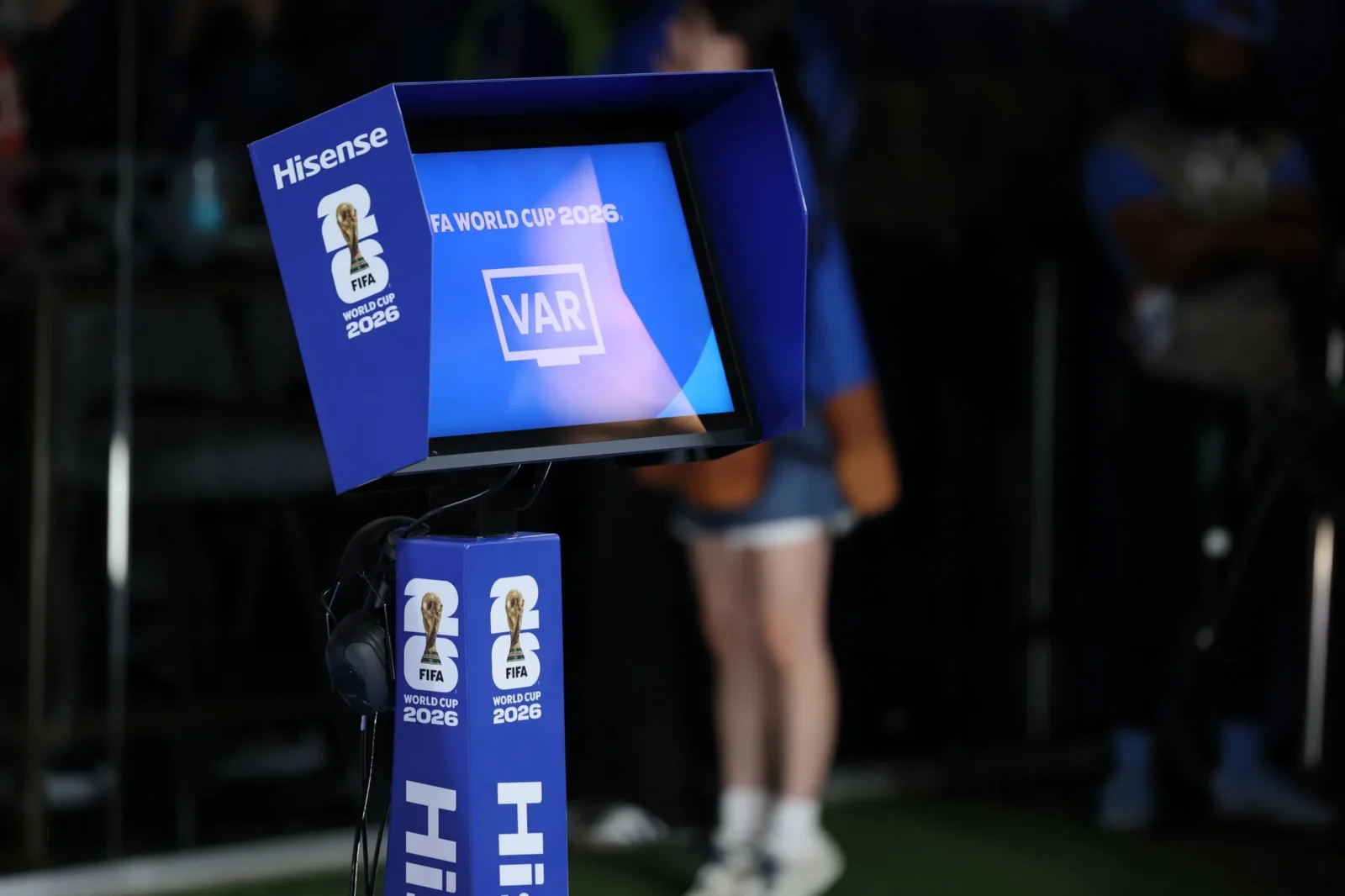
South Africa’s long-awaited Video Assistant Referee rollout has reached an awkward point. The money exists. The technology has been evaluated. The football authorities agree in principle that VAR should come. Yet the system is still not operating.
On August 26, the South African Football Association said the R20 million received from the Department of Sport, Arts and Culture remains untouched in a separate account while governance, budget verification and procurement reviews continue. After an August 18 engagement, the department gave SAFA a final 21-day extension to complete the outstanding work and submit a comprehensive report.
That delay will tempt observers to ask a simple question: when will VAR finally arrive?
African football should ask a harder one first: what would prove that the system is ready to work well after it arrives?
VAR is often discussed as a technology purchase. In practice, it is an operating system for high-stakes judgement. Cameras, software and replay rooms matter, but the quality of the outcome also depends on procurement discipline, referee preparation, communication protocols, decision authority, connectivity, review standards and recurring operating costs. A federation can buy the equipment and still build a weak system around it.
South Africa therefore needs a public VAR governance scorecard before installation becomes the main measure of progress.
The first measure should be procurement clarity. SAFA says it conducted a technical evaluation and identified preferred providers before the current funding was received, while no contracts were signed. That is exactly the stage where a transparent scorecard can help. Football stakeholders should be able to see what capabilities are being purchased, how vendors will be assessed, which costs are one-time and which recur, and what performance standards a provider must meet after deployment.
The second measure should be referee readiness. VAR cannot compensate for weak judgement by simply adding another screen. Referees and video officials need repeated practice on intervention thresholds, communication, speed and consistency. The Department of Sport, Arts and Culture previously described referee and official training as a core part of the national VAR plan. The scorecard should therefore track certification, scenario practice and readiness testing rather than counting training sessions alone.
The third measure should be operating authority. Everyone involved needs to know who can stop a process, who can overrule a technical recommendation and who owns the final decision when systems or communications fail. This sounds obvious until a high-pressure match produces an unusual case. Governance becomes visible precisely when the normal procedure stops being enough.
The fourth measure should be incident review. Every major VAR controversy should generate an operational learning record. What happened? Which information was available? Where did the process slow down? Was the intervention threshold applied consistently? Did technology fail, did communication fail, or did judgment fail? The purpose should be improvement rather than blame. A system that cannot learn from disputed decisions will repeat them with better cameras.
The fifth measure should be recurring cost. Public attention naturally focuses on the initial funding allocation, but VAR creates ongoing expenses in staffing, maintenance, connectivity, upgrades, training and match operations. A sustainable model has to show who pays those costs once the launch budget is gone. A federation should know the cost per match and the cost per competition before expanding the system further.
This is where the South African delay can become useful rather than merely frustrating. The additional review period creates an opportunity to publish the operating model before the technology becomes politically and commercially difficult to change.
There is precedent for treating football technology as a governance issue. In 2025, the Department of Sport, Arts and Culture framed its larger VAR funding commitment around integrity, fairness, FIFA compliance, training, stadium assessment and reliable connectivity. CAF, meanwhile, has placed governance and transparency alongside its ambitions to strengthen African football. The logical next step is to make those principles measurable at the point where technology enters match decision-making.
A scorecard would also improve the public debate. Right now, supporters can easily interpret delay as incompetence while administrators can defend delay as due diligence. Both claims can be partly true or partly wrong. Transparent milestones would let everyone distinguish necessary preparation from avoidable drift.
For example, a project could be behind its original calendar but still show clear progress if vendor evaluation is complete, officials have passed readiness tests, stadium connectivity is verified, incident-review procedures are approved and recurring funding is secured. Conversely, a launch date can look like progress while hiding unresolved operating risks.
The broader lesson matters beyond South Africa. African federations will adopt more decision-support technology as competitions professionalize. The question is whether each new system becomes another procurement project or a chance to improve institutional capability.
Technology works best when it makes good judgment easier to reproduce. That requires rules for who decides, evidence for how decisions are reviewed and feedback loops that improve the system after mistakes.
South African football already has the attention, funding and public demand needed to make VAR consequential. The remaining task is to show that the operating model deserves the same scrutiny as the equipment.
Before fans are asked to trust the screen, they should be able to see the governance behind it.
—
Dr. Gleb Tsipursky is a behavioral scientist, CEO of Disaster Avoidance Experts, and the author of The Psychology of AI Adoption at Work: From Resistance to Results (Georgetown University Press, 2026). His commentary regularly appears in major publications, including The New York Times, The Guardian, and the Toronto Star
About the Author




0 Comments